

MotoGP is entering a new phase of global expansion under Liberty Media, but chief sporting officer Carlos Ezpeleta insists the championship will develop on its own terms rather than attempt to become “Formula 1 on two wheels”.
Speaking to Motorsport.com at the British Grand Prix, Ezpeleta outlined MotoGP’s plans to strengthen its presence in international markets, improve the fan experience and build a more valuable commercial operation following Liberty Media’s acquisition of the championship.
One of the clearest priorities is reducing MotoGP’s reliance on its traditional European base.
The 2026 calendar features 14 races in Europe and eight outside the continent. That balance is expected to shift significantly in 2027, with only nine European rounds and 13 outside Europe. Ezpeleta believes the split could move towards 50-50 within the next two or three years.
However, he stressed that expansion is not simply about adding races in new countries. MotoGP wants to establish a lasting presence in markets such as the United Kingdom, United States and Southeast Asia, rather than arrive for one Grand Prix before disappearing for the rest of the year.
“We need to make sure we have a presence throughout the year as we develop these markets,” Ezpeleta said.
The approach reflects a broader change in MotoGP's management since Liberty Media took control. The organisation has been bringing in more international talent while placing greater emphasis on commercial, marketing and promotional activities alongside its traditional focus on competition, safety and technical development.
Ezpeleta said decisions are increasingly being judged by their potential long-term value to the championship, including their ability to attract new fans and strengthen MotoGP’s global image.
That strategy is already evident in the plans for Adelaide, which will host a MotoGP street race in the latter part of 2027. Ezpeleta described it as one of the most ambitious projects in the championship’s history, although he stressed that MotoGP does not intend to turn every race into a street event.
Safety remains the starting point for the project, with the circuit required to meet MotoGP and FIM standards before other considerations are taken into account. The event has already generated significant interest, with hundreds of thousands of ticket reservations reportedly received since the agreement was announced.
More broadly, MotoGP wants its 22 events to become major entertainment occasions in their own right. Ezpeleta said the championship is looking for venues that can provide better access for fans, stronger hospitality infrastructure and proximity to major cities and airports.
The goal is not only to improve the racing weekend itself, but also to make each event easier and more attractive for new audiences.
Liberty Media’s involvement has inevitably led to comparisons with Formula 1, particularly after the enormous growth F1 experienced under the same ownership. However, Ezpeleta believes that success cannot simply be replicated.
Instead of searching for one major initiative that transforms MotoGP, he expects growth to come from hundreds or even thousands of smaller improvements across the sport. These could include digital content, merchandising, licensing, commercial partnerships and hospitality.
While MotoGP can learn from Formula 1’s experience, Ezpeleta said the two championships have different audiences and identities.
“There is no desire to emulate Formula 1,” he said. “This is not Formula 1 on two wheels.”

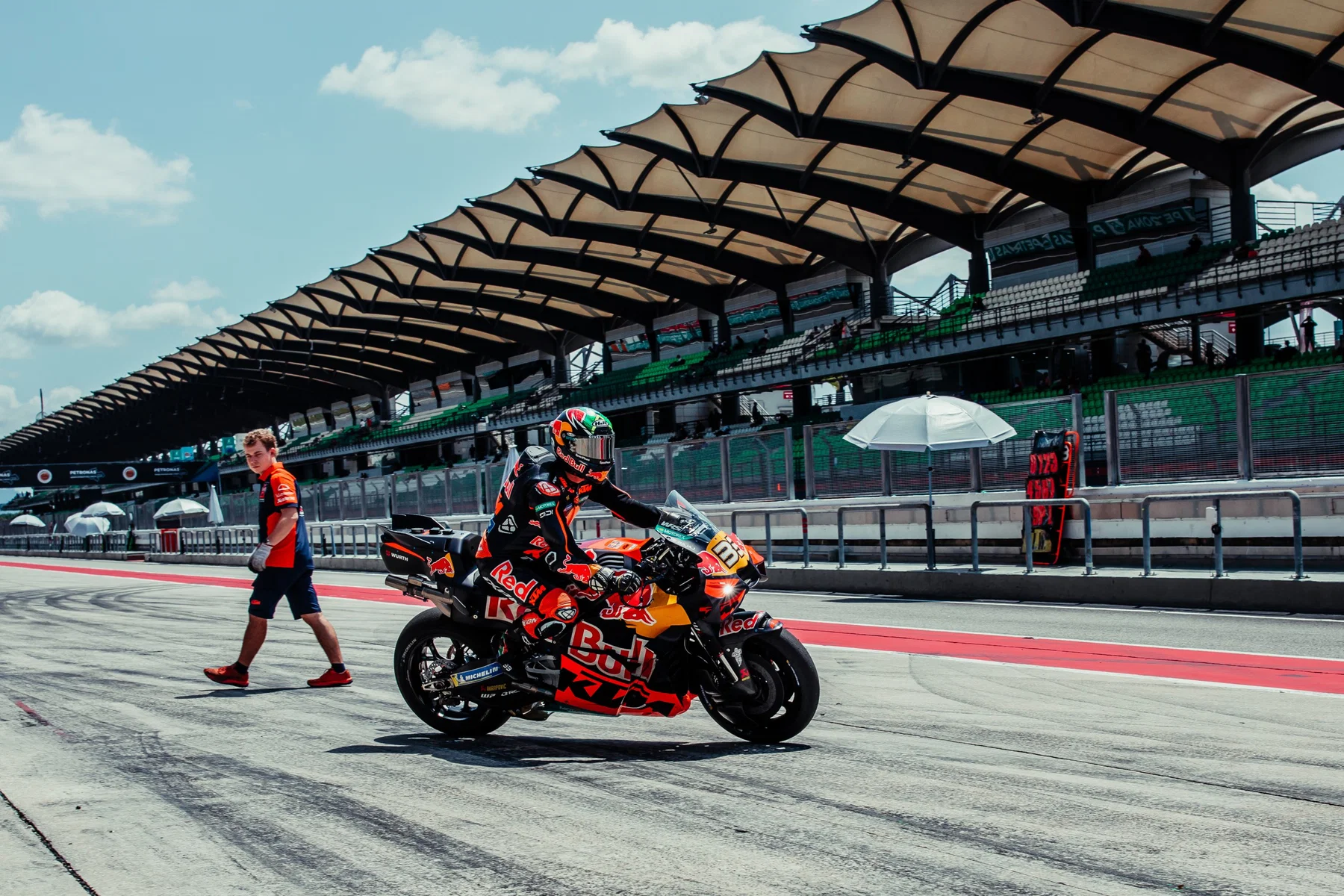
Source: Sepang International Circuit
The same philosophy applies to MotoGP’s season launch events. After the success of the 2026 launch in Kuala Lumpur, which featured MotoGP bikes on the streets around the Petronas Twin Towers, the championship plans to continue developing the concept. The 2027 launch is scheduled for Rio de Janeiro.
North America is another key part of MotoGP’s expansion plans, although Ezpeleta acknowledged that the championship faces a difficult task competing for attention in a market crowded with major sports.
He believes MotoGP already has the right product for younger American audiences and is investing in television coverage to make the sport easier for newcomers to follow.
A second US Grand Prix is also being considered, but Ezpeleta does not see it as essential to MotoGP’s long-term plans. The bigger objective is to make MotoGP a year-round presence in the United States rather than a sport that attracts attention only during its annual visit to Austin.
“A second race is important, but I would say it is not crucial,” Ezpeleta said.
Another major issue on MotoGP’s long-term agenda is the possibility of introducing a budget cap.
Ezpeleta said MotoGP wants to explore the idea, although he stressed that the motivation is different from Formula 1. MotoGP currently has strong racing and does not believe spending is preventing competitive action on track.
Instead, the proposed cap would be aimed at preventing an uncontrolled escalation of spending between manufacturers and creating greater financial stability across the grid.
Ezpeleta argued that the difference between manufacturers is not simply how much they spend, but how much more they spend than their rivals. Limiting that gap could help teams and manufacturers redirect resources towards commercial and marketing development.
Any major change would require agreement from all parties and could not be introduced before the current agreements expire in 2031.
For now, MotoGP’s immediate task is to build on the strength of its racing while expanding its audience and commercial reach. Ezpeleta believes the championship can grow significantly without sacrificing the identity and sporting values that made it successful in the first place.
The message from MotoGP’s leadership is therefore clear: Liberty Media may bring new investment and ideas, but the long-term ambition is to make MotoGP bigger without turning it into something it is not.