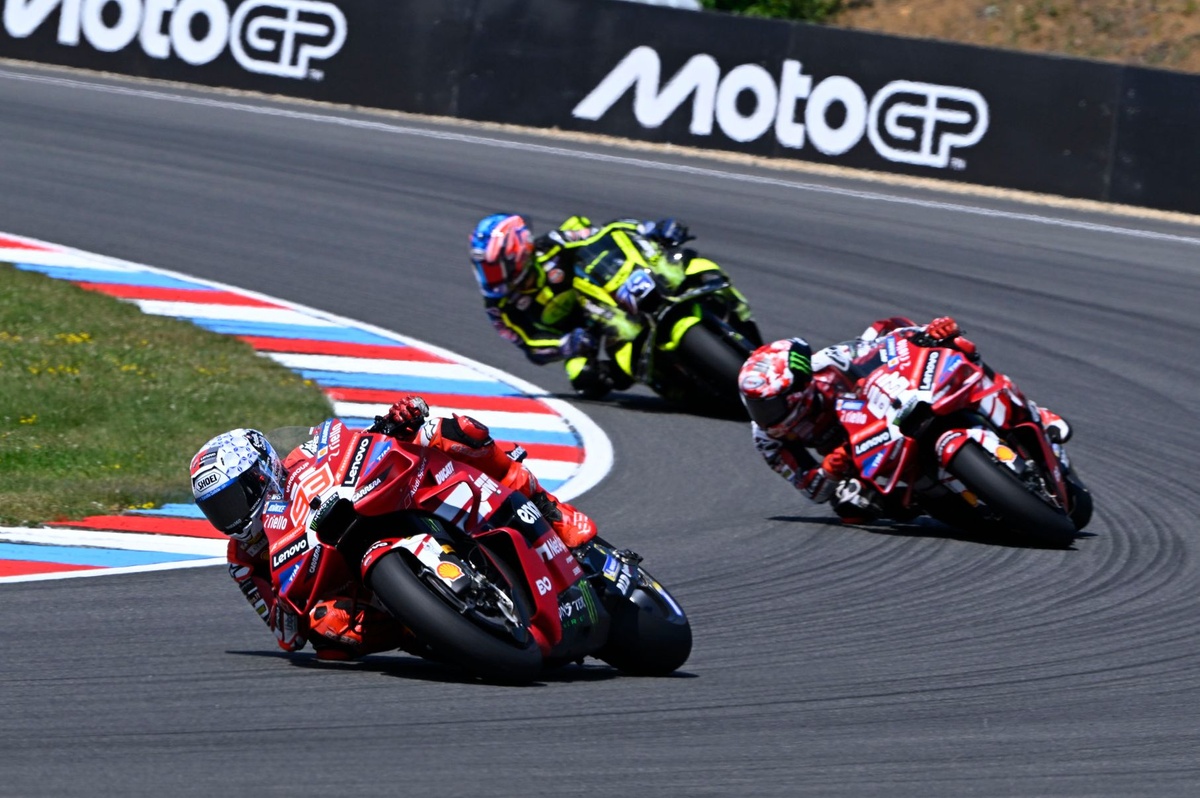
The MotoGP landscape is shifting dramatically! In a series of decisive moves, the Grand Prix Commission has just announced immediate rule changes set to redefine race starts and the long-term structure of the sport. Riders, teams, and fans are bracing for impact as safety and fairness take center stage.
Key Rule Changes Rocking MotoGP
- Front Holeshot Device Banned: Effective immediately from the Dutch GP, eliminating a controversial starting aid.
- Expanded Grid Spacing: Riders will get more breathing room on the grid from the German GP for enhanced safety.
- Manufacturer Rider Cap: A future limit of six riders per manufacturer will be enforced from 2028 to promote competitive balance.
The Holeshot Hammer Drops: Front Device Banned
In a move that’s sending ripples across the paddock, MotoGP has outlawed the front holeshot device with immediate effect. This controversial technology, which lowered the front of the bike at the start for better traction, faced strong opposition. Its use required riders to aggressively brake into the first corner to disengage it, raising significant safety concerns.
Beyond safety, the device also represented an expensive development arms race, offering little tangible benefit to the spectacle of racing. While a full ban on all holeshot devices was slated for 2027, the series has acted swiftly, eliminating the front mechanism from the upcoming Dutch GP. Only rear holeshot devices will remain in play for the rest of the season.
Wider Lanes, Safer Starts: Grid Layout Revamped
Get ready for a visually different start! From next month's German GP at the iconic Sachsenring, the grid spacing will be significantly expanded across all classes. The distance between individual riders is increasing from three meters to four meters, making each row stretch from nine meters to 12 meters.
This crucial adjustment aims to enhance safety during the chaotic opening moments of a race. With more space, riders will have increased visibility and reduced risk of contact, directly addressing recent concerns about congested race starts. The familiar three-rider-per-row format will, however, remain.
A Future of Balance: The Manufacturer Rider Cap
Looking further ahead, the Grand Prix Commission has also laid down a strategic long-term marker: a cap of six riders per manufacturer from the 2028 season. This means each manufacturer can effectively supply one factory team and two customer teams.
This forward-thinking decision aims to maintain competitive balance and ensure a diverse grid. Interestingly, MotoGP is already moving towards this structure. Ducati, for instance, currently supplies three teams (its factory squad, Gresini, and VR46), but with Pramac's anticipated switch to Yamaha from 2025, the landscape will naturally align. This rule is underpinned by the new Concorde Agreement, which secures the involvement of Ducati, Aprilia, KTM, Honda, and Yamaha until at least 2031, promising stability and fierce competition for years to come.