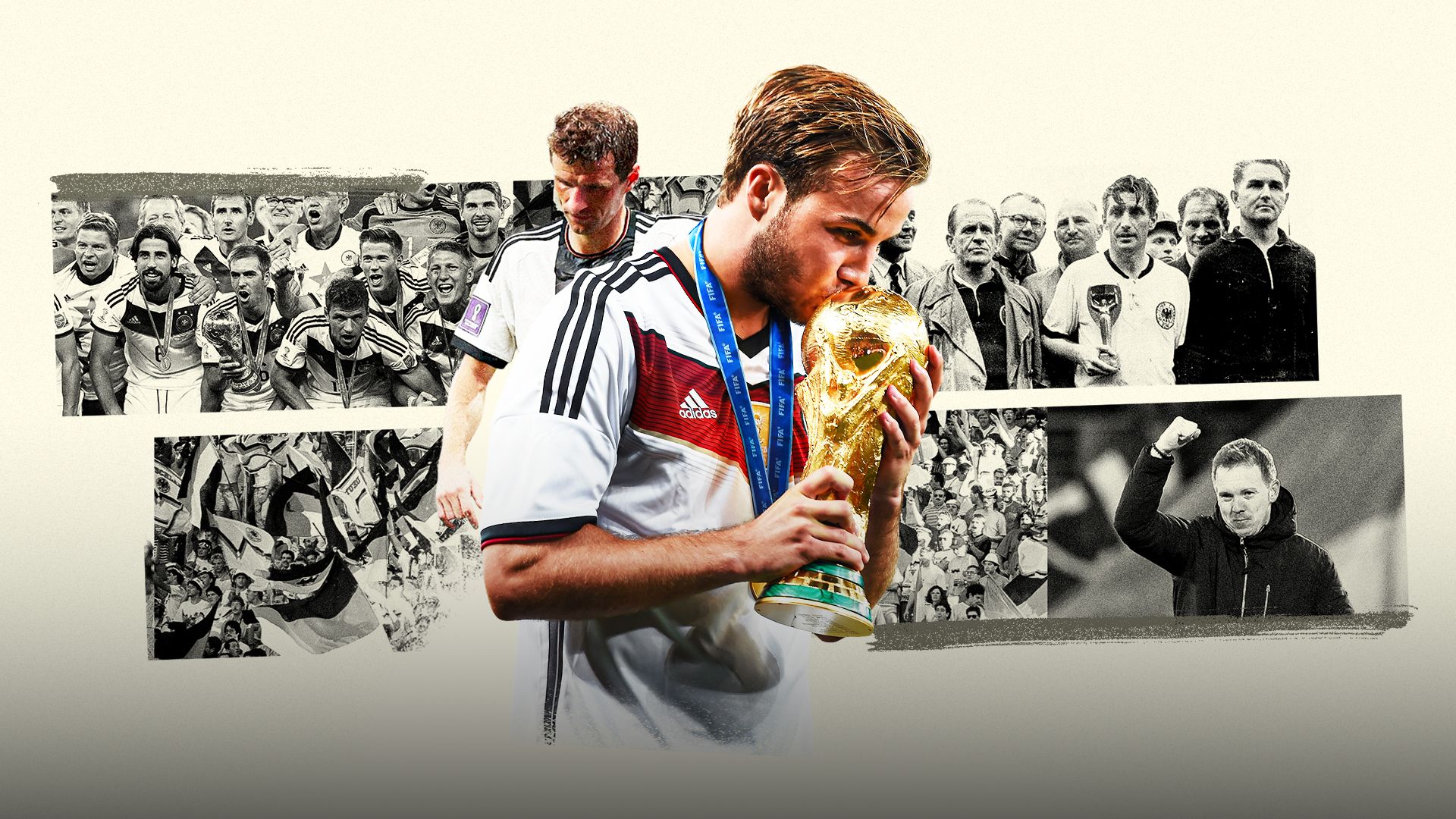

The mighty German national team once stood as the epitome of grit and unwavering determination. Yet, recent years have seen a storied footballing giant falter, losing its way amidst tactical dogma and a disappearing identity. Now, under the bold leadership of Julian Nagelsmann, a new chapter is unfolding – one that promises to revive the very World Cup DNA that once struck fear into opponents worldwide. It's a mission to reconnect with the fans, redefine their style, and reclaim their rightful place among football's elite.
Key Takeaways:
- Joachim Löw's era saw Germany embrace a possession-heavy style, culminating in the 2014 World Cup triumph.
- This approach became an ideological trap, leading to back-to-back group stage exits in the 2018 and 2022 World Cups.
- Julian Nagelsmann is spearheading a cultural reset, prioritizing fighting spirit, defensive solidity, and "worker" mentality.
- The goal is to blend modern tactics with traditional German virtues to forge a resilient, unified squad ready to stir national emotions.
The Golden Era's Flaw: How Löw's Vision Unraveled
For over a decade, Germany redefined itself under Joachim Löw. Gone was the perceived 'old-school' grit; in its place, a sleek, possession-dominant philosophy emerged. Influenced by Pep Guardiola's aesthetic, the team became a ball-controlling machine, peaking with the stunning 2014 World Cup victory in Brazil. The 7-1 semi-final demolition of the hosts became an iconic moment, showcasing a perfect blend of tactical precision and technical brilliance. It was a triumph that captivated the world and heralded a 'new Germany'.
However, this very success inadvertently planted the seeds of future crisis. The beautiful game morphed into an end in itself. Possession became paramount, often at the expense of pragmatism and crucial defensive balance. As the global game evolved with intensive counter-pressing and fluid transitions, Germany seemed stuck, clinging to an increasingly outdated ideology.
Reclaiming the "German Virtues": Nagelsmann's Battle Plan
The ignominious group stage exits at the 2018 and 2022 World Cups laid bare the uncomfortable truth: Germany had lost its identity. Löw himself later admitted his error, recognizing the need for a more balanced approach. The team, while technically gifted, seemed emotionally hollow, lacking the famed fighting spirit that Gary Lineker once immortalized. They aspired to be everything – elegant like Spain, tactically astute like France, relentless like England – and in doing so, became nothing unique.
Enter Julian Nagelsmann. Appointed in 2023, the young coach immediately recognized the disconnect. His programmatic approach is a call to arms, urging a return to the foundational German virtues: resilience, collective effort, and mental toughness. He's openly spoken of the "pressure to be successful" and the need for football to "stir emotions," both within the squad and across the nation. This isn't about romanticizing the past; it's about harnessing a potent resource for the future, especially in tournament football where character often trumps theoretical systems.
For forging a New Generation of "Workers": The Squad Reshuffle
Nagelsmann's most tangible shift is his emphasis on what he calls "workers." These aren't necessarily the most flashy technicians but rather players who embody sacrifice, running strength, tactical reliability, and a relentless tackling spirit. They are the bedrock upon which collective success is built, providing stability and structure.
Players like Robert Andrich (Bayer Leverkusen), Pascal Gross (Brighton), and Grischa Promel (Hoffenheim) are prime examples of this philosophy. Defenders like Waldemar Anton and Nico Schlotterbeck (both Borussia Dortmund), alongside established figures such as Jonathan Tah (Bayern Munich) and Antonio Rüdiger, bring physical robustness. Even midfield stalwarts Joshua Kimmich and Leon Goretzka, along with RB Leipzig captain David Raum, are embracing this mindset. This focus ensures the team is perceived as a cohesive unit, not just a collection of individual talents.
Beyond Tactics: Reconnecting with the Fans
A critical component of Nagelsmann's mission is re-establishing the emotional bond between the team and the country. The sterility that plagued previous campaigns has given way to a palpable shift in public perception. During Euro 2024, genuine enthusiasm returned, fueled by a team that felt emotionally charged and authentic.
Nagelsmann famously articulated his vision: "I want us to get on the bus and drive to the game with everyone thinking: 'Of course we're going to win today, we're Germany, we're a footballing nation, we're going to win'." This isn't arrogance, but a deep-seated conviction that self-belief and a clear identity are paramount. Players like Jamal Musiala and Antonio Rüdiger now embody this modernized self-image: technical brilliance fused with unyielding determination.
The Enduring Legacy: Why Mentality Matters Most
In today's globalized football landscape, pure ball possession is no longer a guaranteed path to glory. Teams like France and Argentina have proven that tournament success hinges on adaptability, mental fortitude, and unity. Germany was once the undisputed master of these qualities.
Nagelsmann's project isn't about blindly copying the past. It's about a nuanced reorientation: blending modern football with a distinct German identity. It's about remembering that the teams of 1974, 1990, and even 2014 thrived on structure, clarity, and discipline. The coach aims for a psychological stability that translates into fluid, fearless play on the pitch. By emphasizing "resilience, team spirit and passion," Julian Nagelsmann is laying the foundation for a future where Germany once again earns the respect that Lineker's iconic statement originally implied – not as an ironic jab, but as a genuine compliment to a team that truly knows who it is.