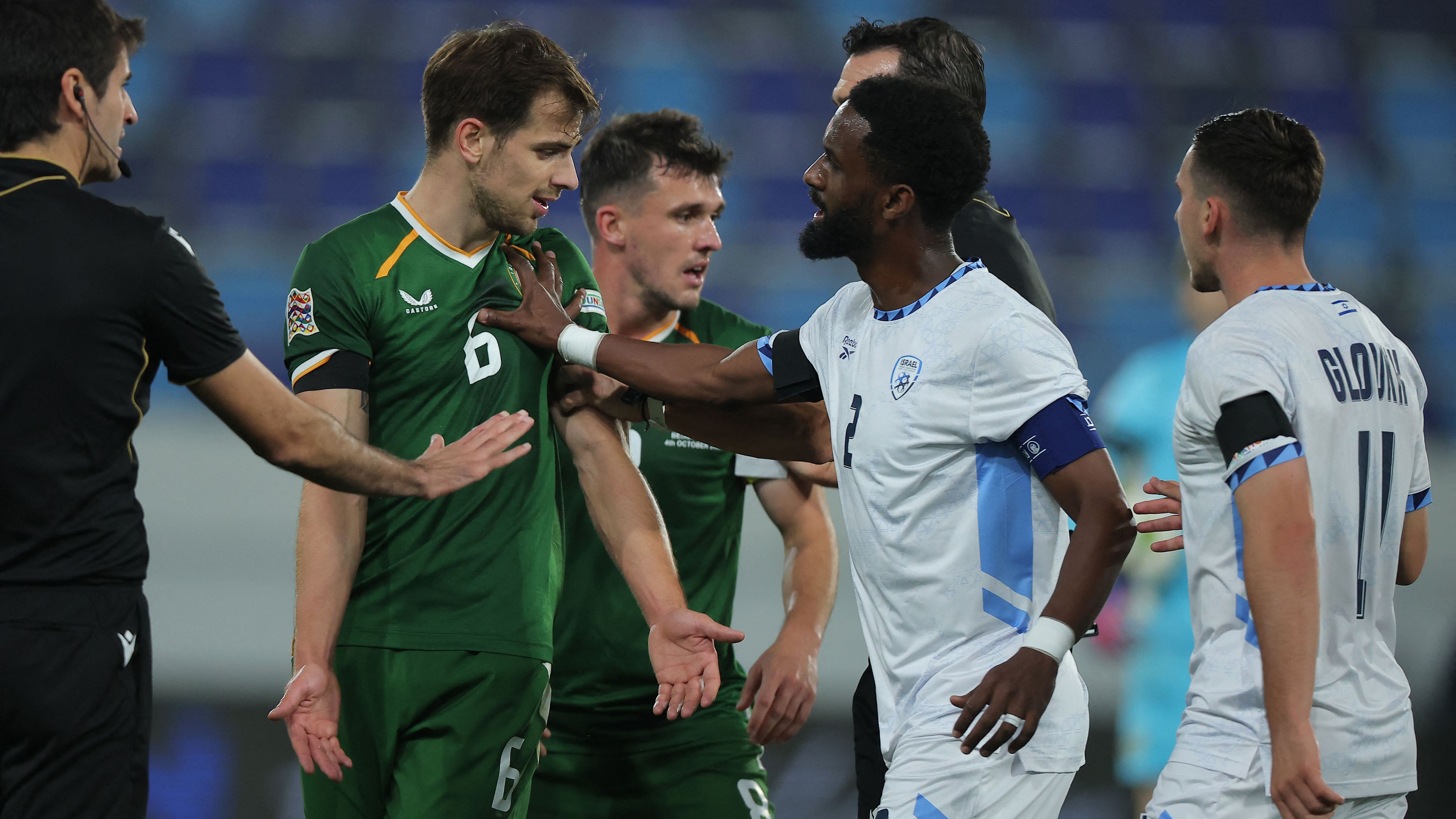

The beautiful game is rarely 'beautiful' when political tensions spill onto the pitch, and the recent UEFA Nations League clash between the Republic of Ireland and Israel has become a toxic flashpoint. European football's governing body, UEFA, has launched a full-scale investigation into explosive allegations of Israeli players spitting at an Irish coach, sending shockwaves through both camps.
Key Points:
- UEFA has initiated a formal probe into alleged spitting by Israeli players.
- The incident reportedly occurred at half-time during the Nations League 1-1 draw in Serbia.
- The Israel FA vehemently denies the accusations, claiming "provocation" from the Irish side.
- This controversy follows weeks of escalating political and sporting friction between the two nations.
Spitting Allegation Sparks UEFA Investigation
Football is a game of passion, but some lines should never be crossed. The highly charged UEFA Nations League fixture, which saw the Republic of Ireland draw 1-1 with Israel, has now become the subject of a serious disciplinary inquiry. UEFA confirmed on Monday that an Ethics and Disciplinary Inspector will delve into official reports detailing an alleged spitting incident involving Israeli players and an Irish coach at half-time.
The Serbia Showdown: Behind Closed Doors Drama
Played in Backa Topola, Serbia, behind closed doors, the match itself was shrouded in an already tense atmosphere. The decision to play without spectators only amplified the intensity for those present. Now, an alleged act of misconduct in the tunnel area has escalated the drama far beyond the final whistle, forcing UEFA to intervene and investigate potential breaches of sportsmanship.
A Web of Controversy: Responses & Restrictions
The fallout has been swift and contentious. A UEFA spokesperson confirmed the inspector's appointment after "official reports" detailed the half-time allegations. This move underscores the seriousness with which European football's body views such claims, particularly given the already fraught relationship between the two nations.
Israel's Firm Denial & Media Fallout
The Israel FA has wasted no time in rejecting the accusations, with a spokesperson quoted as saying, "No one spat towards the coach." They further claimed their players maintained professionalism despite "provocation the Irish side decided to do." Meanwhile, the escalating tension also impacted media operations, with UEFA banning two journalists from the post-match press conference after a prior media briefing with Ireland head coach Heimir Hallgrimsson was abruptly cut short.
A History of Heated Encounters
This isn't an isolated incident; rather, it's the latest chapter in a growing saga of political and sporting friction. Weeks before Sunday’s match, Republic of Ireland goalkeeper Gavin Bazunu made headlines by withdrawing from the squad, citing opposition to "the atrocities in the region." His powerful statement highlighted the deeper geopolitical context impacting these fixtures.
Bazunu's Stance and Hallgrimsson's 'Genocide' Claim
Despite Bazunu's high-profile exit, the Republic of Ireland squad voted overwhelmingly to fulfill their initial fixture against Israel on September 27, winning 3-0. Ahead of that game, Ireland coach Heimir Hallgrimsson controversially declared his side would be "playing against genocide," a statement that drew a sharp rebuke from the Israel FA, who accused Hallgrimsson of "ignorance, hypocrisy and stupidity." The verbal sparring has clearly translated into palpable tension on and off the pitch.
What's Next? Disciplinary Action & Future Fixtures
The UEFA Ethics and Disciplinary Inspector now faces the task of thoroughly gathering evidence to determine if sanctions are warranted. Any individuals found guilty of misconduct could face formal disciplinary charges, which might include fines or bans. The underlying political strain, however, shows no signs of dissipating.
The Football Association of Ireland (FAI) previously requested UEFA to avoid drawing the two nations together in future competitions, a request that was ultimately rejected. Both national associations now await UEFA's ruling, keenly aware that this dispute could significantly impact future encounters and the image of the sport itself.