
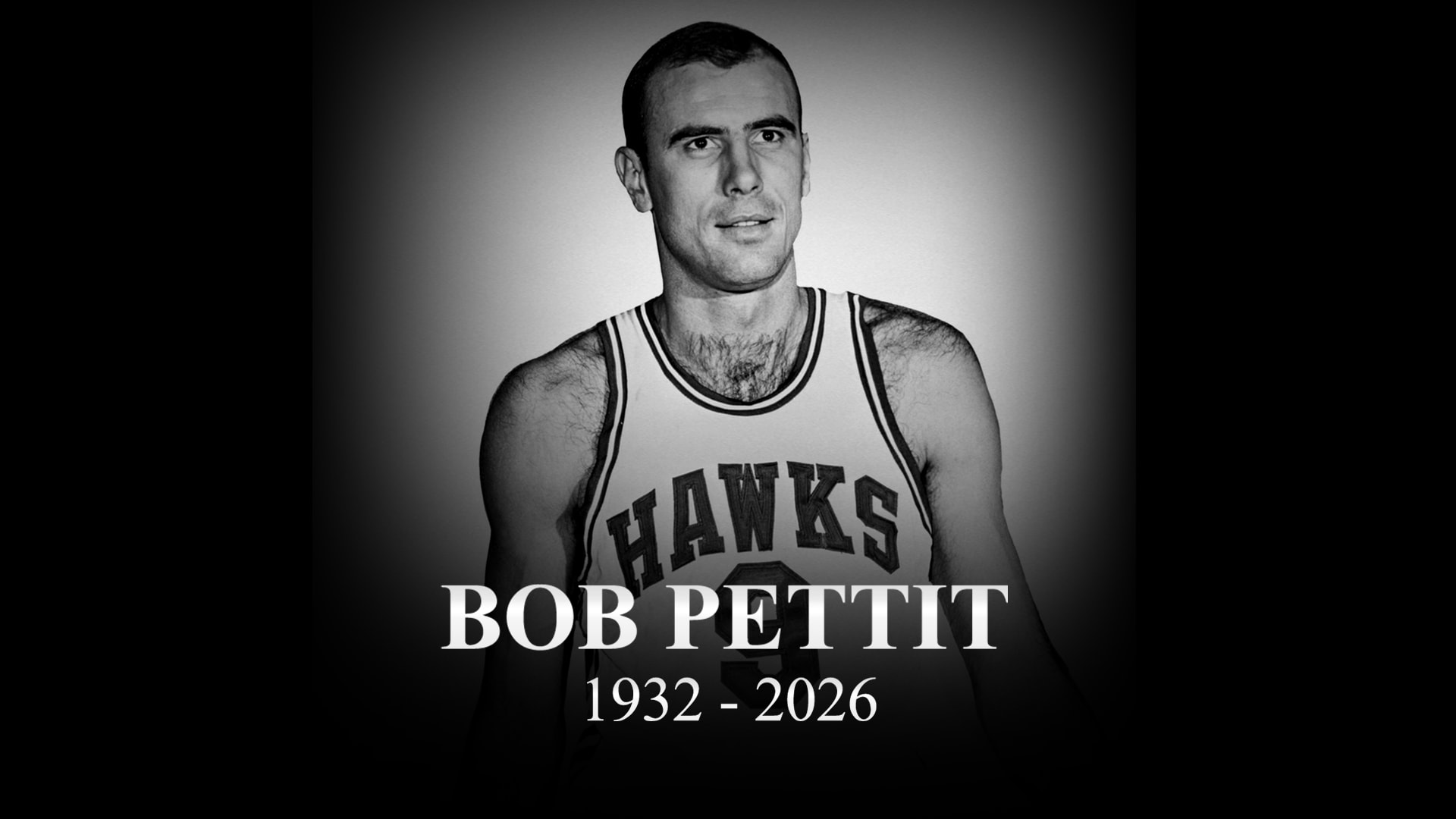

The basketball world has lost an absolute titan. Bob Pettit, the NBA's inaugural Most Valuable Player and a foundational legend who revolutionized the power forward position, has passed away at the age of 93. His incredible career with the St. Louis Hawks laid the groundwork for future generations of stars.
Key Highlights of Bob Pettit's Legacy:
- First-Ever NBA MVP: Awarded in 1956, cementing his place in history.
- 1958 NBA Champion: Led the St. Louis Hawks to their sole title over the formidable Boston Celtics.
- Two-Time NBA MVP & Four-Time All-Star Game MVP: A testament to his consistent dominance.
- Pioneer Power Forward: Redefined the role with his versatile, face-up game and relentless work ethic.
A Titan's Farewell: Remembering a Basketball Pioneer
News broke on Thursday, confirmed by his alma mater LSU, that Bob Pettit passed away on Wednesday. His departure marks the end of an era, but his influence on the game remains indelible. NBA Commissioner Adam Silver paid tribute, highlighting Pettit's groundbreaking achievements and his role in elevating the sport.
Redefining the Power Forward Position
At 6-foot-9 and 205 pounds, Pettit was a physical force unlike any before him. He wasn't just a back-to-the-basket big man; he was among the first to play facing the basket, showcasing a blend of skill and power that would become the blueprint for modern power forwards. His relentless drive and commitment to conditioning were legendary.
The Apex of Achievement: MVPs and a Championship Ring
Pettit burst onto the scene, earning Rookie of the Year honors in 1955. The very next season, he claimed the NBA's first MVP award, leading the league in scoring with 25.7 points per game. He secured a second MVP in 1959 and matched Kobe Bryant's record with four All-Star Game MVP awards, showcasing his consistent brilliance. The crowning glory came in 1958, when he led the St. Louis Hawks to a historic NBA championship over Bill Russell's seemingly invincible Boston Celtics, famously dropping 50 points in Game 6.
A Legacy Forged in Battle
Bob Pettit was a statistical marvel who etched his name into the record books. He retired after the 1964-65 season as the NBA's all-time leading scorer with 20,880 points and second in rebounds with 12,849. His career averages of 26.4 points and 16.2 rebounds are simply staggering, especially considering the era's physicality.
Battling the Celtics Dynasty
Pettit's career coincided with the Boston Celtics' unprecedented dynasty. The Hawks faced Boston in four NBA Finals, including epic seven-game battles. While they only secured one championship, their fierce rivalry underscored Pettit's ability to challenge one of the greatest teams in sports history. Imagine facing legends like Wilt Chamberlain and Bill Russell night after night – that was the reality for Bob Pettit.
From LSU Star to NBA Icon
Born in Baton Rouge, Louisiana, Robert Lee Pettit Jr. was a late bloomer in basketball, only making his high school varsity in his junior year. He quickly excelled, leading Baton Rouge High to a state championship. Staying home, he became an All-American at LSU, leading the Southeastern Conference in scoring for all three of his varsity seasons.
His impact at LSU is immortalized with his retired No. 50 jersey and a bronze statue alongside fellow legend Shaquille O'Neal. He is one of only three LSU players, including Pete Maravich, to be enshrined in the Naismith Memorial Basketball Hall of Fame in 1970. His No. 9 jersey is also retired by the Atlanta Hawks, a lasting tribute to a player who embodied grit, skill, and an unbreakable will to win. After basketball, Pettit remained in his native Baton Rouge, contributing to banking and financial consulting, always a beloved figure.