

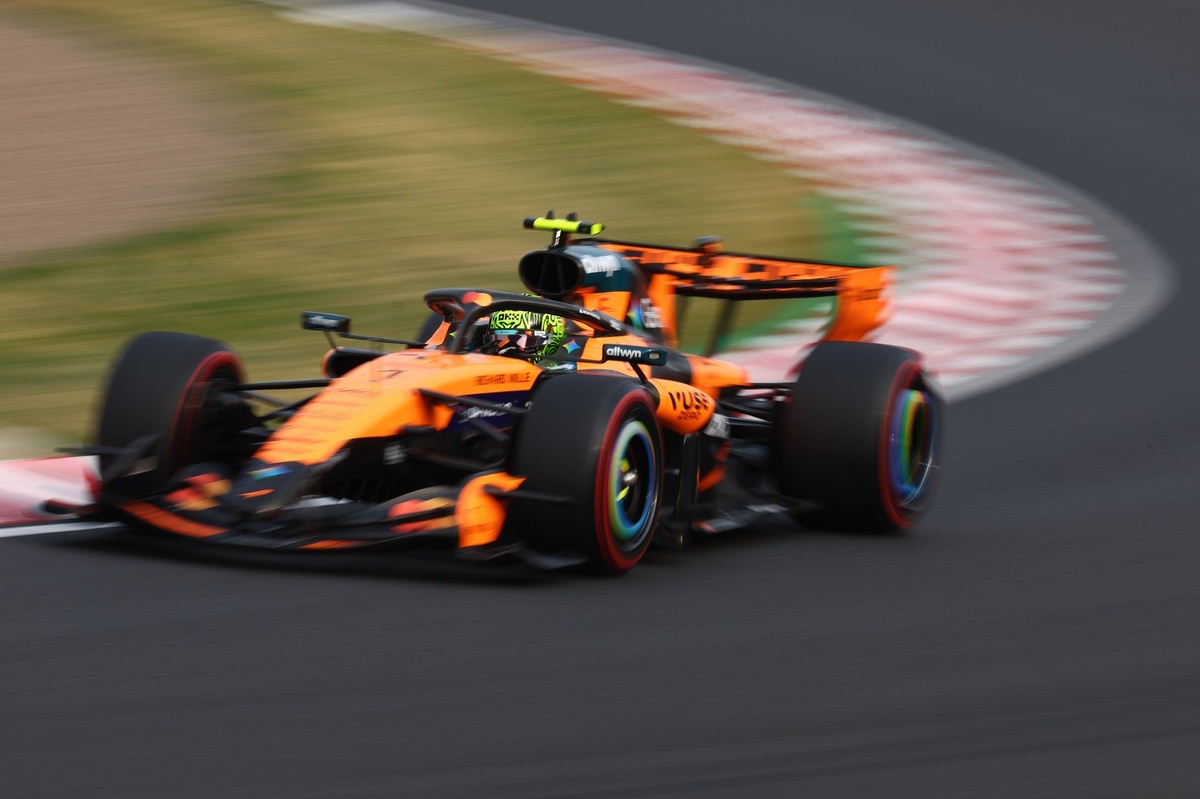

The roar of an F1 engine should signify raw power and driver skill, but for stars like Lando Norris and Max Verstappen, a crucial element of the sport feels broken. The current (and future 2026) F1 power unit rules, particularly around battery deployment, are stripping control from the drivers and turning genuine on-track battles into a frustrating "yo-yo" effect.
Key Takeaways:
- Lando Norris and Max Verstappen express deep frustration over F1's current power unit and battery deployment regulations.
- The "yo-yoing" effect makes overtakes feel artificial and unsustainable, robbing drivers of genuine racecraft.
- Drivers lament a severe lack of control over their car's energy management, especially when attacking.
- The recent Suzuka Grand Prix starkly exposed these limitations, sparking calls for significant rule adjustments for F1 2026.
The Frustration Mounts: "This Is Not Racing"
Lando Norris didn't hold back after his strong fifth-place finish at Suzuka. Despite McLaren's impressive progress, Norris highlighted a fundamental flaw in the racing itself. He specifically recounted an encounter with Lewis Hamilton, where his car's automatic battery deployment forced an unwanted overtake, only for him to be immediately vulnerable.
"Honestly some of the racing, I didn't even want to overtake Lewis. It's just that my battery deploys, I don't want it to deploy, but I can't control it," Norris revealed to Motorsport.com. "So, I overtake him, and then I have no battery left, so he just flies past. This is not racing, this is yo-yoing."
Driver Control: A Vanishing Act
The core of the issue, according to Norris, is the feeling of powerlessness. Drivers should dictate their energy usage, not be at the mercy of pre-programmed systems. This problem intensifies in "overtake mode" when a car is within one second of its rival.
He detailed a scenario at the final chicane where he passed Hamilton, only to be instantly re-passed on the main straight. "If I go on throttle, my battery deploys, and I don't want it to deploy because it should have cut. But because you lift and you have to go back on [throttle], it redeploys."
This effectively left him with no energy to defend against the Ferrari driver who then flew past. "There's just not enough control for a driver, and that's why you're just too much at the mercy of what's behind you. That's just not how it should be," Norris emphasized, highlighting the impact on race strategy and genuine battle.
Verstappen's Verdict: Suzuka's Brutal Truth
Reigning world champion Max Verstappen echoed Norris's concerns, confirming that the Suzuka circuit uniquely magnified the problem. The track's layout, with its long straights and minimal recharge zones, makes strategic battery deployment a precarious gamble.
"In general, you just have to be very careful with how you use your battery. It's a bit tricky," Verstappen stated. He pointed to the sequence around 130R and the Casio Triangle. Drivers deploying power on one straight have nothing left for the next, making it "completely inefficient" to attempt overtakes in traditional hot spots.
The 2026 Challenge: A Call for Authenticity
Both drivers are effectively sending a clear message to the FIA regarding the future of F1, especially with the upcoming 2026 rule changes. While racing might look thrilling on television, the reality from inside the cockpit is less authentic and more dictated by automated energy management.
"Yes, the racing can look great on TV, but the racing inside the car is certainly not as authentic as it needs to be," Norris concluded. The sentiment is clear: for Formula 1 to truly captivate, driver skill must once again reign supreme over power unit algorithms.