
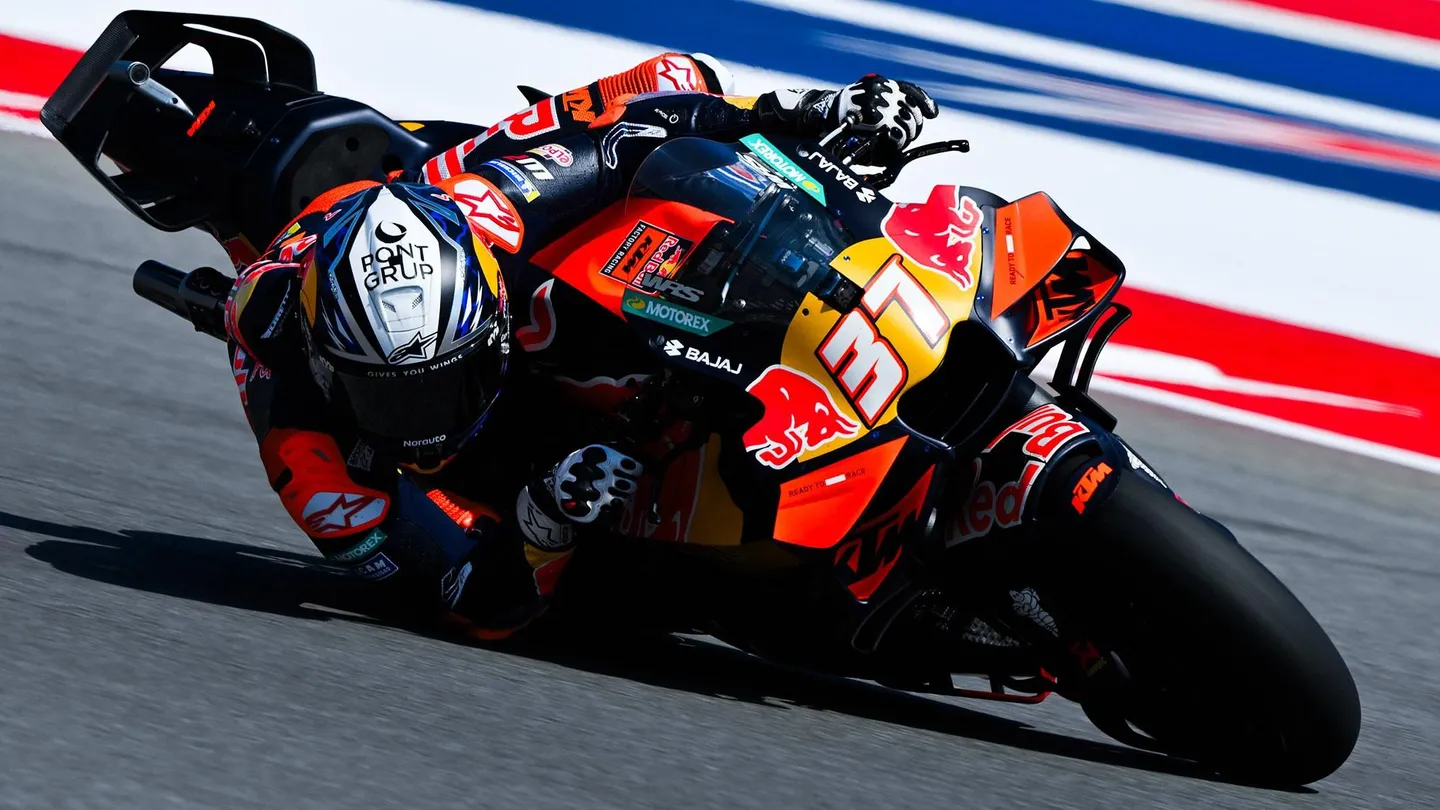

Pedro Acosta has proposed a new approach to MotoGP's tyre pressure regulations after the current rules disrupted his battle with Marc Marquez at the Indonesian Grand Prix.
The Red Bull KTM rider believes teams should follow a standard front tyre pressure requirement on the starting grid, allowing riders to focus on racing without worrying about penalties caused by changing conditions during the race.
The issue came to the forefront at Mandalika, where Acosta and Marquez repeatedly exchanged positions as they tried to keep their front tyre pressures within the permitted limits. Their battle cost both riders valuable time and allowed Trackhouse Aprilia's Ai Ogura to overtake them in the closing stages.
Acosta, who started ninth and showed strong pace early in the race, was forced to let Marquez through after his front tyre pressure exceeded the permitted level. The pair continued to trade positions over the following laps, disrupting their fight for a better result.
The Spaniard believes the regulations leave riders with too little control over their race strategy, as tyre pressure can change depending on track conditions and whether they are riding behind other competitors.
"You can't predict the future, and deciding what pressure to put in the tyres forces you to do so," Acosta said. "If you set it too high, the bike doesn't work, and if you set it too low, you run the risk of being penalised."
He suggested that Michelin should establish a standard pressure range for the front tyre and check compliance on the starting grid before the race begins.
"If we all had a standard pressure, and it was the same across the grid, it would be easier. Going very high is even dangerous," he explained.
Acosta believes the proposed system would allow riders to concentrate on competing rather than adjusting their tactics to avoid penalties. He also argued that the current rules can affect the quality of racing, particularly when riders are forced to surrender positions despite having the pace to stay ahead.

Source: KTM
The Indonesian Grand Prix was not the first time the regulations influenced a race result. Jorge Martin encountered a similar problem during Saturday's Sprint, forcing him to give up the lead as he tried to bring his front tyre pressure back within the required range. He eventually finished fourth, while Marquez took the victory.
Under the current regulations, MotoGP riders must maintain their front tyre pressure above 1.80 bar for at least 60% of the laps in a Grand Prix and 30% in a Sprint. Riders who fail to meet the requirements face time penalties of 16 seconds in a Grand Prix and eight seconds in a Sprint.
KTM rider Maverick Viñales also received a 16-second penalty at Mandalika for failing to comply with the minimum pressure rule, although it did not change his finishing position.
MotoGP is set for a tyre supplier change in 2027, when Pirelli replaces Michelin as the championship's sole supplier. The minimum pressure regulations are expected to remain, but Pirelli has previously indicated that its tyres will offer a wider operating pressure range, potentially reducing the likelihood of similar problems.
For Acosta, the priority is finding a system that preserves safety without forcing riders to sacrifice positions during a race. The Mandalika weekend has renewed the debate over whether the current regulations strike the right balance between technical safety requirements and competitive racing.