

Get ready to rethink what a sports venue can be, because in China, the game is literally reaching new heights – 51 stories high, to be exact! The nation isn't just building courts; it's crafting vibrant social ecosystems where pickleball is the star, fundamentally transforming urban recreation.
The Future of Play: Key Takeaways
- Nanjing Golden Eagle World pioneers sky-high pickleball with 11 international-standard courts and comprehensive facilities.
- Sports facilities are increasingly integrated into commercial and leisure developments across China, offering a holistic experience.
- Pickleball's accessible and social nature makes it the perfect anchor for these new, integrated lifestyle hubs.
- This trend reflects a broader consumer shift, prioritizing unique social interaction and diverse experiences over solitary exercise.
A New Apex for Urban Play: Nanjing's Sky-High Courts
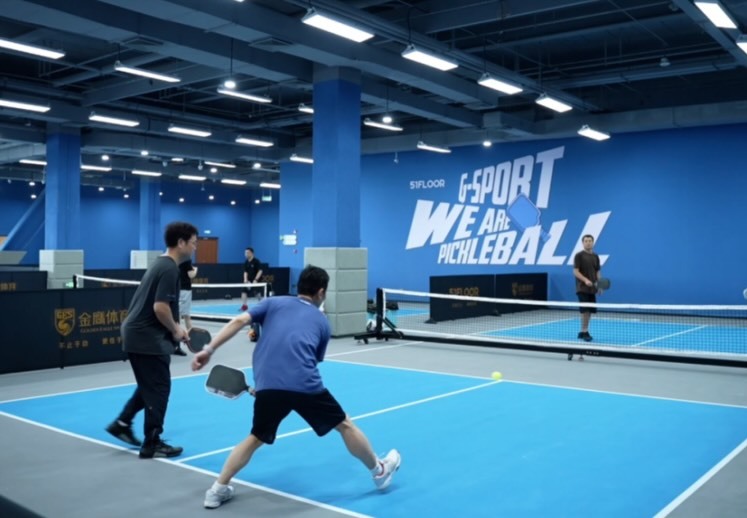
Imagine trading serves high above the city, with panoramic views as your backdrop. That's the reality at Nanjing Golden Eagle World, where a sprawling 12,000 square metre sports complex on the 51st floor began trial operations on May 30, 2026.
This isn't just any sports facility. It boasts 11 international-standard pickleball courts, an indoor golf zone, and a state-of-the-art fitness and rehabilitation centre. It's a testament to China's innovative approach to urban sports.
Beyond the Baseline: Crafting Lifestyle Hubs
As dusk settles, the courts remain abuzz with players squeezing in games after their workday. Friends gather, compete, and socialize, often before heading downstairs for dinner or a shopping spree. The Nanjing complex brilliantly transforms a pickleball session into a comprehensive outing, seamlessly blending sport with dining, retail, and leisure.
This integration is rapidly becoming a cornerstone of China's urban recreation scene. Sports venues are strategically emerging within commercial developments and unconventional locations. Operators are moving beyond simple court bookings, curating experiences that keep visitors engaged for extended periods.
The Pickleball Effect: A Social Magnet
Pickleball is particularly well-suited for this evolving model. Its inherently social and accessible format naturally attracts groups rather than just individual players. A single court can bring people together, while the surrounding businesses benefit immensely from the increased foot traffic and sustained engagement.
The Nanjing complex perfectly illustrates this synergy. Players arrive for pickleball, but their spending habits don't necessarily end when the final point is scored. Food, retail therapy, and other recreational pursuits become integral parts of the same enriching visit.
China's Leisure Revolution: Sport as a Catalyst
This shift also reflects a profound change in consumer expectations. While exercise remains a primary motivator, people increasingly value the social interaction and unique experiences that accompany physical activity. In this context, pickleball isn't merely vying for space against other fitness options; it's becoming a pivotal element of how people choose to spend their precious leisure time.
The vast commercial potential of sports is already strikingly evident across China's major cities. Shanghai's sports-related consumption soared past 100 billion yuan in 2025, fueled by global events like the Formula 1 Chinese Grand Prix, the ATP Shanghai Masters, and the Shanghai Marathon.
While these events operate on a monumental scale, they underscore how sport can generate significant spending far beyond the competition itself. This macro trend is echoed in micro-examples like the Baguio Country Club in the Philippines, Kandooma in the Maldives, and The Whampoa in Hong Kong, all adding pickleball facilities to enhance their broader offerings.
The Future of Play: More Than Just Courts
Ultimately, pickleball's contribution to this burgeoning market hinges on more than just the sheer number of courts built. Venues must provide compelling reasons for players to return, while simultaneously creating robust opportunities for surrounding businesses to thrive from enthusiastic participation.
Nanjing's 51st-floor complex offers a compelling blueprint, strategically positioning pickleball within an environment where sport, socializing, and commerce harmoniously overlap. As more Chinese cities reimagine their urban spaces, pickleball is poised to play an increasingly vital and visible role in this dynamic mix. The fundamental question is no longer simply where people can play pickleball, but rather what else a pickleball venue can bring to the table.