


Forget everything you thought you knew about pickleball's global reach – China is not just playing the game; it's rewriting the rulebook for its explosive expansion. What began as an intriguing hybrid sport, blending elements of tennis, badminton, and table tennis, has now embedded itself deep within China's ambitious sports landscape, signaling a monumental shift.
Key Points of China's Pickleball Boom:
- Explosive Growth: The China Pickleball Circuit projects a jump from 80 events to over 600 annually by 2026.
- State-Backed Validation: Formal government policies and inclusion in the National Fitness Games solidify its official status.
- Cultural Fit: The sport's mechanics resonate deeply with Chinese players' familiarity with badminton and table tennis.
- Massive Investment: Over 2,300 referees trained in 2025 alone underscores a serious structural commitment.
China's Pickleball Revolution: The Numbers Don't Lie
The figures emerging from China are nothing short of staggering, painting a clear picture of a sport no longer on the fringes. The Chinese Tennis Association (CTA) spearheaded the China Pickleball Circuit in March 2024 with a respectable 80 events.
Crucially, the ambition doesn't stop there. Plans are already in motion to scale this up dramatically, with more than 600 annual tournaments slated for 2026.
The investment in human capital is equally impressive. In 2025, China trained an astonishing 2,300 pickleball referees – nearly six times the previous year's total. Sun Wenbing, deputy secretary-general of the CTA, emphatically stated, "Pickleball is no longer a niche sport for a small group of people. It is becoming a new option for mass fitness and a new hot spot for sports consumption."
State-Sponsored Ascent: Official Backing Ignites Growth
Unlike many grassroots movements, pickleball's rise in China has received the ultimate boost: formal state endorsement. In 2025, China's State Council issued a pivotal policy document aimed squarely at fostering emerging sports, and pickleball was a clear beneficiary.
Further cementing its legitimacy, the General Administration of Sport included pickleball as an official event in the second National Fitness Games, scheduled for April 2026. This deliberate policy push means China isn't merely observing the sport's popularity; it's actively creating the conditions for its widespread adoption and long-term success.
Cultural Congruence: Why China is Ripe for Pickleball
One of the primary drivers behind pickleball's swift integration into Chinese sports culture is its inherent compatibility. Players in China are already steeped in a rich tradition of racquet sports, particularly table tennis and badminton.
Pickleball's quick reflexes, compact court dimensions, and similar paddle mechanics make the transition incredibly intuitive. As Beijing-based sports commentator Zhang Bin highlighted, "The sport’s quick reflexes, compact court and the similarities with table tennis and badminton make it easier for players familiar with those sports to adapt."
For recreational enthusiasts like Chengdu-based professional Yin Hongrun, the appeal is simpler and more immediate. "I used to play badminton, but pickleball feels easier to start," she shared. "You can learn the basics very quickly, and the rallies are really fun." This accessibility is crucial for mass participation.
Overcoming Hurdles: Infrastructure and Global Ambition
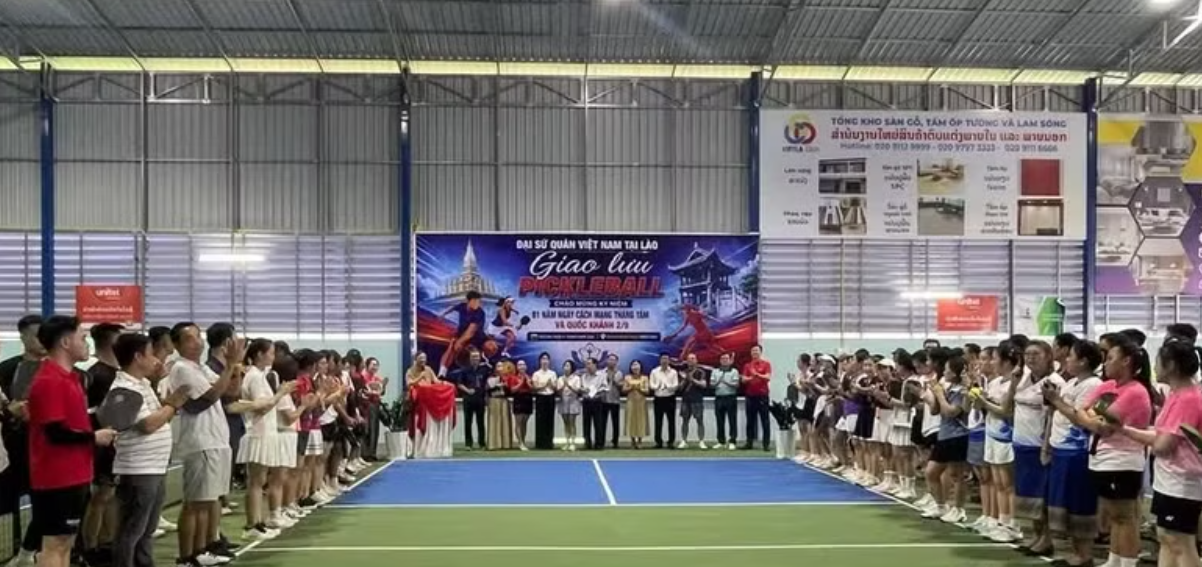
While the momentum is undeniable, dedicated infrastructure remains a work in progress. Many games are currently played on converted tennis or badminton courts, as purpose-built pickleball facilities are still catching up in most Chinese cities. Traditional racquet sports still boast a larger footprint in terms of existing courts and cultural presence.
However, when a sport grows from 80 to 600 tournaments in just two years, backed by national policy and showcased by global icons like Andre Agassi and Steffi Graf at exhibition events, the trajectory is unmistakable. China isn't just embracing pickleball; it's strategically building a comprehensive system around it, poised to become a dominant force in the sport's global future.