
Saudi Arabia is building an F1 circuit unlike anything the world has ever seen. The Qiddiya Speed Park is rapidly taking shape, promising a new era for motorsport, but its towering centerpiece, "The Blade," has ignited a fervent debate among fans: is this radical design a stroke of genius or a dangerous gamble?
Key Points: The Qiddiya Revolution
- Qiddiya Speed Park is under construction, aiming for a 2028 F1 debut.
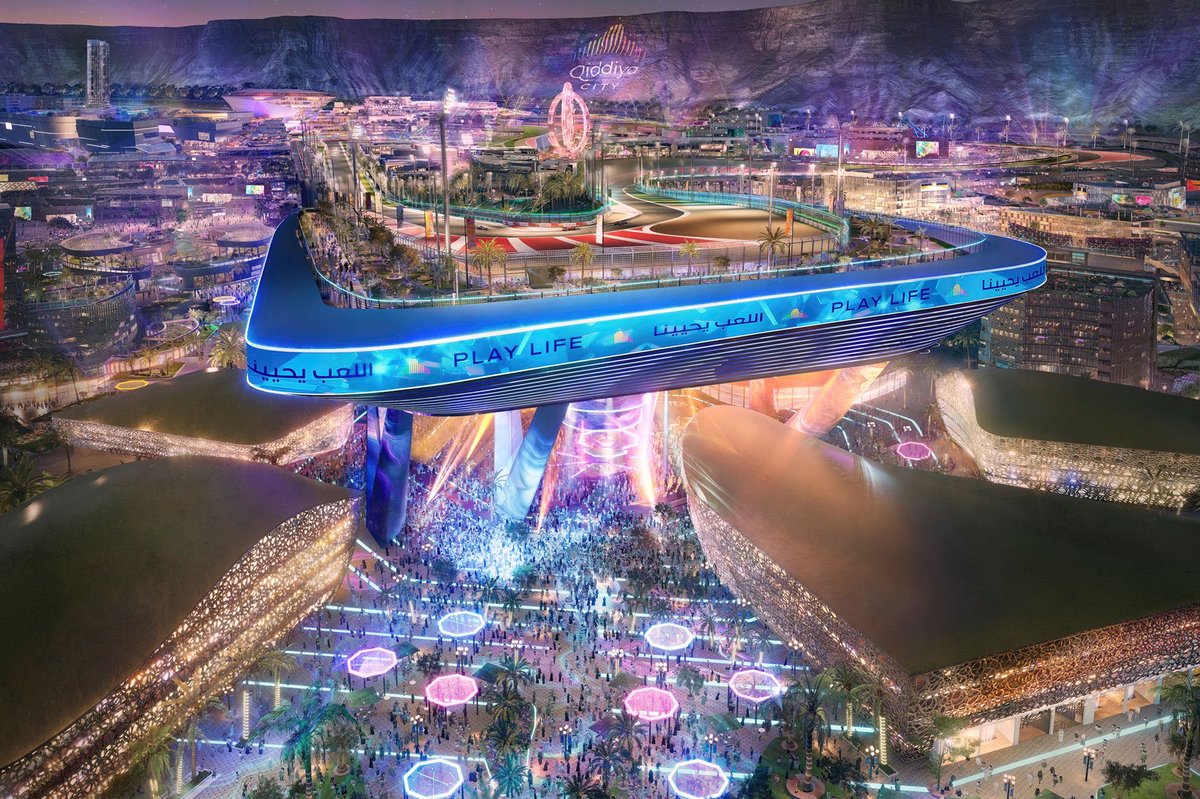
- Its signature feature, "The Blade," is a 70-meter-high (20-storey) banked corner.
- Fan safety concerns are circulating, sparking discussions on track limits.
- Designed by Hermann Tilke and Alexander Wurz, the track promises high-speed thrills.
Saudi Arabia's Ambitious F1 Dream Accelerates
Progress at the Qiddiya Speed Park in Saudi Arabia is nothing short of breathtaking. New images and videos confirm the rapid advancement on what's earmarked to become the permanent home of the Saudi Arabian Grand Prix. This isn't just about a race track; it's part of a colossal entertainment city, including theme parks and golf courses, showcasing a grand vision for the future.
This audacious project is set to redefine what an F1 track can be, with an expected debut in 2028 if current construction timelines hold. The ambition is clear: to deliver a spectacle unmatched anywhere else on the global motorsport calendar.
"The Blade": A Corner That Defies Gravity
At the heart of the Qiddiya Speed Park's innovative design is "The Blade," a first corner unlike any other. Standing an astonishing 70 meters (20 storeys) high, this dramatic left-hand turn has captivated and concerned fans in equal measure. Recent construction images highlight the sheer scale of the support structures required for such an elevated section, underscoring its unique engineering challenge.
The concept alone conjures images of exhilarating speeds and breathtaking views, pushing the boundaries of driver skill and car performance. It's a statement piece, designed to be instantly recognizable and unforgettable.
Fan Frenzy: Are the Safety Worries Valid?
The unveiling of "The Blade's" colossal structure has inevitably led to a wave of online discussion, with many fans voicing significant safety concerns. Comments ranged from "what happens if they fall off?" to worries about massive speed differences on an uphill approach. This isn't surprising given the unprecedented nature of the corner.
However, a closer look at the design details and expert insights offers a counter-narrative. The track's architects, renowned designer Hermann Tilke and former F1 driver Alexander Wurz, are not new to pushing boundaries while prioritizing safety. Supporters point out that "The Blade" is an uphill hairpin, meaning drivers will navigate it at relatively low speeds, similar to Turn 1 at COTA. Furthermore, the presence of extensive runoff areas and multiple catch fences indicates a meticulous approach to driver protection.
Pushing the Limits: A New Era for Motorsport
Beyond "The Blade," the Qiddiya Speed Park track features 21 corners and will run in a counter-clockwise direction, adding another layer of challenge for drivers. Experts predict speeds could reach up to 325 km/h (202 mph) on certain sections, promising a truly high-octane experience.
This isn't just a replacement for the current Jeddah Corniche Circuit; it's a bold declaration of intent. Qiddiya aims to provide a completely fresh perspective on what an F1 race weekend can offer, blending cutting-edge architecture with motorsport's raw thrill. The world waits to see if this audacious vision can deliver on its immense promise.