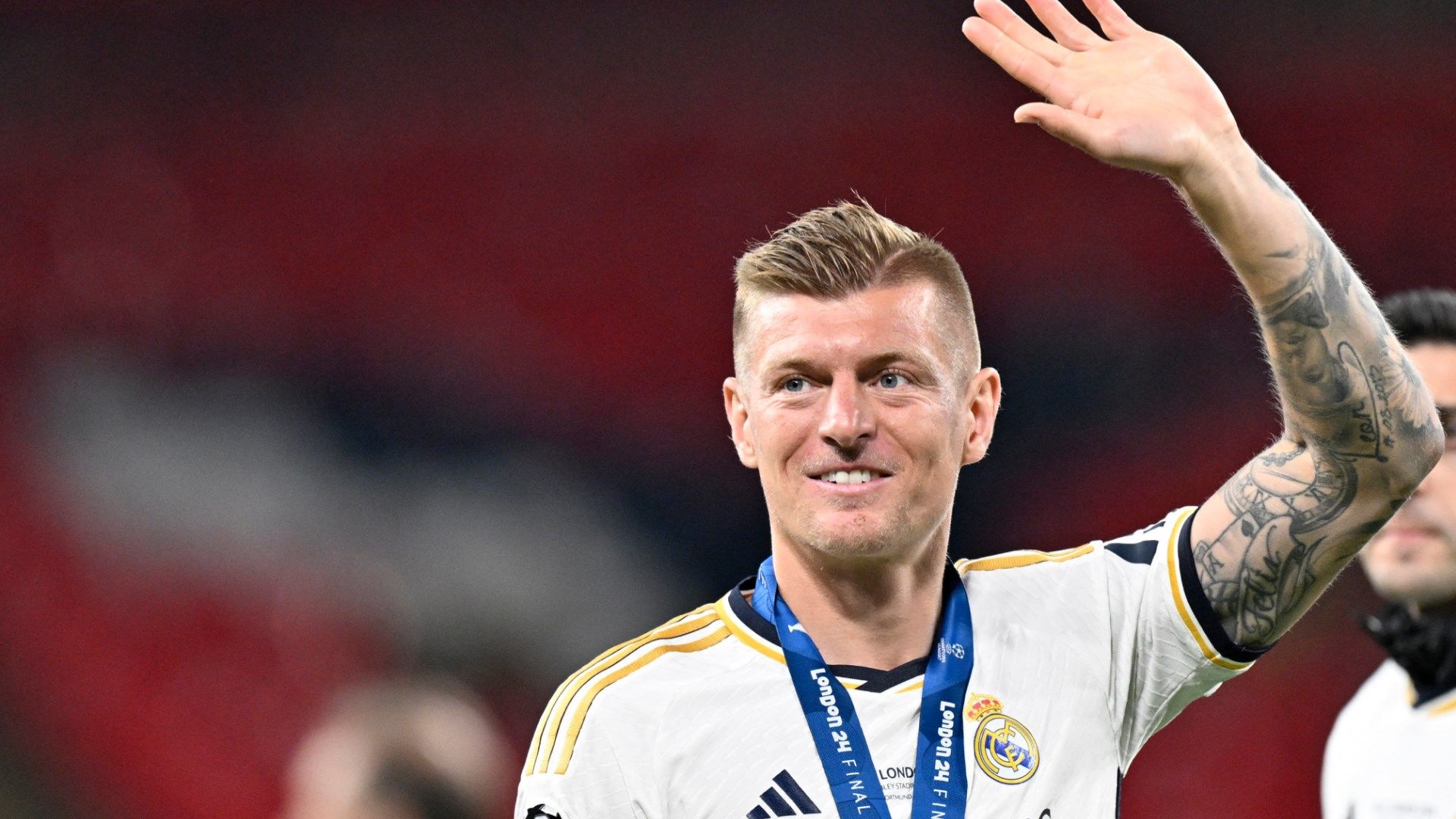

The departure of Toni Kroos has left a gaping, almost unfillable hole in the heart of Real Madrid's midfield. While Los Blancos celebrate another Champions League triumph, the echoes of Davide Ancelotti's insights reveal a tactical shift that could define their next era. The son of head coach Carlo Ancelotti isn't just speaking hypothetically; he's pinpointing a crucial challenge for the reigning European champions.
Key Points:
- Real Madrid faces a significant void following Toni Kroos's retirement, impacting midfield control and tempo.
- Davide Ancelotti emphasizes Kroos's irreplaceable ability to dictate matches and deliver pinpoint passes.
- The current midfield, despite its power, lacks a natural, deep-lying playmaker.
- Manchester City's Rodri is identified as the ideal profile, showcasing the type of player Madrid might eventually seek.
The End of an Era: Unpacking Kroos's Legacy at Real Madrid
When a player of Toni Kroos's caliber steps away, the impact reverberates far beyond the pitch. Davide Ancelotti, a former assistant manager at Real Madrid, articulates this perfectly: the team has lost an "irreplaceable" level of control. For years, Kroos, alongside Luka Modric, orchestrated Real Madrid's rhythm, ensuring every forward run was met with a perfectly weighted pass.
Ancelotti stresses that losing Kroos means losing "something that you will never get back." His assertion isn't hyperbole; Kroos was the ultimate tempo-setter, a midfield general who owned the match. He not only dictated the pace but also covered significant ground, blending technical mastery with defensive intelligence, often running 11 kilometers per match.
Madrid's Midfield Conundrum: Power vs. Precision
Real Madrid's current midfield boasts an incredible array of talent: Jude Bellingham, Federico Valverde, and Aurélien Tchouaméni. These are powerful, dynamic players, capable of dominating physically and making decisive runs. Yet, as Davide Ancelotti keenly observes, they "lack a natural dictator in the middle of the park."
The challenge is clear: without a deep-lying playmaker like Kroos, the seamless connection between defense and attack, where "every movement into space was followed by a ball arriving there," is harder to achieve. Verticality, Ancelotti points out, isn't just about runners; it's about the maestro who can launch them precisely.
The Rodri Blueprint: A Glimpse into the Future?
When pressed on potential solutions, Davide Ancelotti didn't shy away from naming a specific player profile that would fit seamlessly. He highlighted Manchester City's Rodri as the "special player" who could thrive anywhere. This isn't about finding a carbon copy of Kroos, which Ancelotti admits is impossible, but rather identifying the type of player who can restore that crucial balance.
Rodri's ability to control possession, break up play, and distribute with immense accuracy embodies the qualities Real Madrid might need to reintegrate into their tactical DNA. It’s a clear indication of the strategic thinking required to evolve after a legend's departure.
Charting a New Course: Ancelotti's Next Tactical Challenge
Carlo Ancelotti and his coaching staff now face the monumental task of reshaping Real Madrid's midfield identity. The days of relying on Kroos's metronomic passing to dictate high-stakes matches are over. This means shifting the creative burden and tactical responsibility onto the existing crop of midfielders, encouraging greater collective intelligence in possession.
Real Madrid will undoubtedly remain competitive, known for their resilience in crucial moments. However, the true test will be how they adapt their tactical blueprint. Whether through internal development, strategic adjustments, or a future dip into the transfer market for a Rodri-esque talent, Los Blancos must find a new rhythm to continue their reign at the pinnacle of European football.