

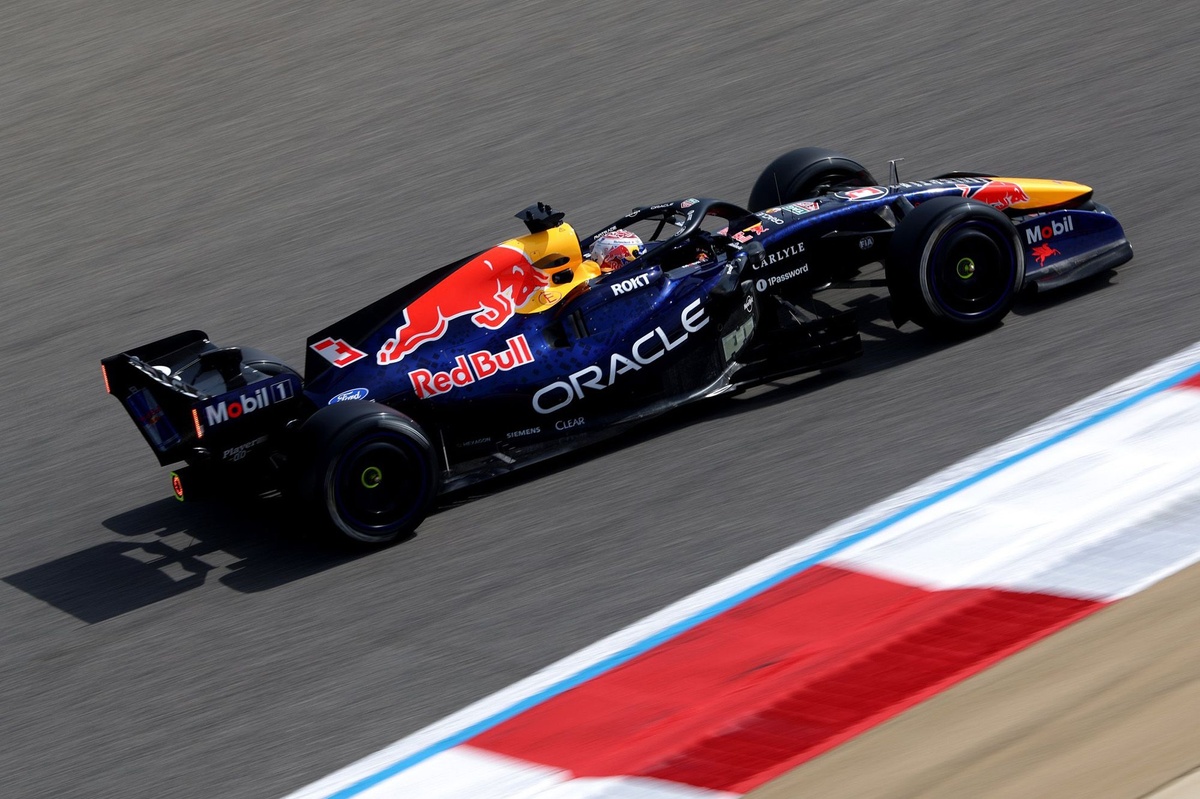

The battle for Formula 1 supremacy in 2026 just heated up dramatically, with an unexpected admission from a fierce rival sending shockwaves through the paddock. Mercedes boss Toto Wolff has declared the new Red Bull-Ford F1 engine the "benchmark" after its impressive performance in Bahrain testing. This stunning revelation shifts the narrative dramatically, positioning Red Bull's homegrown power unit as an early frontrunner.
Key Takeaways from Bahrain Testing
- Mercedes F1 team principal Toto Wolff publicly praised the Red Bull-Ford engine's early performance.
- The DM01 power unit, developed by Red Bull Powertrains with Ford, demonstrated exceptional reliability and performance.
- Wolff specifically highlighted Red Bull's superior energy deployment on straights over consecutive laps as a key differentiator.
- This early assessment from a rival magnifies the challenge for all teams heading into the 2026 F1 regulations.
Wolff's Shocking Revelation: Red Bull-Ford Sets the Bar
In a move that caught many off guard, Toto Wolff, the outspoken leader of Mercedes-AMG Petronas F1 Team, offered high praise for his rivals. He openly stated, "The car, the power unit are the benchmark at the moment I would say." This isn't just a casual remark; it's a stark acknowledgment of Red Bull's significant progress. With Max Verstappen topping the morning session during Bahrain testing, the combination of their formidable driver and this new power unit is proving to be a potent force.
Red Bull's Homegrown Power Unit: From Concept to Contender
The journey for Red Bull Powertrains has been an audacious one. Following Honda's initial decision to withdraw from F1, Red Bull committed to developing its own engines in-house. This ambitious project, spearheaded by then-CEO Christian Horner, eventually saw a landmark partnership with Ford, establishing Red Bull Ford Powertrains. They strategically poached top talent from established engine manufacturers, including some from Mercedes, signaling their serious intent.
Unpacking the DM01: Reliability Meets Raw Force
Initial skepticism was high; building a competitive F1 power unit from scratch is an immense challenge. However, the DM01 – named in homage to Red Bull's late chairman Dietrich Mateschitz – defied expectations. Early shakedowns in Barcelona revealed remarkable reliability straight out of the box. Now, in Bahrain, the V6 engine and its intricate hybrid deployment system are showcasing not just robustness, but genuine performance.
The Crucial Edge: Energy Deployment
Wolff's assessment honed in on one critical area: energy deployment. "Look at the energy deployment today," he urged, "They are able to deploy far more energy on the straights than everybody else... over consecutive laps." This isn't about a single hot lap; it's about sustained power delivery, which is paramount for race pace and overtaking. The fact that this advantage was observed over "10 consecutive laps" underscores a profound engineering achievement. This advanced deployment capability also benefits the sister team, Racing Bulls, signaling a wider impact on the grid.
Mercedes' Reality Check: Dispelling the Hype
Prior to Bahrain, a buzz surrounded Mercedes-powered teams, with whispers of a "compression ratio trick" giving them an edge. Wolff was quick to temper these expectations. He dismissed the hype as "overblown," asserting, "I think everybody was a little bit too excited about the performance of the Mercedes engine-powered teams. And I think that our colleagues from the other brands have been carried away a little bit, that this could be embarrassing, which I don't think it is at all." His pivot to praising Red Bull serves as a powerful counter-narrative, bringing a dose of reality to the pre-season chatter and setting a clear new benchmark for 2026.