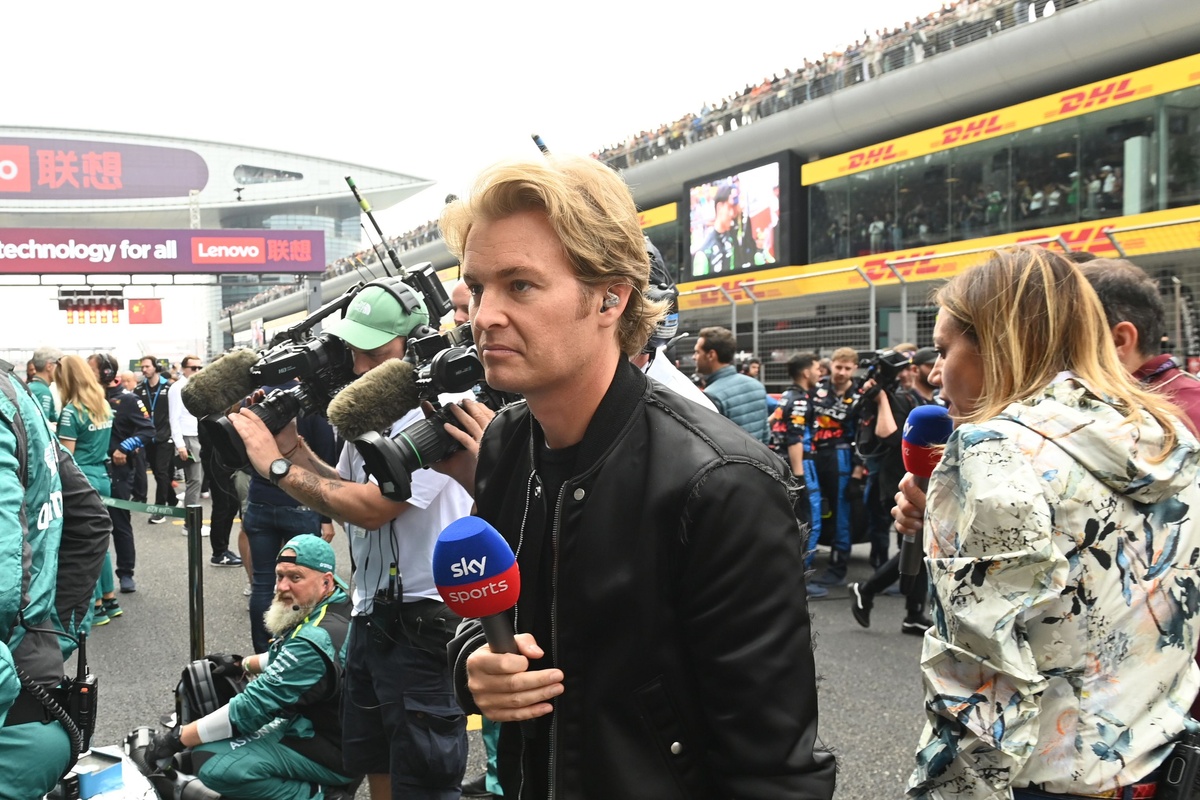

The Formula 1 world is buzzing, and it's not just about the incredible racing! Lando Norris was undeniably robbed of a potential victory at the Spanish Grand Prix, a cruel twist of fate handed down by an ill-timed Virtual Safety Car (VSC). Now, 2016 champion Nico Rosberg is stepping up, demanding a major overhaul to prevent such injustice from ever happening again.
Key Points: Rosberg's F1 VSC Call
- Nico Rosberg proposes significant F1 VSC rule changes.
- Lando Norris saw a likely Spanish Grand Prix victory slip away due to VSC timing.
- Proposed solutions include closing the pitlane or drastically reducing VSC pitlane speed.
- The aim is to eliminate the unfair advantage some drivers gain during VSC periods.
The Madring Mayhem: How a VSC Derailed Norris' Charge
It was a race weekend that promised so much for McLaren ace Lando Norris at the inaugural Spanish Grand Prix at the Madring circuit. Starting from a hard-fought pole position, Norris quickly established a commanding lead over his rivals, including Mercedes' Kimi Antonelli. The win seemed within his grasp.
Then came the moment of controversy. A Virtual Safety Car was deployed to recover Lance Stroll's stranded Aston Martin. Crucially, Norris had just passed the pit entry, leaving him unable to dive in for a 'cheap' pit stop like his competitors.
This ill-fated timing allowed drivers like Antonelli and Red Bull's Max Verstappen to make their stops under the reduced speed conditions, losing significantly less time than they would under green flag racing. Norris was forced to continue, only to emerge from his eventual stop well behind, ultimately finishing a heartbreaking third.
Rosberg's Radical Fix: Leveling the Pitlane Playing Field
Speaking on Sky Sports' The F1 Show, Nico Rosberg didn't mince words. While acknowledging the inherent luck factor in VSC deployments, he emphasized the unfairness of the specific scenario that cost Norris. "It's always horrible when that happens because he deserved to win," Rosberg stated emphatically.
The former champion laid out two compelling proposals to rectify the situation. His primary suggestion? Close the pitlane entirely during a Virtual Safety Car period. This would immediately remove any opportunity for a strategic advantage based on track position relative to the pit entry.
Alternatively, Rosberg suggested a drastic reduction in the pitlane speed limit during a VSC. The core issue, he explained, is the disproportionately small time loss incurred during a VSC pit stop compared to a regular one. Slowing cars down significantly in the pitlane would effectively equalize the time lost, ensuring no driver gains an unfair strategic edge.
Why the VSC Creates Unfair Advantages
The VSC was introduced to improve safety and avoid the often-processional racing behind a full Safety Car. It works by forcing drivers to maintain a delta time, effectively slowing the entire field down in a controlled manner. However, this system inadvertently creates a unique strategic loophole.
When cars on track are driving slowly, the relative time lost during a pit stop – typically involving entering the pitlane, changing tires, and exiting – becomes much smaller. Drivers who happen to be near the pit entry when a VSC is called can capitalize on this, gaining track position over those who are further down the lap or have just passed the entry. It's a gamble, but one with potentially race-winning consequences, as Norris painfully discovered.
The Path Forward: What's Next for F1 Regulations?
Rosberg stressed that the VSC remains a valuable tool for race safety and minimizing boring laps. His proposals aren't about eliminating it, but rather refining its implementation to maintain sporting fairness. The debate will undoubtedly spark discussions within the FIA and among teams.
Ensuring that every driver has an equal chance, regardless of their position on the track when a safety intervention occurs, is paramount for the integrity of the sport. The Norris incident at Madring has highlighted a flaw that needs addressing, and Nico Rosberg's powerful advocacy could be the catalyst for meaningful change in Formula 1's rulebook.