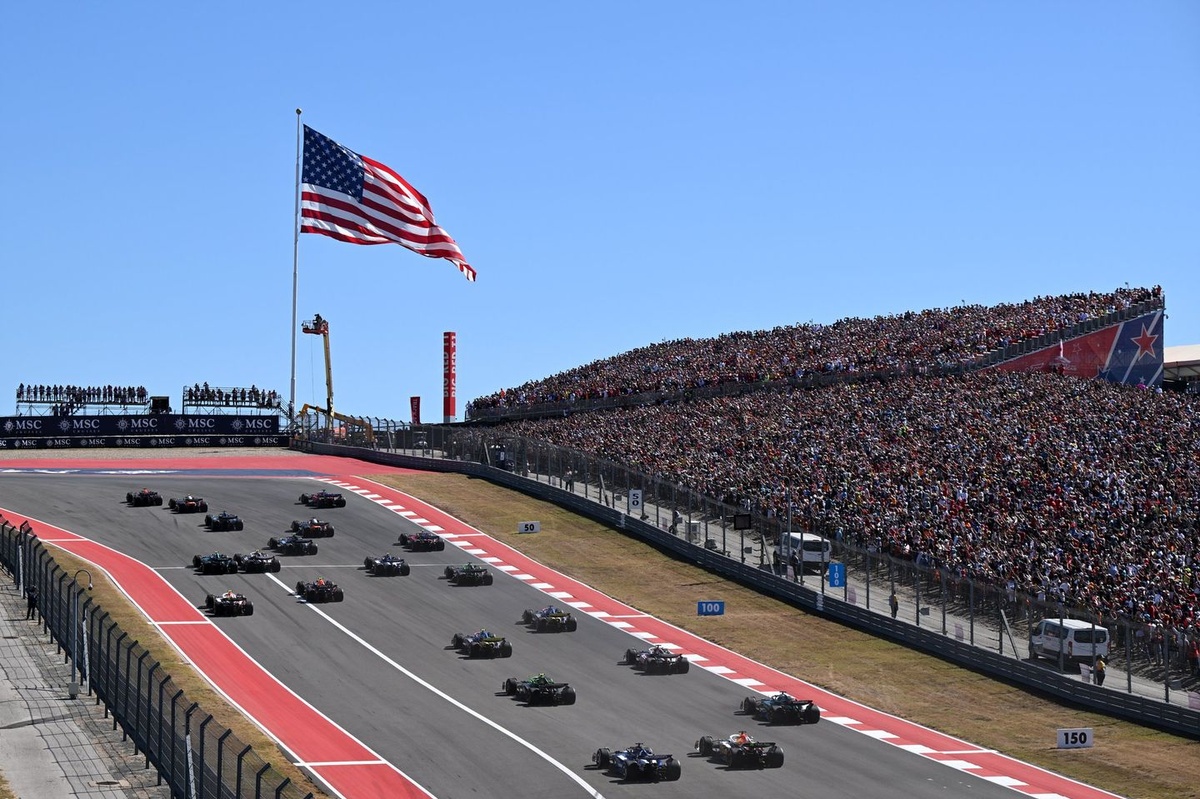

The gladiators of Formula 1 push their machines to the absolute limit, but a growing chorus of drivers, led by George Russell, is demanding better battlegrounds. The state of F1 track resurfacing has become a hot topic, particularly after reigning champion Max Verstappen's scathing remarks about the notorious bumps at the Circuit of the Americas (COTA).
- George Russell advocates for Formula 1 tracks to be resurfaced every couple of years for consistency and safety.
- Max Verstappen voiced extreme concern over COTA's bumps, fearing "a new spine" would be needed post-race.
- Modern F1 cars, with their ultra-low ride heights and 18-inch tires, are exceptionally sensitive to track imperfections.
- The issue extends beyond COTA, affecting multiple circuits on the challenging 24-race calendar.
The Bumpy Road Ahead: Verstappen's COTA Outcry
COTA has long held a reputation as one of the bumpiest circuits on the Formula 1 calendar. However, Max Verstappen was left genuinely alarmed after witnessing the demands placed on cars and drivers during a World Endurance Championship race there. His candid reaction speaks volumes about the driver experience.
"Oh my God, I probably need to order a new spine after the weekend, or become like Robocop. Crazy," Verstappen quipped, highlighting the severe physical toll these imperfections exact. It’s a stark reminder that even the most elite athletes feel the impact of compromised surfaces.
Russell's Resurfacing Rally: A Call for Consistency
Responding to Verstappen's comments, Mercedes driver George Russell didn't shy away from confirming the severity of COTA's bumps. Yet, he quickly broadened the scope, arguing that this isn't an isolated incident. Ageing asphalt across the entire F1 calendar is creating inconsistent and potentially dangerous conditions.
"My general view is F1 tracks probably need to be repaved every couple of years just to make it a bit more consistent," Russell declared. He emphasized that deteriorating tarmac, which can literally come apart, poses significant issues for both car performance and driver safety. For a sport predicated on precision, unpredictable surfaces are a major headache.
The Ultra-Low Ride Height Dilemma
Unlike categories such as IndyCar or F2, which operate with considerably higher ride heights, Formula 1 cars are engineered to run incredibly close to the ground. Russell highlighted this critical distinction: "Our ride height’s 10mm at the end of the straight, a centimetre from the ground, so any tiny bump you really feel it." This wafer-thin clearance transforms minor undulations into jarring impacts for the drivers.
The 18-Inch Tire Impact
Compounding the low ride height issue is the shift to 18-inch tires. While the overall circumference remains similar, the larger rim size drastically reduces the tire's sidewall. This change has stripped away a crucial element of the car's passive suspension, meaning the tires now offer far less damping against track imperfections. What was once a 'damper' is largely gone, leaving drivers more exposed than ever.
Beyond COTA: A Calendar-Wide Challenge
The problem of deteriorating track surfaces isn't confined to a single venue. Recalling the Monaco Grand Prix, incidents involving Lance Stroll and Charles Leclerc at Turn 19 raised questions about the track's integrity. While both drivers attributed issues to their cars, many observers couldn't help but link the crashes to the visibly damaged asphalt. This pattern suggests a systemic need for improved maintenance across the sport's global venues.
Mercedes' Pursuit of Performance Amidst the Bumps
As teams like Mercedes continually push for marginal gains, battling unpredictable track conditions adds another layer of complexity. George Russell confirmed that Mercedes would be running their latest upgrade package in Austin, noting it required "a bigger set-up adjustment than we first anticipated." These adjustments are crucial for optimizing performance, but rough tracks force engineers into compromises that could hinder a car's true potential.