

The Rough Start: A Racer's Dream Derailed
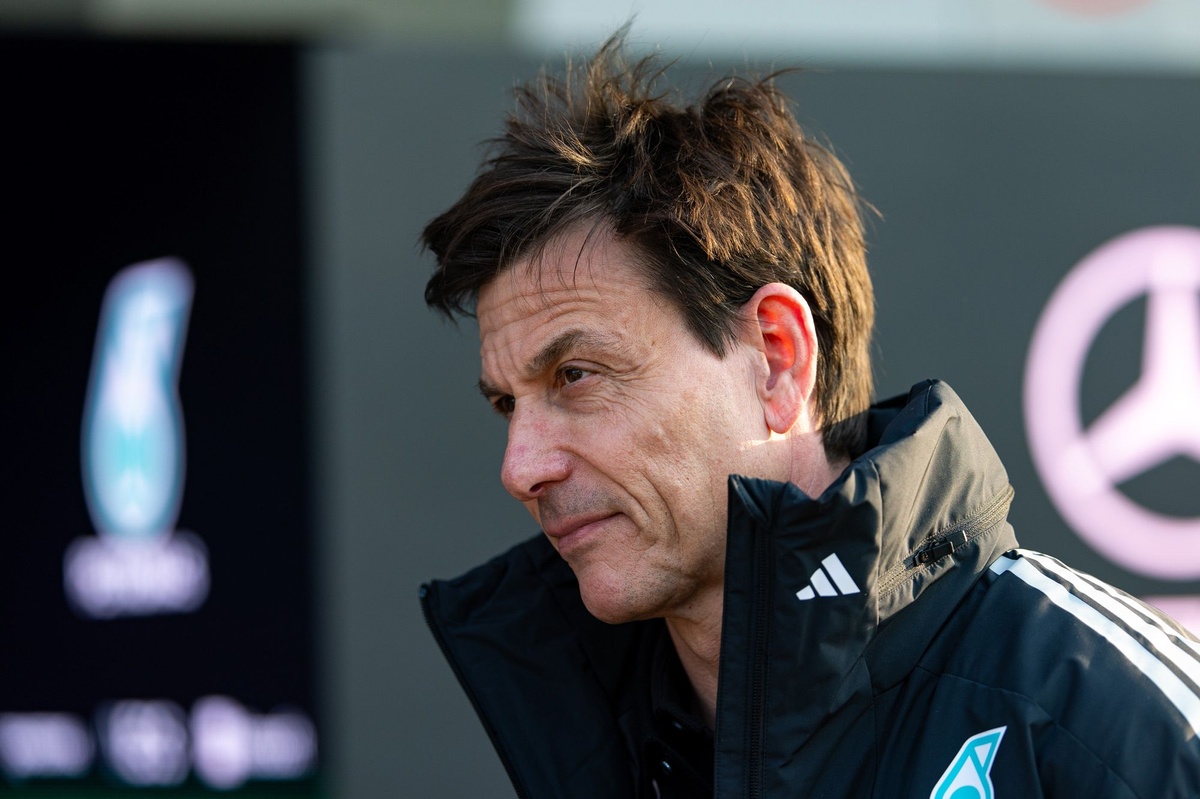
Born Torger Christian Wolff, the Austrian's early life was marked by a fervent passion for motorsport. He competed in Austrian and German Formula Ford, even financing his endeavors by working as a driving instructor at the Red Bull Ring – an ironic twist given his future rivalries.
However, a stark realization hit early: he lacked the raw talent to make it as a top-tier driver. This pivot was crucial, as Wolff shifted his focus from the cockpit to the boardroom.
The Business Acumen That Built an Empire
Dropping out of the University of Vienna, Wolff plunged into banking, eventually becoming a venture capitalist specializing in start-ups. This led to the founding of his investment firm, Marchfifteen, in 1998, capitalizing on the booming internet era. A subsequent firm, Marchsixteen, followed in 2004.
Through Marchsixteen, Wolff acquired a minority stake in HWA AG, a company founded by AMG co-founder Hans Werner Aufrecht. HWA managed Mercedes' DTM program, providing Wolff with his first significant entry into professional motorsport management.
From Investor to F1 Boardroom
His renewed involvement in racing, though no longer as a competitive driver, deepened his connections. In 2009, a pivotal encounter with Frank Williams led to Wolff's investment in the iconic Williams Formula 1 team.
He quickly joined its board of directors, ascending to Executive Director by 2012. This period saw Williams achieve a memorable victory with Pastor Maldonado at the 2012 Spanish Grand Prix, a testament to the early impact of Wolff's strategic mind.
Seizing the Silver Arrows Opportunity
Mercedes had returned to Formula 1 as a works team in 2010, but despite bringing back seven-time world champion Michael Schumacher, success remained elusive. The team, built on the foundations of the championship-winning Brawn GP, struggled to reach its potential.
Recognizing the need for a paradigm shift, Mercedes sought fresh leadership. Legendary Niki Lauda played a crucial role, not only in persuading Lewis Hamilton to join but also in identifying Wolff as the man to steer the ship.
The Billion-Euro Bet That Paid Off
Initially approached to analyze Mercedes' shortcomings, Wolff was then offered a top job. He candidly declined due to his significant stake in Williams.
Mercedes' counter-offer was audacious: a 40% ownership stake in the team. Wolff ultimately negotiated a 30% share, with Lauda taking 10%. At the time, the team was valued at less than €250 million – a staggering contrast to its current multi-billion-euro valuation.
Architect of an Unrivaled Dynasty
What followed Wolff's arrival in 2013 is etched into Formula 1 history. From 2014 onwards, coinciding with the new hybrid V6 power unit regulations, Mercedes became an unstoppable force.
With the strongest engine on the grid and Lewis Hamilton at the peak of his powers, the Brackley-based team secured an astonishing 15 world titles (drivers' and constructors') between 2014 and 2021.
Beyond the Track: A Legacy of Wealth and Vision
This era of unparalleled dominance, coupled with Liberty Media's transformative takeover of Formula 1, sent Mercedes' value skyrocketing. The team is now estimated to be worth an astounding €5.2 billion.
Wolff remains a substantial owner with a 33% stake. His entrepreneurial spirit hasn't waned; he also holds a 1% share in Aston Martin Lagonda and continues to invest in ventures like BBR Rallye Racing and a sports management company co-owned with Mika Hakkinen, representing drivers such as Valtteri Bottas.
His personal net worth is projected to reach an incredible €2.3 billion by 2026. Yet, for Wolff, one moment stands out: the 2014 Austrian Grand Prix. At the very circuit where he once started with nothing, Mercedes and Williams – both teams he had invested in – locked out the top four positions. A true full-circle triumph.