
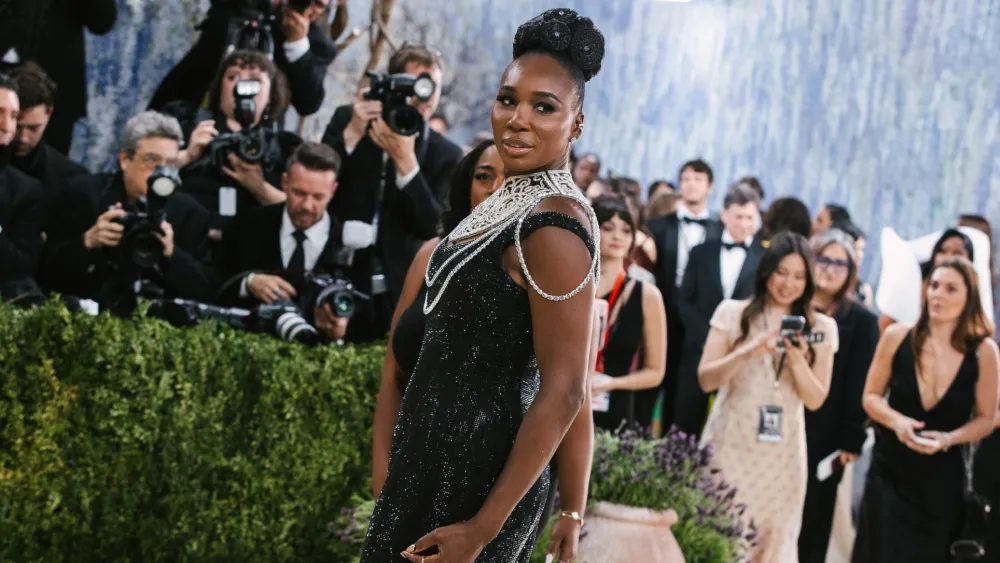

Venus Williams turned the 2026 Met Gala into more than a fashion moment, using her platform to draw attention to a major issue in sport: the lack of research focused on female athletes.
As a co-chair of the event, the seven-time Grand Slam champion arrived with a message built into every detail of her outfit, highlighting how women in sport remain underrepresented in sports science research.
Her look, designed under the “Costume Art” theme, featured a gown embellished with over 4,000 Swarovski crystals. The design drew inspiration from artist Robert Pruitt and his 2022 portrait of Williams, which depicts a symbolic conversation between her younger and older self.
One of the most striking elements was her jewellery, which spelled out “6%”. The number represents a key statistic: only 6% of global sports science research is focused specifically on women.
Williams also wore a silver necklace set with 3,800 stones, designed as a tribute to the Venus Rosewater Dish, the trophy awarded to the Wimbledon women’s singles champion at Wimbledon Championships.
The overall look was created in collaboration with Swarovski Global Creative Director Giovanna Engelbert and was intended to translate Pruitt’s artwork into a wearable statement piece that blended sport, art and advocacy.
Beyond fashion, Williams used the moment to support a wider initiative in women’s sport. She is an ambassador for Gatorade’s “Body of Science” programme, a long-term research project led by the Gatorade Sports Science Institute aimed at closing the gender data gap in athletic performance.
The initiative focuses on areas such as hydration, nutrition, injury prevention, and how female physiology changes across life stages including menstruation, pregnancy and perimenopause. More than 500 female athletes have already contributed to the research.
Speaking about the project, Williams said the goal is to improve conditions not just for current athletes but for future generations. She emphasised that much of existing sports science has historically been based on male data, leaving women underrepresented in performance research.
The Met Gala appearance ultimately reinforced Williams’ role beyond tennis, positioning her as a leading voice in pushing for structural change in how women’s sport is studied, supported and understood.