

A Sudden Spark
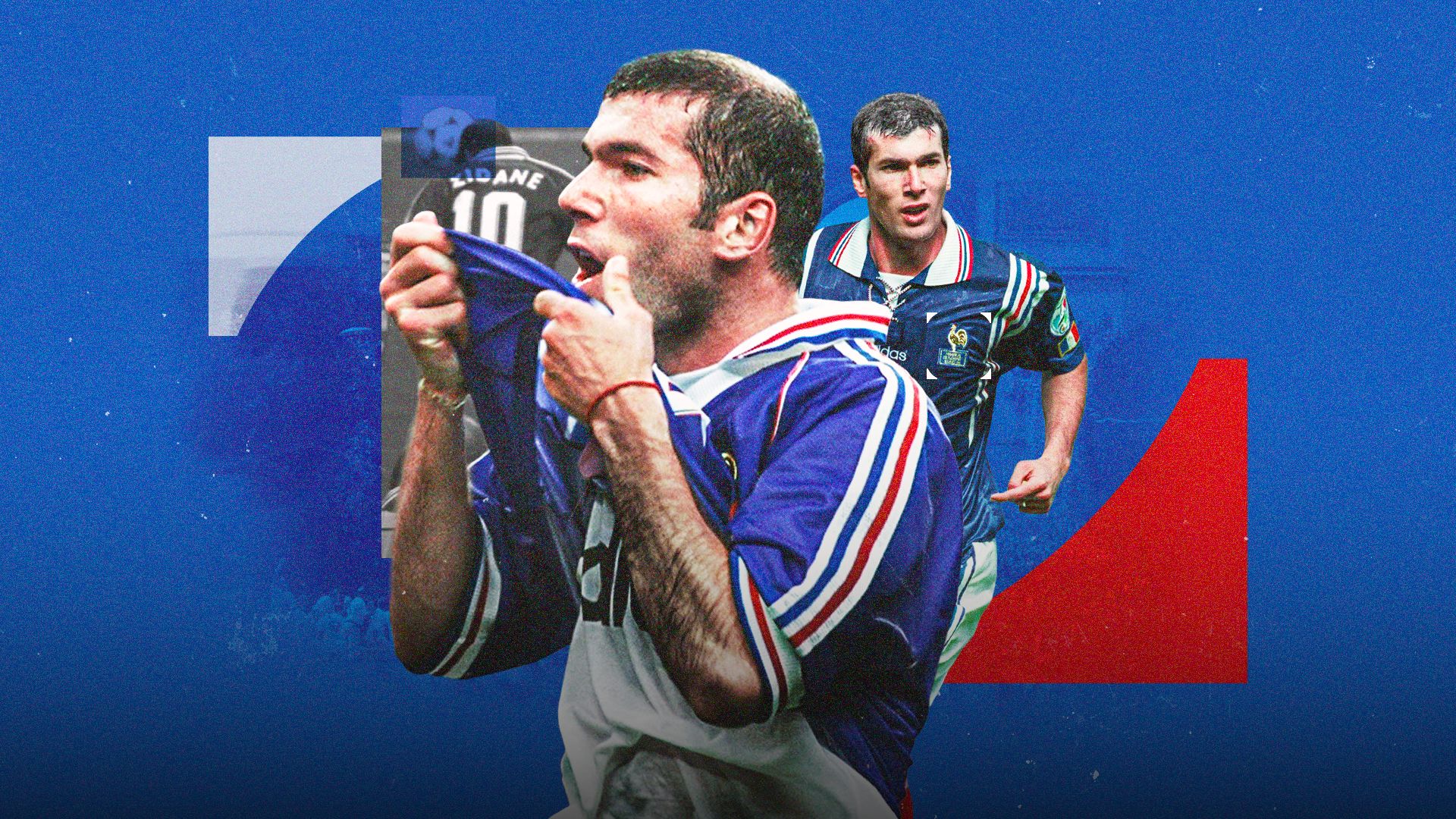
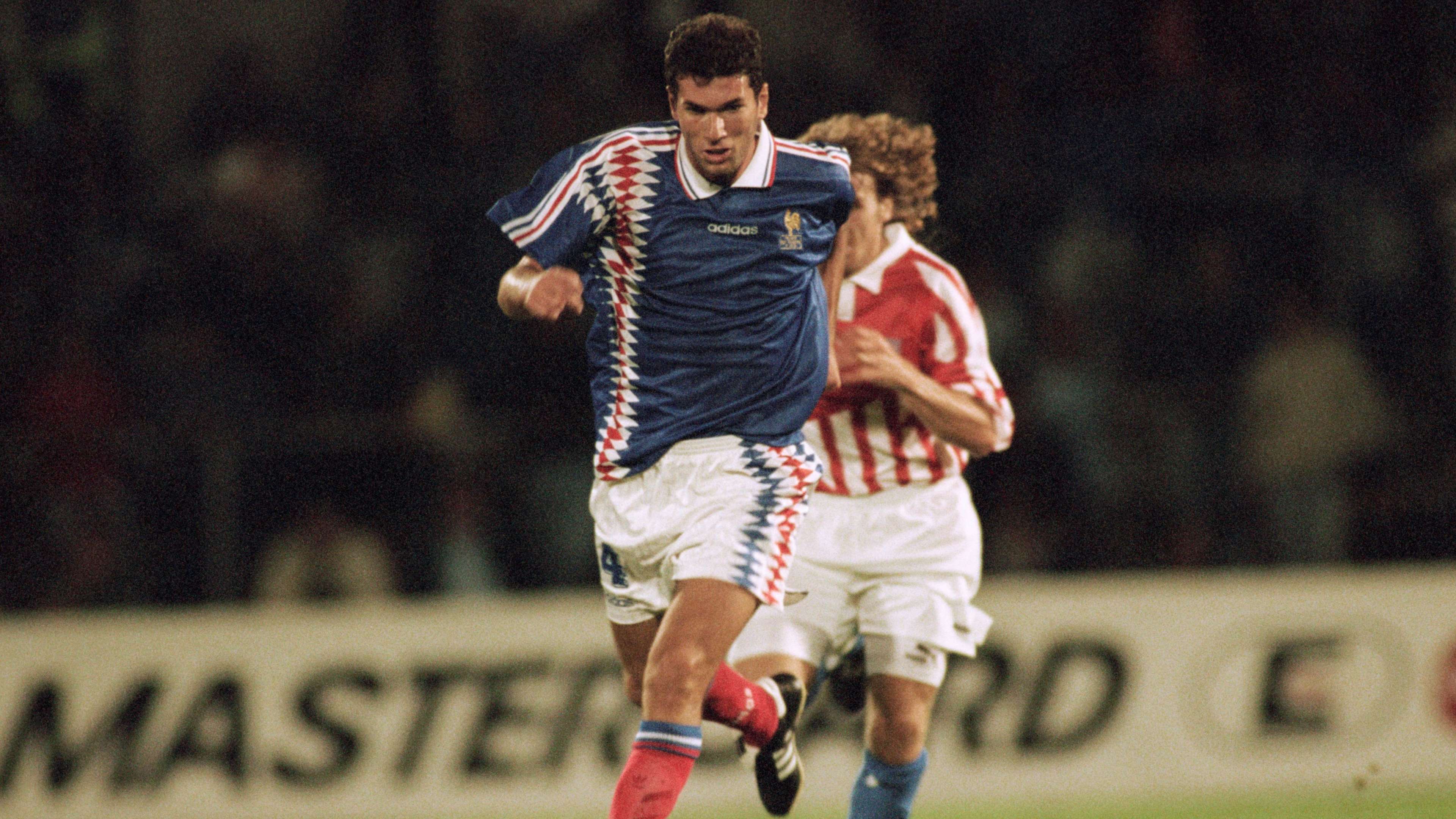
Zinedine Zidane's entry into the French national team was almost by chance. A last-minute call-up for a friendly against the Czech Republic, prompted by an injury to Youri Djorkaeff and the convenience of the match being in his club city of Bordeaux, set the stage for his debut. He stepped onto a team still dominated by figures like Eric Cantona, a stark contrast to the young man whose almost anachronistic elegance seemed to float above the prevailing malaise of French football.
His debut was spectacular. A two-goal brace ignited immense hope across a nation yearning for a successor to Michel Platini. Zidane was hailed as the saviour capable of healing the wounds of past traumas. Yet, manager Aimé Jacquet, far from the public euphoria, remained cautious. Despite the blistering introduction, Zidane soon found himself back on the bench for subsequent matches. Jacquet's message was clear: individual brilliance, however dazzling, must integrate into the collective project. The media, while acknowledging his talent, still saw him as raw, far from a captain. The immense expectations of immediate salvation would prove both a blessing and a burden.
From Promise to Peril
Following his sensational debut, Zidane struggled to find consistency for Les Bleus. His performances often lacked the profound influence expected, leading to descriptions of a "squandered talent" as early hope gave way to public disenchantment.
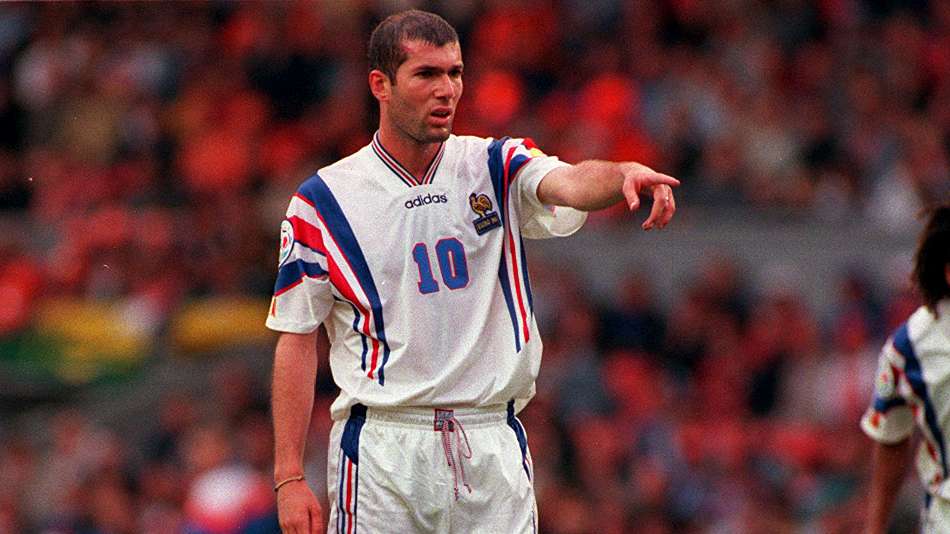
Euro '96 in England was meant to be Zidane's coming-out party as the technical leader of the team. Instead, he delivered a series of anonymous, almost ghostly performances, becoming a symbol of the team's struggles and, for the international press, a major flop. France progressed to the semi-finals on the back of an ironclad defence, but their playmaker's contribution was minimal, deepening doubts about his capacity to carry the team.
What few knew at the time was that Zidane was playing through immense pain. Shortly before the tournament, he was involved in a serious car accident, suffering a severe pelvic contusion and a painful haematoma after hitting the gearstick. He played the entire tournament at far less than 100 percent fitness, transforming what appeared to be a sporting failure into an act of silent courage. Jacquet's unwavering faith, deemed inexplicable by many, was a testament to his deep understanding of Zidane's hidden ordeal.
Jacquet's Vision: Building a World Cup Winner
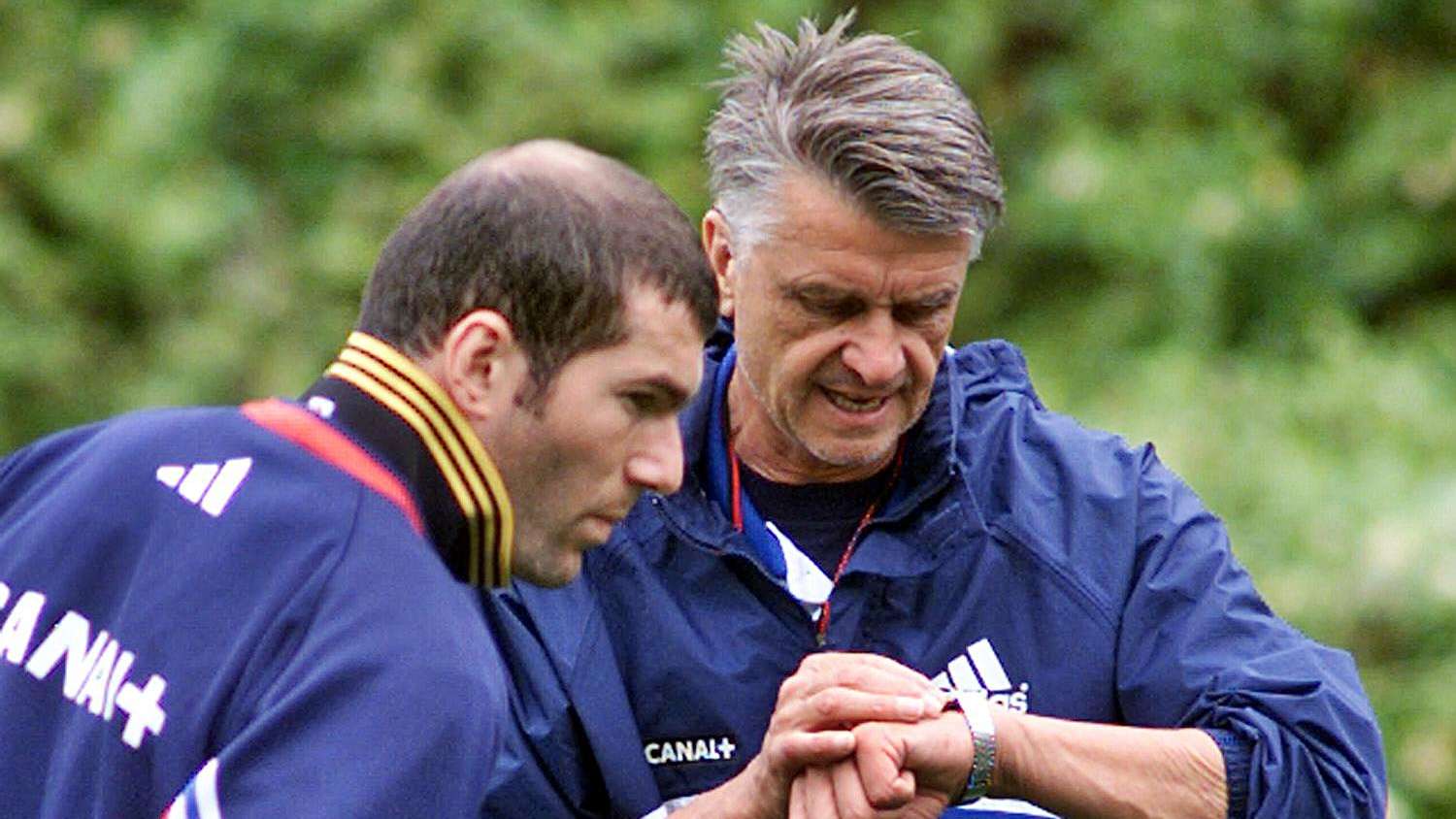
Aimé Jacquet was more than a manager; he was an architect. Taking charge in late 1993, his singular vision was to build a French team capable of winning the 1998 World Cup on home soil. His blueprint eschewed the 'champagne football' of the 1980s in favour of impregnable defensive solidity, iron collective discipline, and meticulous planning.
To execute his plan, Jacquet made the most audacious and controversial decision of his tenure: sidelining the established icons like Eric Cantona, David Ginola, and Jean-Pierre Papin. He believed Cantona's individualistic style didn't fit his system and Ginola disrupted the collective rhythm he sought to impose. This earned him fierce media hostility, accused of killing the beautiful game. Yet, Jacquet stood firm, knowing precisely around whom he wanted to build.
At the heart of this new France was Zidane. Jacquet saw beyond his raw talent, discerning a silent leader capable of elevating those around him. He famously told Zidane, "It's with you that I'll prepare for these competitions." The entire team structure was designed to provide Zidane with the security and freedom needed to flourish. Their bond transcended the professional; it was paternal. Zidane, a sensitive young man, found in Jacquet the mentor he needed. This trust, derided as blind by critics, became the bedrock of the 1998 project. France didn't need a king like Cantona; it needed a conductor like Zidane.
The Perfect Partnership Blooms
On October 11, 1995, in Bucharest, France faced a formidable challenge: a Euro '96 qualifier against a Romania side unbeaten at home for five years. That evening, Jacquet's project truly took shape as Zidane delivered his first masterclass in the blue shirt. He was the catalyst for the 3-1 victory, providing a superb assist for Christian Karembeu and scoring a sumptuous half-volley himself. This match marked his breakthrough as a decisive leader on the international stage.
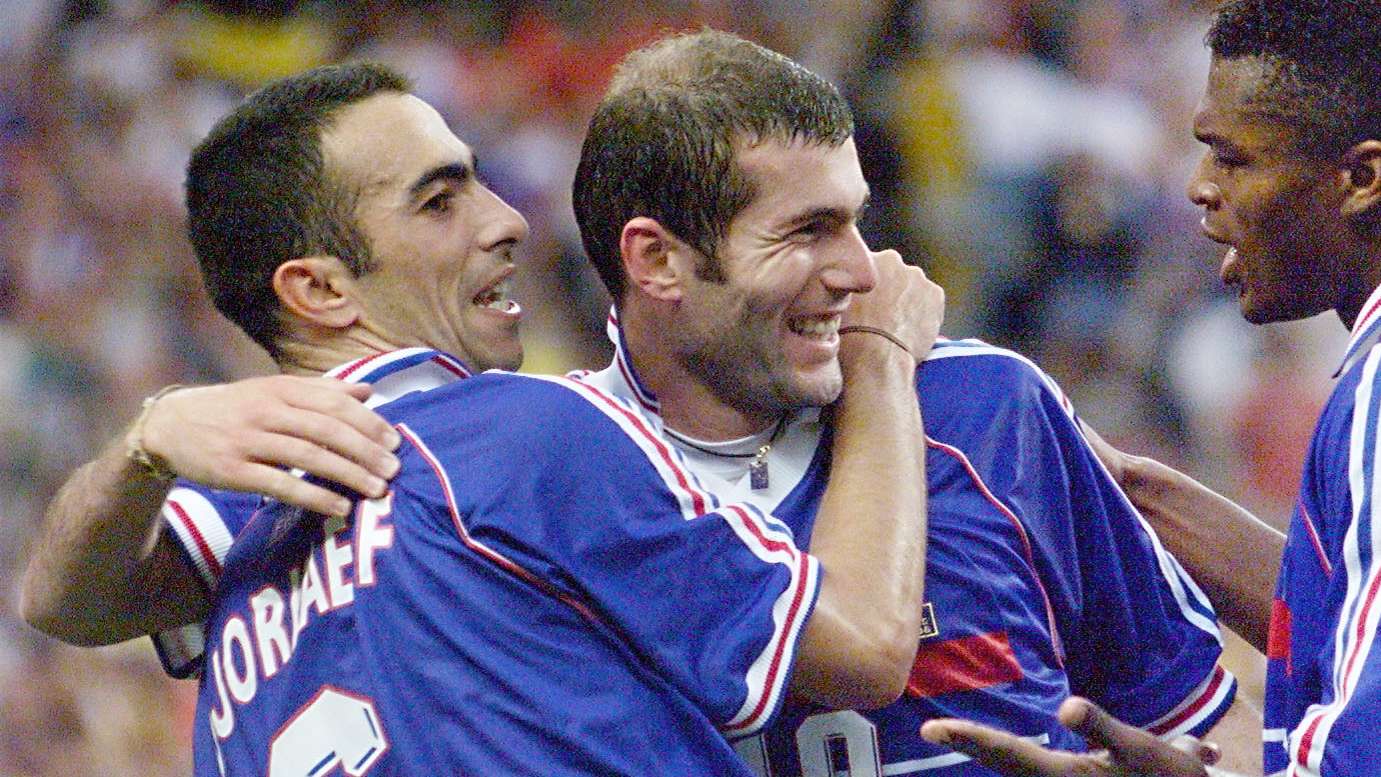
While Romania showcased Zidane's individual brilliance, the team's new creative identity was forged around his burgeoning partnership with Djorkaeff. Jacquet's tactical intuition to build his attacking play around this pair paid dividends, exploding during the historic 10-0 demolition of Azerbaijan in September 1995, a match where they were involved in seven of the goals.
The duo complemented each other flawlessly. In Jacquet's 4-3-2-1 system, Zidane, operating from the wide left, dictated the tempo, while Djorkaeff, in a 'nine-and-a-half' role on the right, was the more direct finisher. Despite media attempts to create a rivalry, the two shared mutual respect, with Zidane later dismissing claims of incompatibility as "nonsense." Between 1995 and 1998, they played 34 matches together for France, winning 25, drawing nine, and never suffering a single defeat. They combined for an incredible 22 goals and 21 assists. This partnership was not just a perfect blend of talents, but a tactical manifestation of Jacquet's philosophy – distributing creative responsibility to avoid over-reliance on a single star, thus preserving the collective balance he so cherished.
The Fall Before the Rise
Zidane did not begin the 1998 World Cup as a conquering hero. His opening match performance against South Africa was decent, marked by an assist, but far from dazzling. France secured a win, but their star hadn't yet truly ignited.
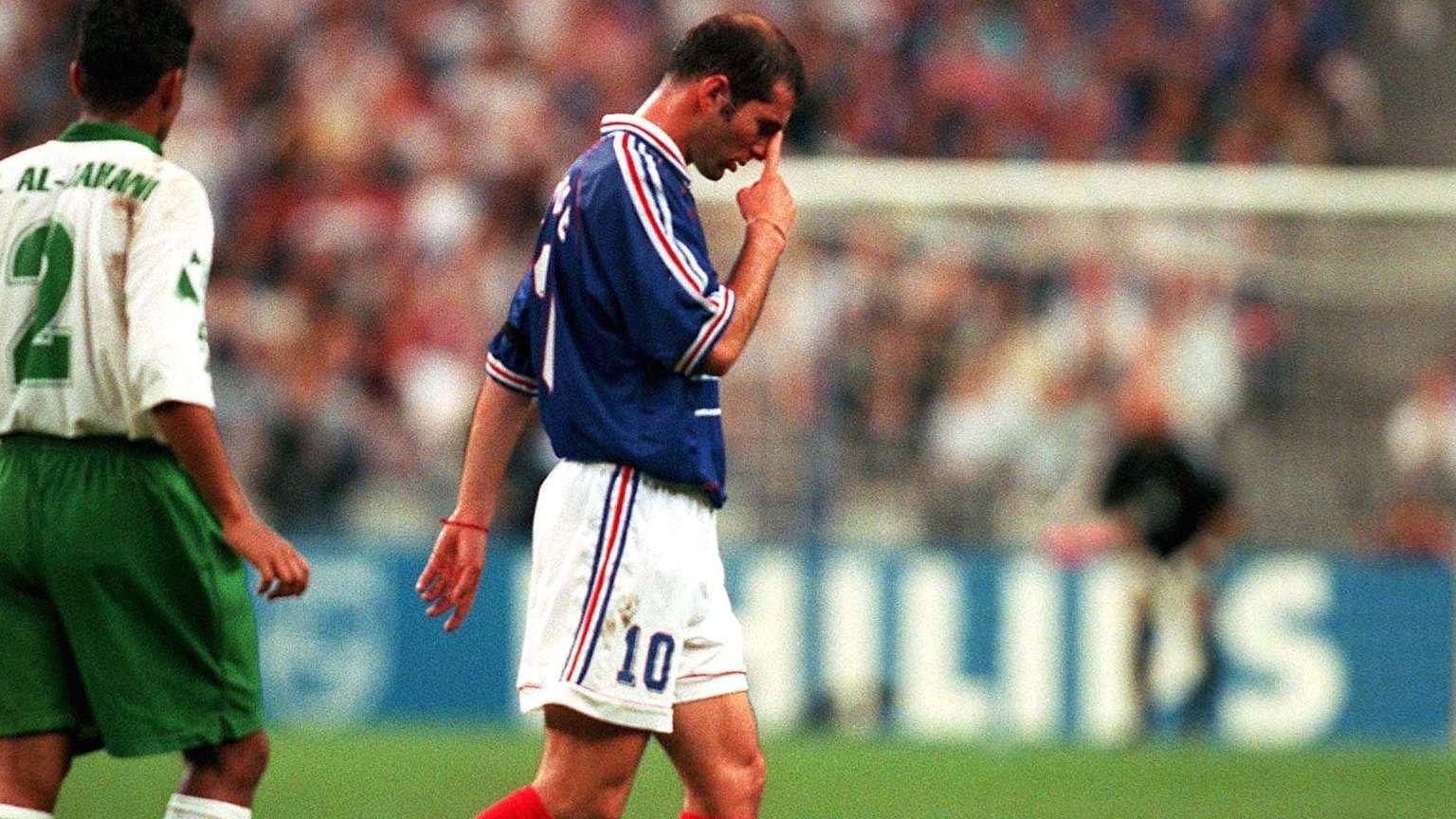
Then, in their second match against Saudi Arabia, everything nearly unravelled. With Les Bleus comfortably leading 2-0, a moment of frustration saw Zidane stamp on Saudi captain Fuad Anwar. The immediate red card revealed a dark aspect of his temperament, making him the first French player ever sent off at a World Cup. Captain Didier Deschamps publicly admonished him, and the two-match ban meant Zidane would miss the final group game and, critically, the round of 16. His position within the squad became extraordinarily precarious.
Against Paraguay in the first knockout round, France laboured against a stubborn defence, their qualification hanging by a thread until Laurent Blanc's 'Golden Goal' in the 114th minute. Had that shot not found the net, the narrative for Zidane would have been entirely different. He would have become the nation's pariah, the scapegoat for a humiliating elimination on home soil. His situation echoed David Beckham's plight in the same tournament, sent off against Argentina and subsequently subjected to a national hate campaign. A single goal separated Zidane from a similar crucifixion.
This trial, this near-disgrace, paradoxically strengthened the French team. It proved their collective character in his absence and perfectly set the stage for his eventual redemption.
The Night Everything Changed
On July 12, 1998, the Stade de France buzzed with anticipation for a coronation, though not necessarily of the hosts. Brazil, the reigning world champions led by the phenomenon Ronaldo, arrived as heavy favourites against France. The atmosphere was electric, charged with the hopes and anxieties of an entire nation, further intensified by Ronaldo's mysterious seizure hours before kick-off. Yet, by full-time, the headlines belonged to one man.
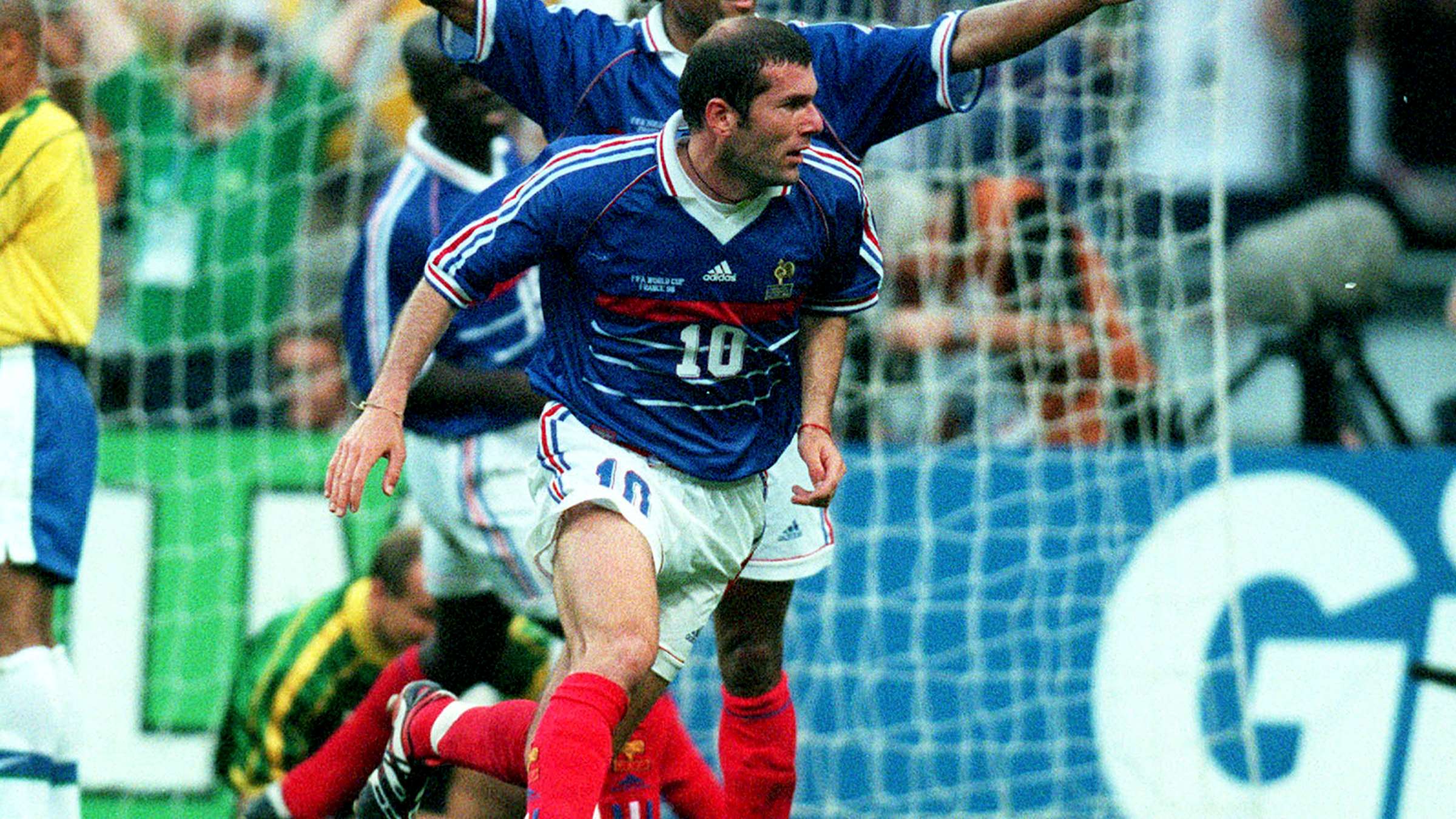
Zidane, back from his suspension, chose this grandest stage to carve his name into legend, doing so with an unexpected weapon: his head. In the 27th minute, from an Emmanuel Petit corner, he rose majestically to catapult the ball into the net, igniting an explosion of sound from the stadium. In first-half stoppage time, the script repeated itself, this time from a Djorkaeff corner, as Zidane once again powered a header home.
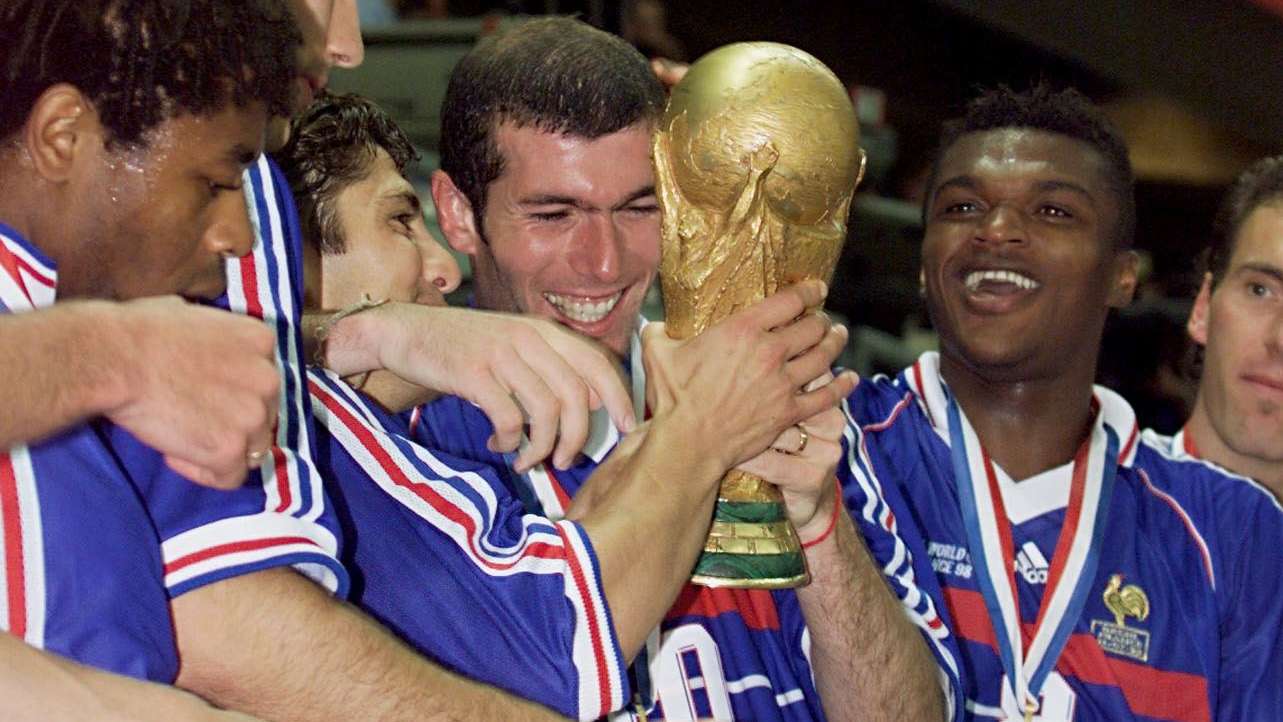
In a span of just 45 minutes, Zidane had decided both the final and his own destiny. The talented but often inconsistent player had transformed into a ruthless leader, delivering his most important performance at the most crucial moment, earning him the Man of the Match award. Petit's late goal sealed a crushing 3-0 victory, securing France's first World Cup triumph. At the final whistle, a wave of jubilation engulfed the country, with over a million people flooding the Champs-Élysées. Zidane's face, projected onto the Arc de Triomphe alongside the words "Merci Zizou," became the symbol of a triumphant, multicultural France.
The very nature of his goals was symbolic. They weren't individual dribbling exploits but the culmination of set-pieces, the ultimate expression of the collective work tirelessly preached by Jacquet. The greatest soloist had achieved glory through the strength and precision of the entire orchestra.
From Shadow to Unquestionable Light
The 1998 victory was not a culmination for Zidane, but a springboard. On that unforgettable night of July 12, the shy and sometimes hesitant player of previous years gave way to a global icon, a leader whose authority and charisma were now unquestionable. As he himself acknowledged years later, "It changed my life, completely." This triumph was the true genesis of his reign.
Under Zidane's majestic leadership, French football entered its golden age. The World Cup was followed by another title at Euro 2000, where Zidane dominated proceedings to be named Player of the Tournament. Even in 2006, having come out of international retirement, it was Zidane who almost single-handedly carried a team nobody expected to reach the World Cup final, proving his phenomenal and enduring influence.
Zidane’s legacy extends far beyond the football pitch. The son of Algerian immigrants, raised in the La Castellane estate in Marseille, his triumph became a powerful symbol for a multicultural France searching for unifying role models. He transcended generations, an almost mythological figure capable of uniting a diverse nation.
His journey from 1994 to 1998 offers a universal lesson: genius is not born ready-made; it must be forged, polished by trials, nourished by trust, and tested by adversity. Without the doubts of the early years, without Jacquet's unshakeable faith, and without the near-disgrace of the red card, the Zidane legend might never have existed. The shadows in his ascent were not mere accidents; they were essential ingredients. In a world that often demands immediate and flawless success from its prodigies, Zidane’s story is a powerful reminder that true greatness is often the fruit of slow, painful, and profoundly human construction.