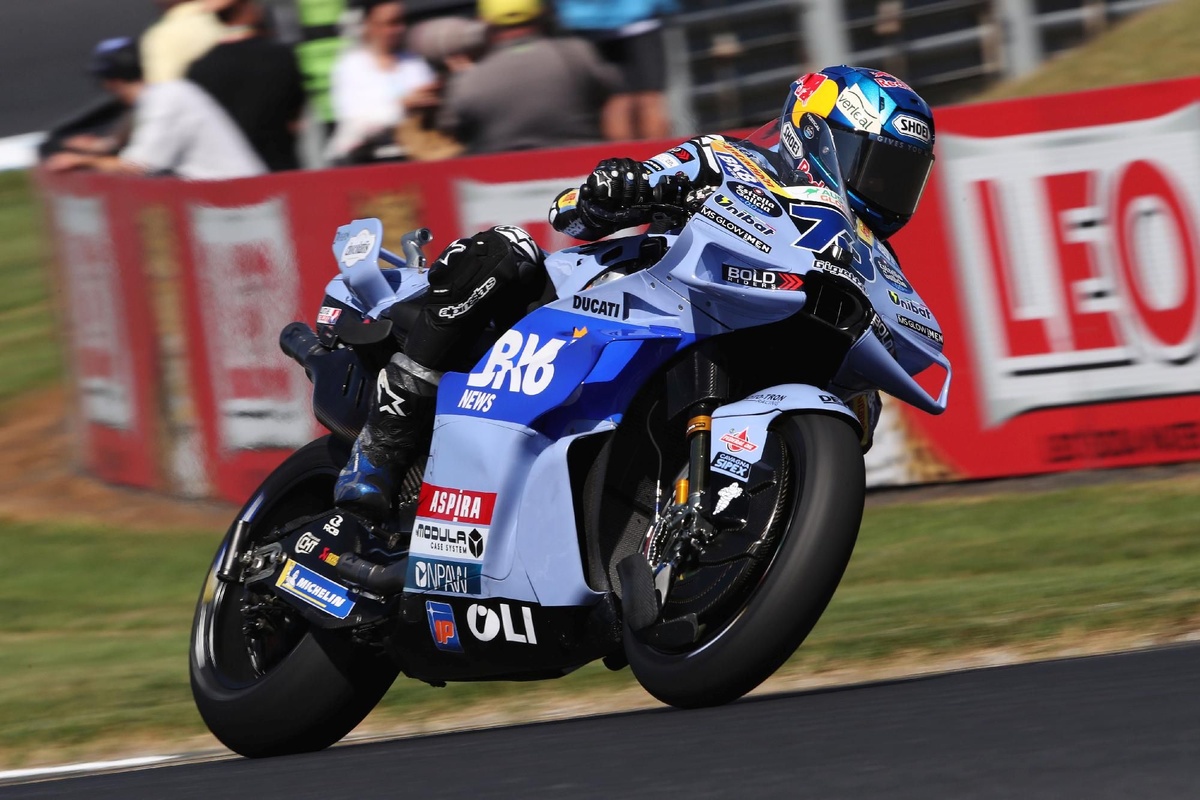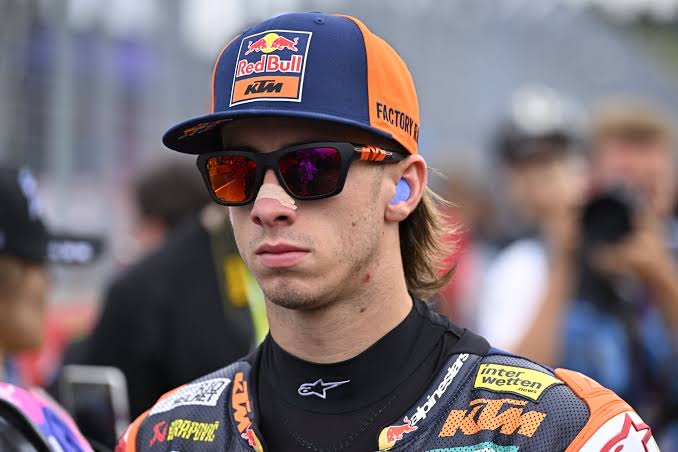

Pedro Acosta left the Japanese Grand Prix with more questions than answers after an unusually difficult MotoGP race at Motegi.
The KTM rider arrived in Japan full of confidence after claiming his maiden MotoGP victory at the Austrian Grand Prix and backed it up with a front-row qualifying performance. But his strong starting position quickly counted for little once the race began.
Acosta lost two places on the opening lap and eventually dropped as low as eighth, struggling to find the pace and consistency that have become hallmarks of his performances.
The biggest issue appeared to be the Michelin hard rear tyre. Acosta said he could not get the grip he needed, particularly when braking and accelerating out of corners.
“I was struggling a lot to stop the bike and even then, to try to have some grip in the drive area,” he explained.
The lack of rear grip left Acosta fighting the bike throughout the race, but what made the problem particularly frustrating was that he could not identify a clear explanation for it.
The Spaniard said the KTM felt relatively normal in other areas, making it difficult to point to the tyre alone as the reason for such a significant loss of performance. His concerns were reinforced by the fact that KTM team-mate Enea Bastianini managed to finish fourth using the same general package.

Source: Grande Premio
“There has to be something around what we don't really know,” Acosta said, highlighting the need for KTM to study the data from the weekend.
The problem also affected one of Acosta’s biggest strengths: overtaking.
Usually one of the more aggressive riders when it comes to making passes, Acosta found himself unable to make moves stick. He became caught behind Ai Ogura and Raul Fernandez, with rear-wheel spin repeatedly costing him momentum.
“When I tried to pass back Raul, I started to spin, I remained stuck, and then Ogura passed me back,” Acosta recalled.
It was a rare sight for a rider who has built his reputation on attacking rivals and finding opportunities in difficult situations.
Rather than dismissing the weekend as a simple off-day, Acosta and KTM now have an important technical puzzle to solve. The Motegi race provided valuable information about how the RC16 behaved with the hard rear tyre, particularly under braking and acceleration.
For Acosta, the difficult result comes at an important stage of his season. After showing that he has the speed to win in MotoGP, the next step is understanding why that performance can sometimes disappear.
Motegi may have been a frustrating weekend, but the data gathered there could prove just as valuable as another strong result as Acosta and KTM look to find more consistency for the remaining races of 2026.