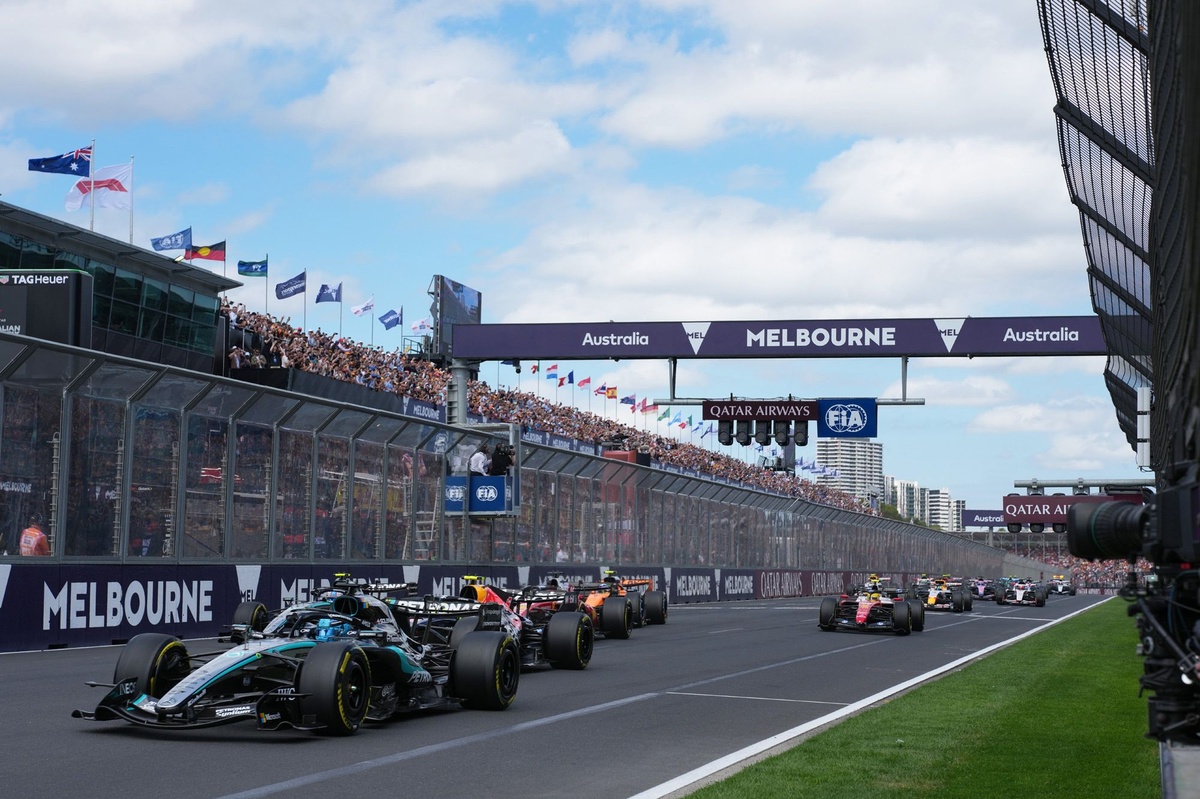
The future has arrived, and it bears the name Kimi Antonelli. The prodigious Mercedes junior driver has not just secured his maiden Formula 1 pole position at the China Grand Prix, he's shattered records, becoming the youngest polesitter in World Championship history. This isn't just a personal triumph; it's a resounding vindication for Mercedes team principal Toto Wolff, who championed the young Italian's rapid promotion despite widespread skepticism.
- Kimi Antonelli stormed to his first career F1 pole position in China, making history as the youngest ever.
- Toto Wolff's bold decision to promote Antonelli has been unequivocally validated by this landmark achievement.
- Lewis Hamilton reignited the "party mode" debate, suggesting Mercedes has a special qualifying power boost, a claim Lando Norris quickly dismissed.
- A deeper dive into the data reveals Antonelli's aggressive corner entry and higher apex speeds were key to his dominant lap.
Kimi Antonelli's Ascent: From Rookie Doubts to Record-Breaker
Kimi Antonelli's journey to Formula 1 has been nothing short of a whirlwind, often described as a "rollercoaster." After just one season in F2 and an "eventful" rookie year with Mercedes, critics questioned the wisdom of his swift promotion. Yet, Antonelli's raw speed and audacious style have always been undeniable.
His early season has been a testament to this thrilling, if sometimes chaotic, talent. From a heavy FP3 crash in Australia followed by a fight back to second, to a penalty-laden sprint race recovery in China, Antonelli consistently pushes the limits. This relentless pursuit of pace culminated in a masterful qualifying performance that solidified his place in the sport's spotlight.
Wolff's Unwavering Faith Vindicated
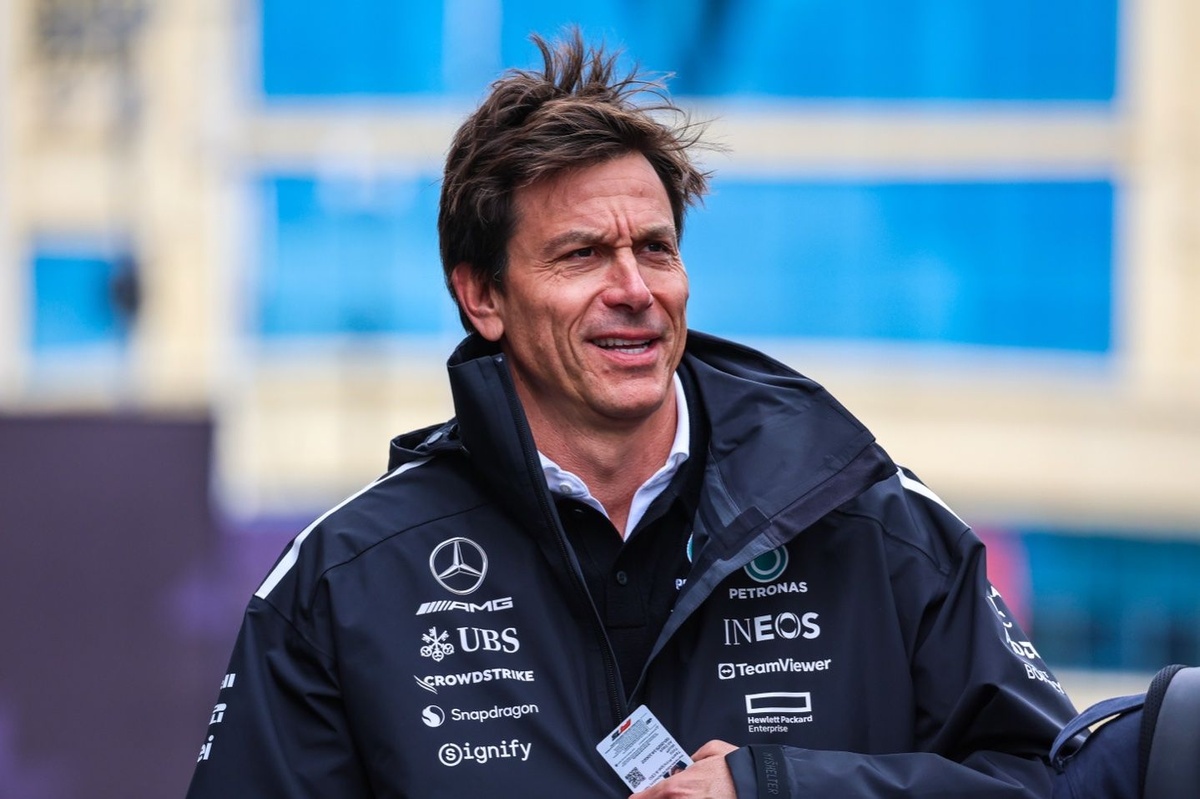
Toto Wolff, Mercedes' steadfast leader, has been Antonelli's biggest advocate. After the historic pole, Wolff didn't mince words, expressing a palpable sense of triumph. "You have to imagine when you're thrown into Formula 1 at 18 and then all that pressure comes," Wolff stated, highlighting the immense scrutiny on young drivers.
He pointed directly to the critics who doubted the "experiment" of promoting such a young talent. Wolff's faith, however, has been rewarded, proving that his vision for Antonelli as a future star was well-founded. This pole position is more than just a lap; it's a strategic victory for the Mercedes boss.
The Pole Lap Dissected: Antonelli's Masterclass in China
The Shanghai International Circuit witnessed a qualifying masterclass from Kimi Antonelli. Despite a control-systems glitch affecting George Russell's garage, Antonelli delivered when it mattered most. His second Q3 lap, a blistering 1m32.064s, secured pole by 0.222s over Russell and a significant three-tenths ahead of Lewis Hamilton's Ferrari.
Telemetry analysis reveals where Antonelli truly excelled. He gained significant early momentum, carrying notably more speed into Turn 1 than either Hamilton or Russell. This aggressive approach into the tightening right-hander immediately gave him an advantage. He was also consistently "last on the brakes" and carried superior speed into the Turn 6 hairpin.
Throughout the tricky sector two, Antonelli picked up crucial tenths, particularly by carrying more speed into Turn 11, likely benefiting from a greater energy harvest. While Hamilton's Ferrari showed strong punch out of some corners, the Mercedes duo, led by Antonelli, built their overall pace through higher apex speeds. This detailed breakdown confirms the young Italian's exceptional skill and precision under pressure.
Russell's Technical Troubles
George Russell's qualifying session was marred by an untimely technical issue. Early in Q3, his Mercedes suffered a mysterious control-systems glitch, leaving him momentarily stranded on track. Despite his team's frantic efforts, Russell was forced to limp back to the pits, stuck in first gear. Miraculously, he re-emerged with just two minutes remaining, delivering a solid 1m32.286s lap, albeit one affected by the earlier compromise.
The 'Party Mode' Revival: Hamilton's Theory Sparks Debate
Lewis Hamilton ignited a familiar debate after qualifying, suggesting that Mercedes possesses a special "party mode" – a qualifying power boost reminiscent of past eras. He noted a significant pace jump from Mercedes between Q1 and Q2, implying a mode switch that Ferrari lacked. "In qualifying they have another mode that they're able to go to... and once they get to Q2 they switch that on," Hamilton claimed.
However, McLaren's Lando Norris, whose car uses a Mercedes power unit, was quick to dismiss the theory. "No, we don't have that," Norris stated, suggesting Hamilton might be "creating things in his head." While the raw lap time gaps between Q1, Q2, and Q3 don't definitively prove a "party mode," Hamilton's comments add intrigue to the Mercedes performance advantage. The data indicated that Antonelli's gains came from driving technique, not a sudden engine mode.
What's Next for Mercedes and the Prodigy?
Kimi Antonelli's historic pole position is a monumental moment for Mercedes and for the young driver himself. It signals the arrival of a serious contender and firmly establishes him as one of F1's brightest future prospects. With Toto Wolff's backing and a car clearly capable of delivering pace, the stage is set for Antonelli to continue his thrilling trajectory.
The China Grand Prix served as a powerful statement. While Antonelli himself remained modest, acknowledging Russell's issues, his raw talent shone through. This performance will undoubtedly fuel excitement for his future, cementing Mercedes' long-term strategy and showcasing the depth of talent within their driver development program.