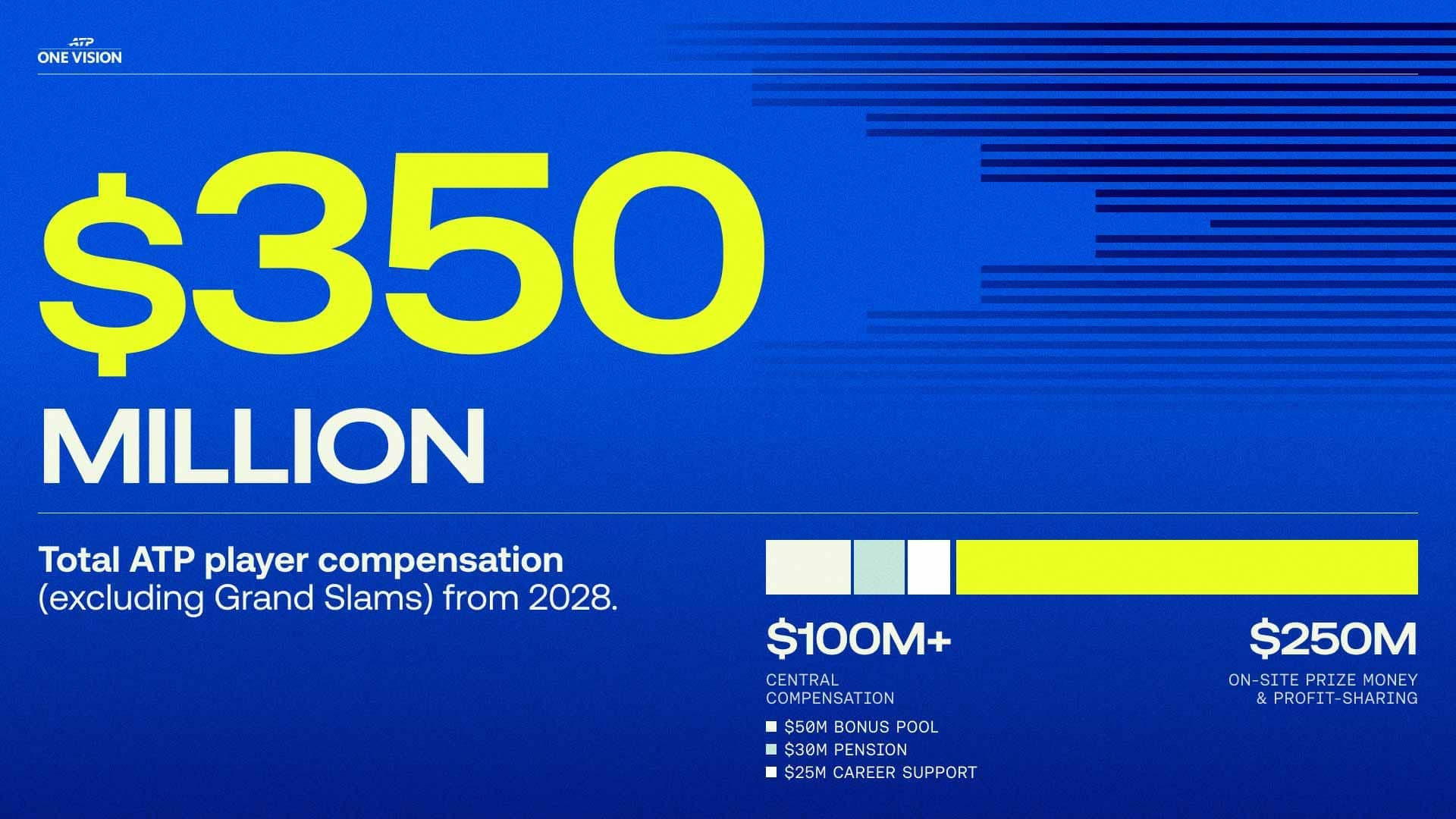

The ATP is not just tweaking the rulebook; it's tearing it up and rewriting the future of professional tennis with an audacious OneVision strategy that promises to revolutionize player welfare, competition, and fan engagement. This bold initiative, championed by ATP Chairman Andrea Gaudenzi, signals a profound commitment to the sport's long-term prosperity, focusing on a clearer structure and unprecedented financial backing. These ATP reforms are set to reshape the landscape for players and fans alike.
- Massive Financial Injection: Over $100 million in central investment annually from 2028, pushing total player compensation (excluding Grand Slams) to an estimated $350 million.
- Ranking System Overhaul: A significant revamp to emphasize performance at top-tier events and reduce the relentless pressure on players to overplay.
- Expanded Player Support: A beefed-up $50 million Bonus Pool for top performers and $25 million in career support for the players ranked in the Top 250.
- Strategic Calendar Changes: Introducing dedicated tournament category weeks and a landmark 10th ATP Masters 1000 event, poised for Saudi Arabia, to streamline the season and heighten competition.
The Dawn of a New Tennis Era: ATP's Ambitious Overhaul
Tennis is at a pivotal moment, and the ATP is seizing the opportunity to evolve its ecosystem. The core objective is crystal clear: strengthen the integrity of competition, align incentives for players and tournaments, and ultimately, deliver more thrilling matchups between the world's elite talent. This isn't just about bigger prize money; it's about creating a sustainable and rewarding career path for more athletes.
Unpacking the Financial Power Play
At the heart of these ATP reforms lies a colossal financial commitment. From 2028, the ATP's annual central investment in player compensation and support is projected to exceed $100 million. When combined with on-site prize money and tournament-level profit-sharing, the total player compensation across the Tour (excluding Grand Slams) is estimated to hit an staggering $350 million. This unprecedented injection of capital underscores the ATP's belief in the sport's commercial growth and its dedication to sharing that success with its athletes.
Crucially, this financial boost is distributed across three key pillars. The ATP Bonus Pool, a scheme designed to reward commitment and performance at the biggest events, will more than double from $21.5 million to a colossal $50 million. This means top performers at ATP Masters 1000 events and the Nitto ATP Finals will see significantly enhanced rewards. Furthermore, a new $25 million year-end bonus will provide vital career support for players ranked within the Top 250 of the PIF ATP Rankings, nurturing talent across a broader spectrum of the professional circuit. Rounding out this financial package are growing player pension contributions, estimated at $30 million by 2028, securing athletes' futures beyond their playing days.
Reshaping the Rankings for Peak Performance
The way players navigate the demanding season is set for a significant shift. The ATP is proposing to evolve its ranking system to give greater weight to results at its most prestigious tournaments. This move isn't just about prestige; it's a strategic effort to reduce the immense pressure on players to overplay, especially after an early exit from a major event.
Under the new proposals, players will no longer be able to replace weaker ATP Masters 1000 results with better performances at ATP 500 or ATP 250 events. This change ensures that results from the biggest tournaments count fully, encouraging players to prioritize peak condition for these crucial moments rather than chasing points. Additionally, a review limiting the number of ATP 250 results that count for top players aims to further protect player welfare, ensuring the best arrive at the biggest stages refreshed and ready to compete.
A Sharper Calendar, Bigger Stakes
Fans crave consistent, high-stakes tennis, and the ATP's calendar adjustments are designed to deliver just that. The introduction of dedicated tournament category weeks aims to streamline the season, reducing instances where ATP 500 and ATP 250 events run concurrently. This creates a clearer narrative for the season, making it easier for fans to follow and understand the stakes of each week's competition. A major highlight of this calendar evolution is the planned addition of a 10th ATP Masters 1000 event, with Saudi Arabia emerging as the likely host. This expansion will solidify the top tier of the Tour, offering more opportunities for elite competition.
These calendar changes, combined with the new Bonus Pool structure, mean every result carries enhanced significance. A strong run at an ATP 500 event could directly impact a player's Bonus Pool payment at the subsequent ATP Masters 1000, injecting more drama and consequence into every single match throughout the year. This creates a more coherent and compelling season for players and spectators alike.
Doubles' Future and the Foundational 500s/250s
While the focus is on the top tier, the ATP is also reviewing the long-term structure of doubles. The goal is to create a sustainable model, potentially adjusting draw sizes and prize money distribution, with any reallocated funds being reinvested into singles qualifying and early rounds. Doubles remains a vital part of the Tour, and these discussions aim to ensure its continued relevance while strengthening the overall player pathway.
The future of ATP 500 and ATP 250 tournaments also looks robust. Despite the emphasis on Masters 1000s, these foundational events will benefit from the clearer hierarchy and dedicated category weeks, reducing internal competition for player fields. They remain crucial stepping stones for emerging talent and continue to be integral to the Tour's overall health, with their results now carrying greater weight due to their impact on a player's overall ranking and potential Bonus Pool earnings. These proposals are still subject to consultation and approval, with a final package expected at the year-end meetings in Turin. The ATP is clearly charting a course for a dynamic and financially robust future for professional tennis.