
The World Cup 2026: Why FIFA's Expanded Format is a Disaster Waiting to Happen
The World Cup 2026 is looming, promising an unprecedented scale, but at what cost to the beautiful game? FIFA's expanded format, championed by Gianni Infantino, is a mathematical nightmare poised to undermine the very integrity and drama that makes the tournament legendary. Fans brace for a competition where strategic losses and calculated draws could dictate fate, rather than pure footballing prowess. This isn't just an expansion; it's a fundamental betrayal of competitive fairness.
Key Flaws in the 2026 World Cup Format:
- 48-Team Expansion: Driven by revenue, not sporting merit, diluting overall quality.
- Third-Placed Teams Advance: Eight teams qualify after group stage, rewarding mediocrity and distorting knockout pairings.
- Collusion Risk: Non-simultaneous final group games and new tie-breakers create opportunities for strategic manipulation, mirroring past controversies.
- Head-to-Head Tie-Breaker: Prioritizing head-to-head results over goal difference prematurely eliminates teams and removes jeopardy from final matches.
FIFA's Money-Driven Mayhem
The decision to swell the World Cup from a perfect 32-team tournament to an unwieldy 48-team tournament was never about enhancing the sport. It was, purely and simply, a power play for FIFA and its president, Gianni Infantino. More teams mean more broadcast rights, more sponsorship, and solidified political support, with little consideration for the competition's sporting integrity.
Initially, FIFA proposed a bizarre 16 groups of three teams. This idea, thankfully, was abandoned after the breathtaking drama of the Qatar 2022 group stage, where simultaneous kick-offs delivered heart-stopping finales. The iconic Group E, featuring Japan, Spain, Germany, and Costa Rica, demonstrated how last-minute swings captivated audiences, proving the four-team group format was sacrosanct.
The 'Revised' Format: A New Set of Problems
In a supposed correction, FIFA settled on 12 groups of four teams for World Cup 2026. This ensures every team plays three matches and, in theory, reduces collusion. However, the mathematics of a 48-team knockout stage meant a controversial addition: eight third-placed teams would now advance to the Round of 32. This move instantly invited criticism, labeled as "rewarding complete mediocrity" by pundits like former Scotland international Craig Burley.
Teams could theoretically progress with just one win or even after losing two of their three group games. This starkly contrasts the clear-cut progression of the 32-team tournament, where only the top two from each group moved on, making every result unequivocally impactful.
The Impending 'Disgrace' of Strategic Play
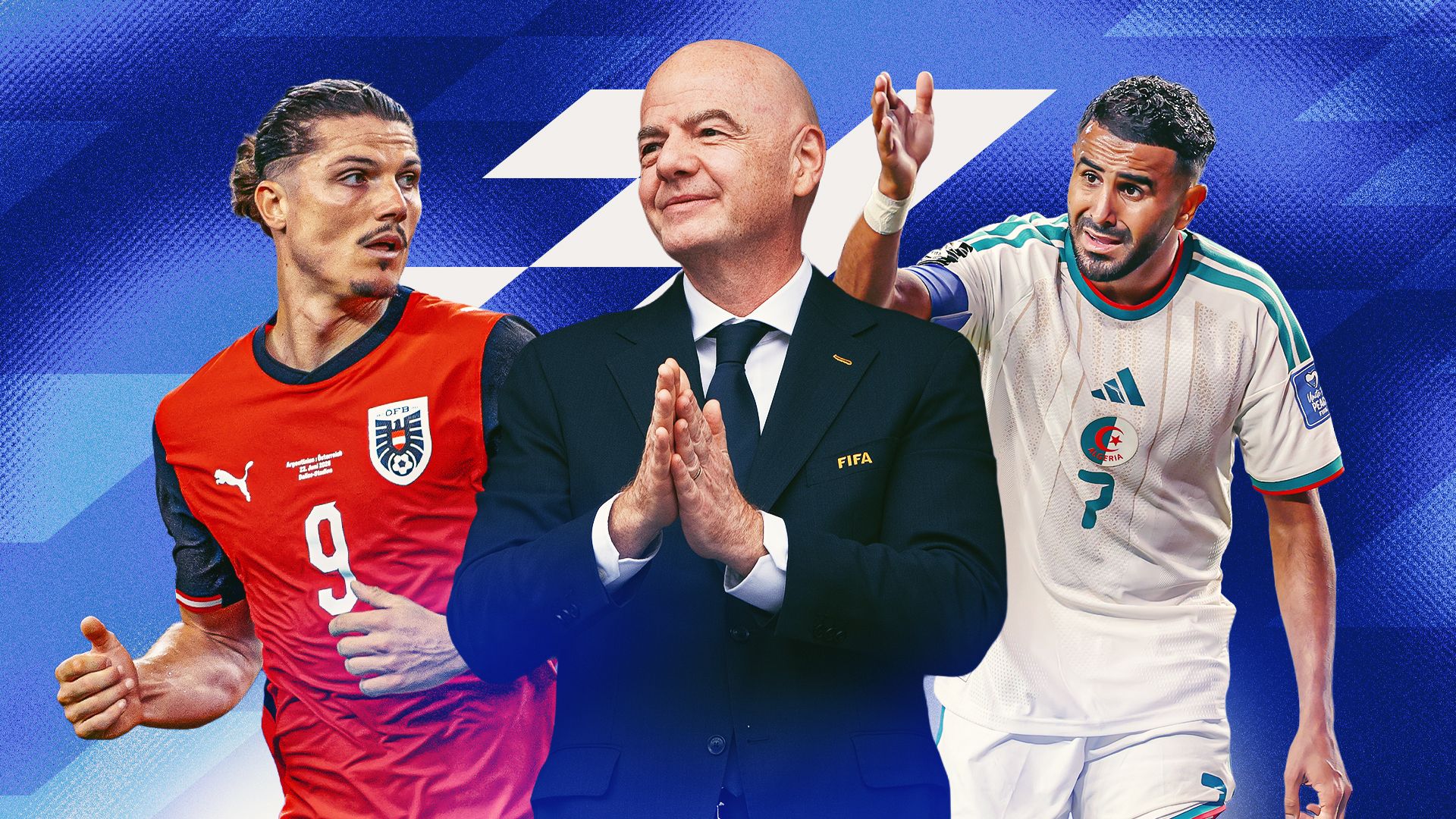
The most alarming aspect of this new World Cup format is its potential to foster collusion, a specter FIFA claimed to have banished. Consider a hypothetical Group J scenario involving Austria and Algeria. If these teams play their final group game after other groups have concluded, they will know precisely what result is needed to advance, and even who they might face in the next round.
For instance, if a draw guarantees both Austria and Algeria progression, or if losing strategically places them against a weaker opponent (e.g., Switzerland instead of Spain), the incentive for a non-competitive match becomes disturbingly real. This harks back to the infamous "Disgrace of Gijon" in 1982, where West Germany and Austria played out a mutually beneficial result.
Flawed Tie-Breakers Amplify Issues
Adding another layer of complexity, FIFA also made a shocking change to the primary tie-breaker for teams on equal points: head-to-head results now trump goal difference. While this seems minor, it significantly impacts group dynamics. It has already led to the early elimination of teams like Jordan in practice, creating "dead rubbers" where one side has nothing to play for, contradicting FIFA's stated goals.
This combination of non-simultaneous final games and the new tie-breaker creates a scenario where teams might not just play for a draw, but potentially even find a loss advantageous. The competitive spirit of the group stage, once a hallmark of the World Cup, stands jeopardized by FIFA's convoluted calculations.
Is a 64-Team World Cup Next?
The sensible solution to these glaring flaws would be a return to the proven 32-team tournament model. However, such a move is unlikely under Gianni Infantino's leadership. Worryingly, proposals for an even larger, 64-team tournament for 2030 have already surfaced, with some support from CONMEBOL.
While facing resistance from UEFA and AFC, the mere consideration of a 64-team World Cup underscores FIFA's problematic "every idea is a good idea" philosophy. Such an expansion would further dilute quality, exacerbate logistical nightmares, and undeniably transform the World Cup from a pinnacle of sporting excellence into a bloated, commercially driven spectacle, forever changed for the worse.