
It was a pole position earned, but one that instantly ignited a firestorm of debate. George Russell snatched pole at the Austrian Grand Prix qualifying session, but the circumstances surrounding his final, decisive lap have left the Formula 1 paddock reeling, with Ferrari leading the charge against what they perceive as a dangerous precedent.
Key Takeaways from the Austrian GP Qualifying Controversy:
- George Russell secured pole under a single yellow flag following Max Verstappen's crash at Turn 9.
- Ferrari Team Principal Fred Vasseur expressed surprise and concern over race control's decision not to deploy double yellow flags, citing safety implications.
- McLaren's Andrea Stella offered a more measured perspective, defending the distinction between single and double yellow flag rules.
- The incident has sparked renewed discussion on the consistency and clarity of F1's trackside safety protocols.
Russell's Controversial Triumph: Pole Amid Chaos
The drama unfolded in the dying moments of Austrian GP qualifying. With the clock ticking, Max Verstappen lost control of his Red Bull at the infamous Turn 9, spearing into the barriers. This serious incident immediately triggered a single yellow flag in that sector. While rival drivers like Ferrari's Charles Leclerc and Lewis Hamilton had already completed their crucial laps, George Russell was still pushing.
Crucially, Russell passed through the single yellow flag zone and, after a momentary lift, continued his charge to post a blistering lap, ultimately securing pole position. This immediately raised eyebrows across the pit lane, particularly within the Ferrari garage, who felt robbed of a potential front-row lockout.
Ferrari Fumes: Vasseur's Stark Warning on Safety
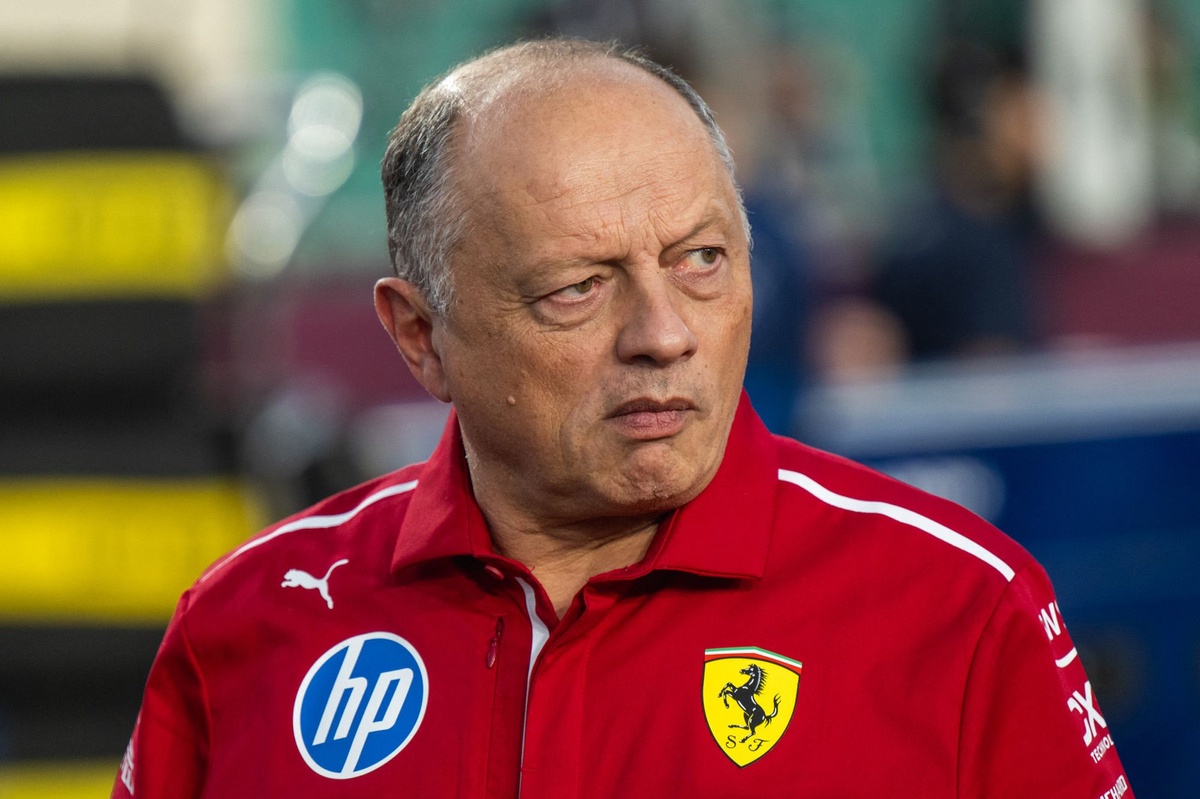
Ferrari Team Principal Fred Vasseur didn't mince words after the session. He voiced his "surprise" that race control opted for a single yellow flag instead of the more stringent double yellows, especially given the severity of Verstappen's crash and the deployment of a medical car. Vasseur’s primary concern isn't with Russell's driving itself – he explicitly trusts the FIA's judgment that Russell complied with the rules by reducing speed.
However, Vasseur views the incident as a critical missed opportunity to reinforce safety protocols. He warned that this decision sets a perilous precedent. "The negative side of this is that next quali, if you have a crash, everybody will push," he stated, highlighting the potential for drivers to exploit the ambiguity in similar future scenarios.
McLaren's Measured Take: Distinguishing the Rules
In contrast to Ferrari's strong reaction, McLaren Team Principal Andrea Stella offered a more nuanced perspective. Stella emphasized the fundamental difference between single and double yellow flags. He noted that the rule automatically deleting lap times under double yellows, introduced in 2022, is a welcome and effective deterrent.
For single yellow flags, however, the onus remains on the driver to reduce speed sufficiently, with stewards evaluating compliance. Stella believes that Russell executed his lift effectively, stating, "For what I saw from the GPS overlays, I think Russell has done a good job of executing a lift." He concluded that while it was "a case on the edge," the stewards' decision was understandable and acceptable within the current framework.
The Stakes: F1's Yellow Flag Dilemma Revisited
This incident at the Red Bull Ring has thrust F1's yellow flag protocols back into the spotlight. The rules dictate that under double yellows, any lap time set is automatically deleted. Under single yellows, drivers must reduce speed, but their lap time can stand if deemed compliant by race control. The core of the debate revolves around the threshold for deploying double yellows, especially when a significant incident like Verstappen's crash occurs.
While the FIA deemed Russell's actions compliant, the controversy underscores the fine line between competitive advantage and absolute safety. The discussion initiated by Ferrari serves as a crucial reminder that clarity and consistent application of these vital regulations are paramount to maintain fairness and protect every driver on the grid.