
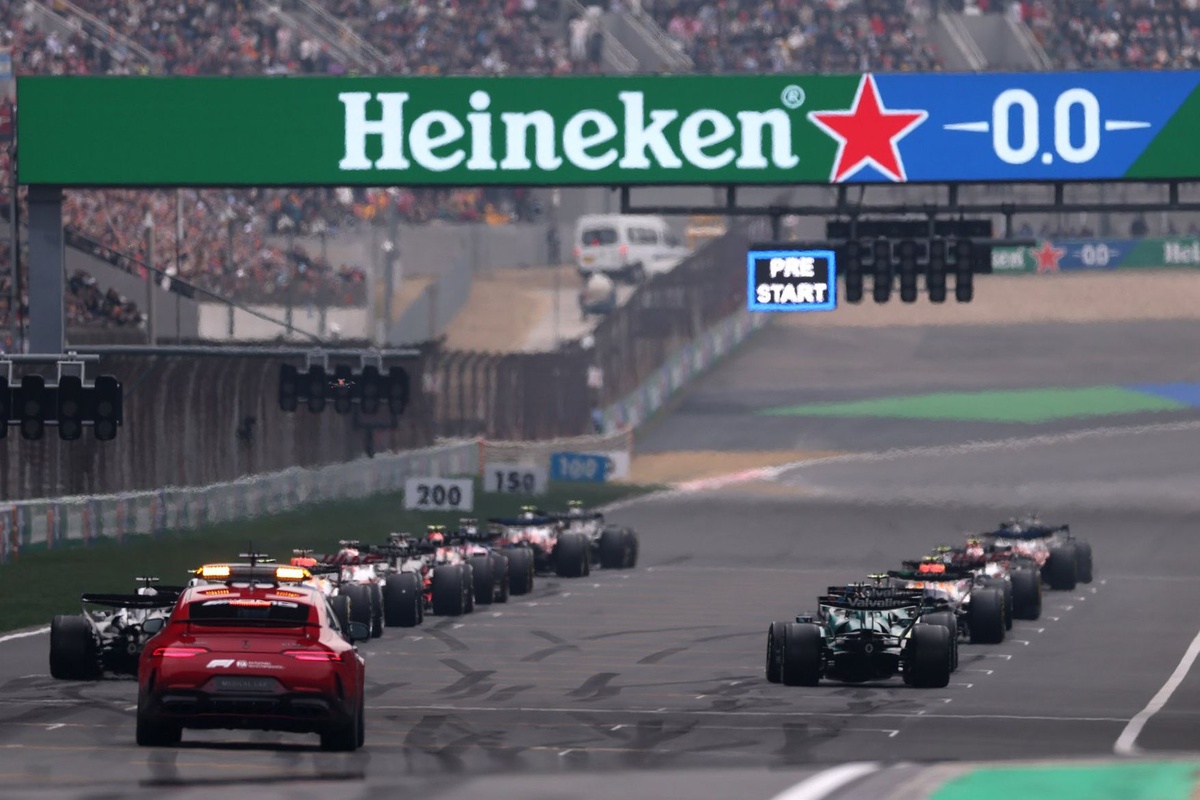

The rumble of a Formula 1 grid is one of sport's most electrifying moments, but a subtle rule change, the F1 pre-start procedure, has been at the heart of paddock debate. Now, the FIA confirms this five-second warning is here to stay, even as its initial safety concerns fade away.
Key Points
- The FIA intends to keep the F1 pre-start procedure for the 2027 season and beyond.
- Initially, the five-second warning addressed issues with problematic starts and mitigated Ferrari's turbo advantage.
- A new "low power start detection" system, triggered by MGU-K deployment, now handles primary safety concerns stemming from slow getaways.
- FIA Director Nikolas Tombazis clarifies the procedure's purpose has shifted to driver preparation, not solely safety.
The F1 Start: A Political Minefield
Remember the tension during winter testing in Bahrain? Early practice starts exposed a critical imbalance, particularly favoring Ferrari with their compact turbocharger. Teams clamored for more time to spool up, but Frederic Vasseur and Ferrari stood firm, protecting their competitive edge.
The compromise was the pre-start procedure: a five-second countdown with flashing blue lights before the red lights illuminate. This brief extension aimed to level the playing field, a solution Vasseur famously declared was the absolute maximum Ferrari would accept.
Safety Revolution: From Melbourne Mayhem to Smart Systems
While the pre-start procedure offered a temporary fix, genuine safety concerns persisted. The dramatic incident in Melbourne, where Liam Lawson barely moved off the line and Franco Colapinto miraculously avoided a high-speed collision, highlighted a critical flaw.
The FIA took swift action, introducing the "low power start detection" system. This ingenious electrical safeguard monitors unusually slow getaways. If detected, an automatic MGU-K deployment kicks in, providing a crucial burst of power to prevent a dangerous stall.
A System for Survival, Not Speed
Nikolas Tombazis, the FIA's single-seater director, is adamant: this system is a safety net, not a performance enhancer. "The automatic MGU-K deployment can turn a disastrous start into a bad one," Tombazis explained, "but it cannot turn a bad start into a competitive one." Its sole purpose is to mitigate risks, ensuring drivers aren't left stranded on the grid.
Why the Five-Second Wait Lingers for 2027
With core safety addressed, many might assume the pre-start procedure would become obsolete. However, Tombazis confirmed it's likely staying for 2027. He argues the five seconds are now an "established process" crucial for driver preparation.
"That does not have to do with safety," Tombazis stated. "It has just to do with having different cars arriving on the grid at different times, and drivers need to be able to prepare in order to have, let's say, a proper start." It's less about avoiding stalls and more about ensuring every driver has the time needed to execute a perfect launch sequence. The political compromise has evolved into a logistical necessity.
The F1 pre-start procedure has traversed a complex path from controversial concession to accepted norm. As F1 charges towards 2027 with new regulations, this five-second pause before the lights go out will remain a fixture, a testament to evolving challenges and the FIA's commitment to both competition and safety.