
The never-ending saga of F1 track limits has long been a headache for fans, drivers, and officials alike. But brace yourselves, petrolheads, because the FIA is finally wielding the ultimate weapon: cutting-edge Artificial Intelligence to bring clarity to the chaos. What once sparked furious debates and delayed race results is now set for a radical, data-driven overhaul, promising a fairer and faster resolution to one of the sport's most contentious issues.
Key Points: The AI Revolution on Track
- The FIA and Catapult developed RaceWatch, an automated tool for track limits.
- This AI-powered computer vision system has cut human review by an astonishing 95%.
- By 2026, the new "Every Car All Turns" (ECAT) system will use advanced positioning and AI to detect infringements.
- Future updates include sending direct video evidence to teams for unprecedented transparency.
No More Grey Areas: AI Takes the Wheel
For years, pushing the track limits has been a driver’s natural instinct to gain precious tenths. This often led to a deluge of questionable decisions, contentious penalties, and agonizing delays, such as the 2023 Austrian Grand Prix where the FIA faced over 1,000 potential violations. It was clear: the system needed a serious upgrade.
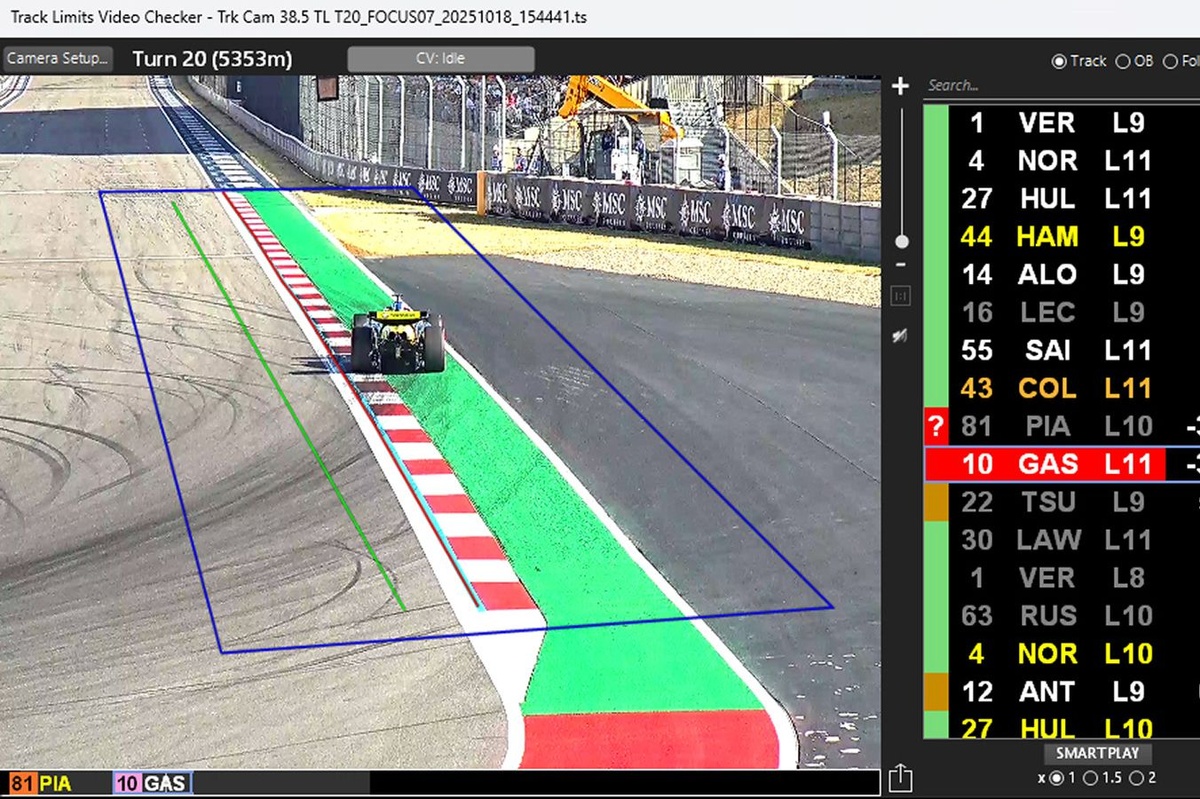
Enter RaceWatch. Developed by the FIA in partnership with Catapult, this automated system began to revolutionize how incidents are handled. Its initial computer-vision capabilities immediately streamlined the process, reducing the need for human review by a staggering 95% and alerting teams to potential infringements within seconds. It was a vital first step in taming the track limits beast.
The Future is Now: Unpacking the 2026 Overhaul
The FIA isn't stopping there. Looking ahead to 2026, even more significant advancements are on the horizon, promising a level of precision and transparency previously unimaginable.
Transparency on Track: Video Evidence for All
One crucial update will empower teams like never before. Soon, the FIA will automatically send footage of any track limits infringement directly to the relevant team. This move is set to drastically reduce arguments, enhance trust, and provide immediate, undeniable evidence, speeding up the entire workflow for everyone involved.
ECAT: Beyond the Camera Lens
Perhaps the most groundbreaking innovation is the "Every Car All Turns" (ECAT) system. This isn't just about cameras anymore. ECAT leverages an advanced, AI-based recognition system, powered by high-performance GPUs, to process a torrent of data in real-time. This ensures unparalleled accuracy and speed in verifying every single lap.
Chris Bentley, the FIA's Single Seater Head of Information Systems Strategy, revealed the ambition behind this: "We'll be able to run the computer-vision software on any machine in the network, send it the portion of video to process, and receive the result, enabling us to handle more and more data." This centralizes control while distributing processing power, a smart move for efficiency.
The new system goes beyond simple camera feeds. It creates a "digital twin" of the race, cross-referencing precise positioning data, micro-sector times, and optimal racing lines. If a car deviates from this ideal trajectory, or enters a pre-defined "geofenced" virtual zone, RaceWatch flags it instantly. As Bentley explains, "The camera becomes slightly secondary in these cases because we're going to use geofencing on the positioning data... We're going to use delays in when cars get to certain positions to work out where it went off."
The Promise of Precision: Ending the Debate?
The goal is clear: transition from a heavily manual process to a highly automated, data-rich one. While human oversight will remain for final evaluations, the overwhelming majority of initial detection and flagging will be handled by this sophisticated AI. This system isn't just about catching infringements; it's about making the decision-making process indisputable.
With this relentless pursuit of technological perfection, the days of endless debates over track limits might finally be numbered. Fans can look forward to faster, clearer, and more consistent rulings, ensuring the focus remains squarely on the thrilling on-track action.