McLaren team principal Andrea Stella dropped a bombshell recently, admitting that even the engineers are baffled by the nuanced behaviour of their power units. "When we try to analyse this, it gets immediately quite complicated," he stated, highlighting internal debates over unexplained performance variances.
Key Takeaways:
- Modern F1 power units utilize advanced, self-learning algorithms for optimal energy deployment.
- Minor driver inputs or external factors like wind and grip can trigger unexpected system reactions.
- This unpredictability creates significant performance differences, frustrating drivers like Oscar Piastri and George Russell.
- The issue is deeply ingrained in current regulations and is unlikely to be fully resolved even with future rule changes.
The Invisible Hand: F1's Self-Learning Power Units
These aren't sentient robots, but highly sophisticated algorithms. They learn from every lap, constantly adapting their energy deployment strategy based on driver input and track conditions. This 'anticipation' can happen mid-lap, recalibrating the optimal strategy if a slight deviation from the predicted path occurs. It's a system designed for ultimate efficiency, yet it introduces a layer of bewildering complexity.
Driver Frustration: When the Car Has a Mind of Its Own
The consequence of these complex systems is often driver exasperation. Oscar Piastri vividly described the feeling: "When you've got qualifying grids decided by computers behaving or misbehaving, it's a pretty crap way of going racing." He noted the frustration of matching a teammate in corners, only to lose two-tenths on the straights due to unseen power unit quirks.
Piastri's Plea and Russell's Puzzle
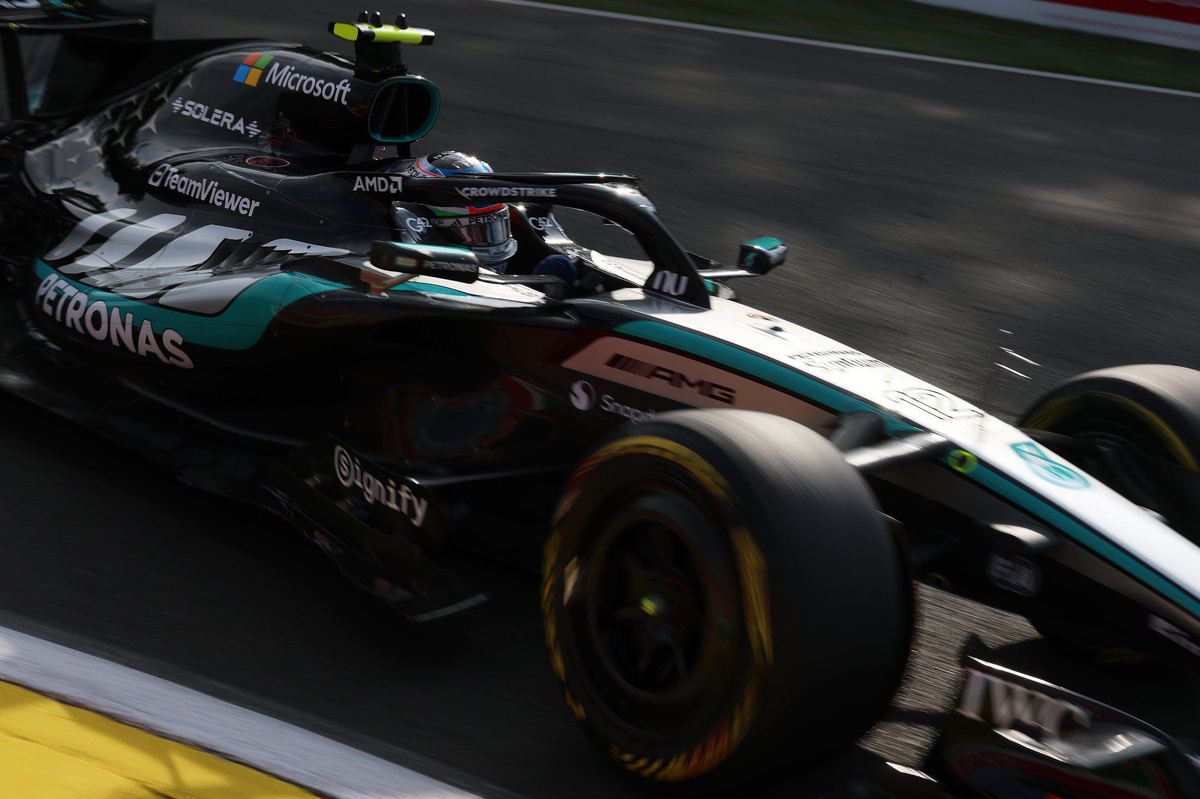
Piastri experienced this first-hand at Spa, losing significant straight-line speed compared to teammate Lando Norris. Similarly, Mercedes driver George Russell was equally perplexed by his own unexplained straight-line deficit, admitting he had "no idea" what was causing it.
The Hadjar Tow Fiasco
Perhaps the most dramatic example came from Isack Hadjar during Q3. Attempting to give Max Verstappen a tow, Hadjar paused at Turn 14. This unforeseen stop "confused" the power unit's software. One attempt saw too much power, the next, not enough. "That was very difficult to judge," Hadjar lamented, showcasing how a slight deviation can completely derail a meticulously planned strategy.
Beyond Driver Error: External Forces at Play
While driver input plays a role, external factors often push these algorithms into unpredictable territory. Andrea Stella explained that the system is highly "sensitive to external parameters." Changing grip levels and wind conditions are prime culprits. Stronger headwinds, for example, can trick the algorithm into thinking a straight is longer than it is, leading to an incorrect energy deployment strategy. These "random" factors are incredibly hard to model accurately, making consistent power delivery a moving target.
The Driver's Dilemma: Mastery or Mystery?
How much control do drivers actually have? McLaren star Lando Norris offered a candid perspective: "It's got nothing to do with you as a driver, really. There are certain things within your control and a lot of things, way too many things, that are out of your control." He stressed the frustration of qualifying pace being dictated by a "lucky" power unit rather than pure driving skill.
Adapting to the Digital Beast
While drivers can't fully control the system, their input still matters. Slight variations – lifting too late or applying throttle too early – can trigger the algorithm to adapt. As Norris previously noted, it's less about "biggest balls" and more about driving the power unit "correctly," even if it feels unnatural. This explains why Mercedes initially blamed Russell's driving style for his deficit, only for the problem to persist after adjustments.
The Road Ahead: A Lingering Challenge?
Circuits like Budapest and Zandvoort are less "energy-poor," meaning these issues might be less prominent. However, on tracks that demand precise energy management, the unpredictability will likely persist. Teams still struggle to fully comprehend all "random" factors at play.
2026 Regulations: A Partial Fix?
The forthcoming 2026 regulations, with their shift to a 60-40 split towards electrical power, might slightly reduce the emphasis on these systems. Yet, Oscar Piastri remains skeptical. He believes these characteristics are "ingrained into these engines" and won't simply vanish, suggesting a future where drivers continue to battle the digital intricacies of F1's most powerful machines. It’s a brave new world where man and machine seek perfect, elusive harmony.