

Ferrari is back to its audacious best, boldly pushing the boundaries of Formula 1 regulations, a move that harks back to the fearless philosophy of Sergio Marchionne. The recent Chinese Grand Prix saw the Scuderia experiment with a mysterious halo winglet, a classic example of their engineers daring to dance on the edge of the rulebook.
Here’s the lowdown on Ferrari’s latest technical gambit:
- Ferrari resurrected its "grey area" philosophy under technical director Loic Serra.
- A novel Halo winglet was tested at the Chinese Grand Prix during sprint sessions.
- The device mysteriously vanished after rival teams signaled protest intentions.
- Ferrari prioritized race results over defending a marginal, legally questionable gain.
Scuderia’s Bold Tech Revival: Marchionne's Ghost in the Machine
Under the technical guidance of Loic Serra, Ferrari appears to be embracing a daring ethos, one deeply reminiscent of former president Sergio Marchionne. Marchionne famously urged his engineers to relentlessly explore every "grey area" in the Formula 1 technical regulations, viewing it as essential to innovation and competition. His belief was simple: if some solutions are banned, the compliant ones will propel the car forward. This aggressive mindset is clearly back at Maranello.
A Calculated Gamble on the Halo's Edge
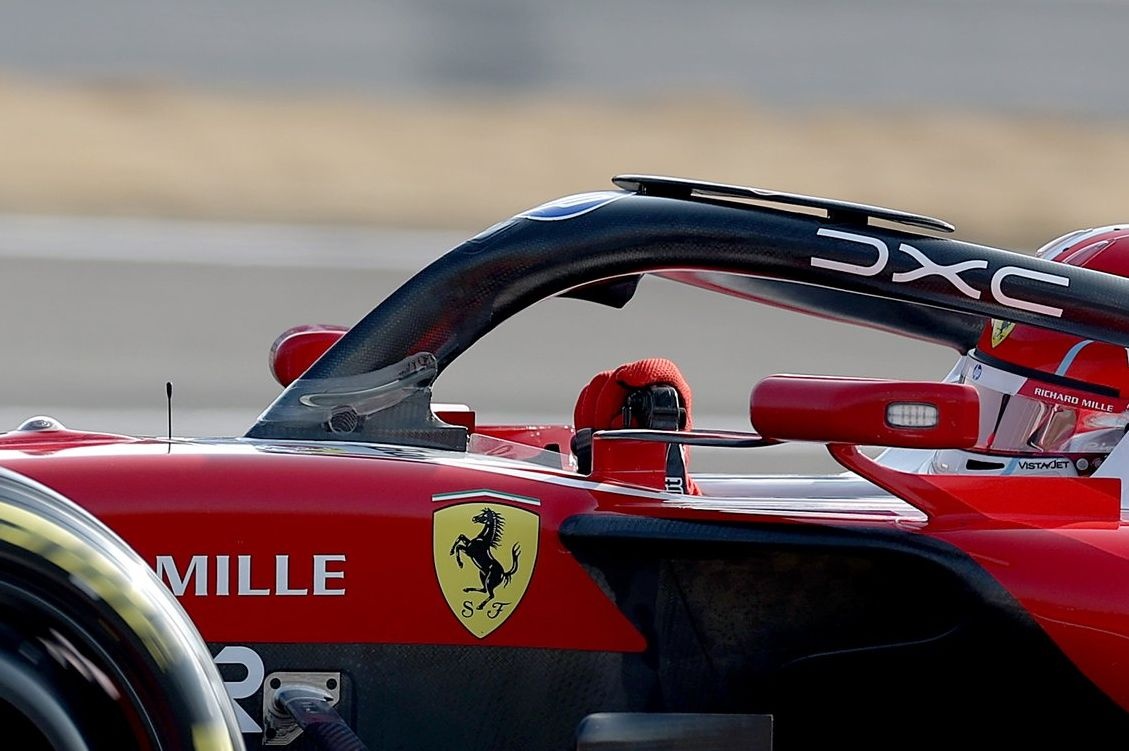
The latest manifestation of this philosophy was a peculiar small fin, strategically mounted on the front pillar of the Halo. This eye-catching addition debuted at the Chinese Grand Prix, appearing in free practice and featuring prominently during the sprint qualifying and sprint race sessions. Its purpose was clear: to subtly redirect airflow upwards, optimizing aerodynamics around the cockpit area.
The Disappearing Act: Why Ferrari Hit Reverse
Despite initially passing the scrutiny of FIA technical scrutineers, led by Jo Bauer, the Halo winglet proved to be a lightning rod for controversy. Reports from The Race indicated that the FIA itself began to question its legality. More critically, a rival team allegedly issued a clear threat: an official protest would be lodged if Ferrari dared to run the device in the main race.
Risk vs. Reward: A Hundredths-of-a-Second Sacrifice
This high-stakes technical chess match culminated in Ferrari's decision to remove the winglet before Saturday's main qualifying session. While the innovation was designed for measurable aerodynamic improvement – albeit a mere few hundredths of a second – the risk was too great. Sacrificing potential third and fourth place finishes in China to defend a highly questionable component simply wasn't a gamble worth taking for the Scuderia. Interestingly, the winglet was noted to be made of a plastic material, suggesting its function might have leaned more towards a "windscreen" deflector rather than a structural element, which might have complicated its regulatory classification further.
What This Means for F1's Technical Frontier
Ferrari’s brief flirtation with the Halo winglet at the Chinese Grand Prix serves as a potent reminder of Formula 1’s constant battle between innovation and regulation. It showcases that even minor tweaks can spark major debate and highlights the razor-thin margins and high-pressure stakes involved in gaining a competitive edge. The Scuderia's willingness to push the envelope, even if it means retreating occasionally, signals their relentless pursuit of victory.