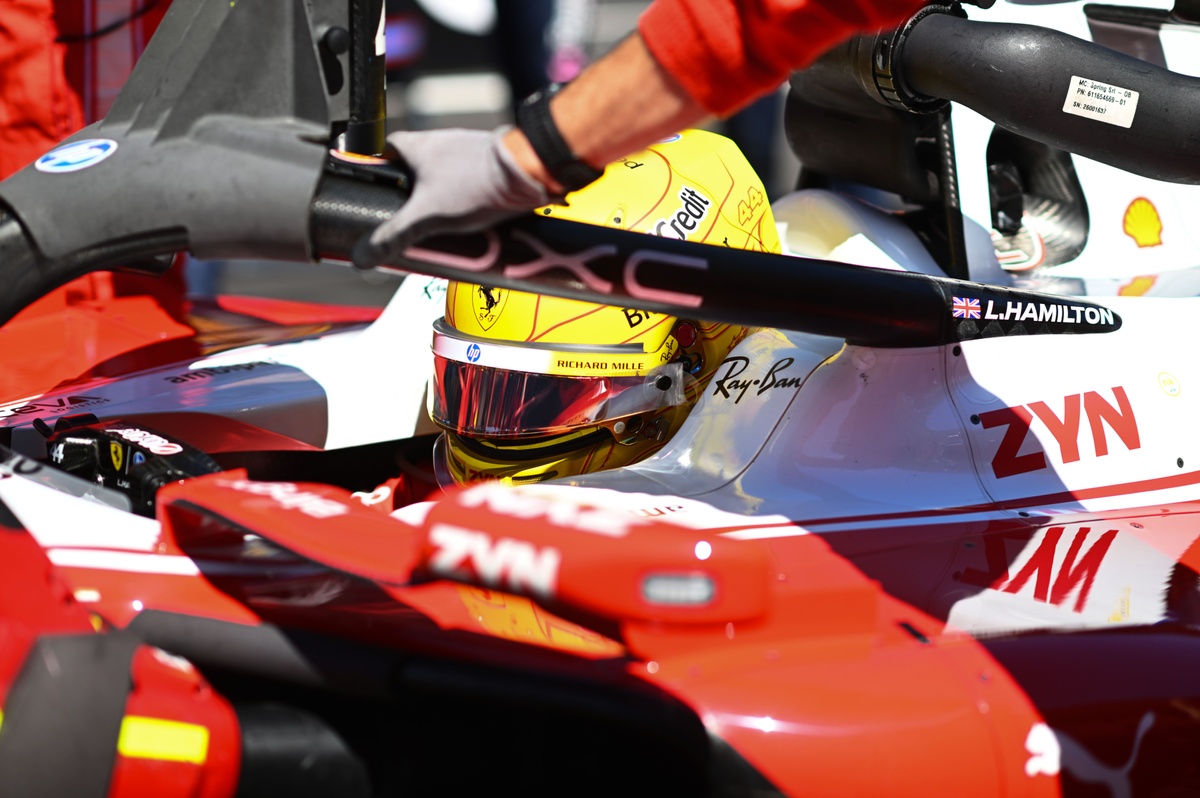
The roar of a revitalized Lewis Hamilton echoed through the Canadian Grand Prix, not just from his engine, but from a strategic shift that has Formula 1 buzzing. After a stellar P2 finish, pundits are pointing to a radical decision by the seven-time champion: stepping away from his team's simulator. This move, and its immediate success, has now sparked serious questions about Ferrari's own simulation program from none other than Sky Sports F1 lead commentator David Croft, who called the implications "quite damning" for the Scuderia. What does this mean for Hamilton's highly anticipated 2025 switch to Maranello?
Key Takeaways:
- Lewis Hamilton achieved his strongest performance of the season at the Canadian Grand Prix, securing P2.
- This breakthrough followed his decision to skip his team's simulator session, focusing instead on pure data analysis.
- David Croft suggested this success is a concerning indictment of Ferrari's simulator, given Hamilton's impending move.
- Concerns about "correlation issues" between simulator data and real-world track performance are now amplified for Ferrari.
Hamilton's Masterclass: Data Over Digital Drives Canada Success
Lewis Hamilton delivered a thrilling performance in Canada, engaging in a fierce late-race duel with Max Verstappen before claiming a hard-fought second place. This result marked his best showing of the 2024 F1 season, signaling a potential turning point after what had been a challenging start to the year.
Crucially, this resurgence came after Hamilton revealed a bold tactical change. He opted to forgo his team's simulator preparation for the Canadian Grand Prix, choosing instead to immerse himself deeply in raw performance data. This focused analysis, he explained, allowed him to optimize crucial aspects like through-corner balance, mechanical setup, and brake performance, areas he admitted had been problematic.
Croft's Blistering Verdict: Ferrari's Simulator Under Fire
Speaking on the Sky Sports F1 Show, veteran commentator David Croft didn't mince words. He lauded Hamilton's renewed vigor but quickly pivoted to the broader implications. "It is quite damning, I think, on the Ferrari simulator that he decides he's not going to use it and then has his best weekend as a Ferrari driver," Croft stated, acknowledging the irony if the setup advice from the simulator is often "the wrong one."
While Hamilton's recent simulator decision pertained to his current team's setup, Croft's comments immediately link this success to the quality of Ferrari's own virtual testing facilities. The underlying concern revolves around "correlation issues"—discrepancies between what the simulator predicts and what actually happens on track. For a team like Ferrari, aspiring to championship glory, such issues are a major red flag, especially with a talent like Hamilton joining their ranks.
The Simulator Showdown: Maranello's Challenge for 2025
Simulators are the bedrock of modern Formula 1 development, offering invaluable virtual track time and setup experimentation. Hamilton's public move away from this tool, followed by immediate success, highlights the immense trust he places in his own instincts and the efficacy of direct data interpretation. It's a testament to his experience but also a stark challenge to any team whose simulator isn't up to par.
For Ferrari, the message is clear: their technological tools must be flawless to meet the demands of a seven-time world champion. The team has invested heavily in their simulation capabilities, but if a driver of Hamilton's caliber finds them unhelpful, it signals a significant area for improvement before his 2025 season arrival. Ensuring perfect correlation between virtual development and real-world performance will be paramount to unlocking Hamilton's full potential at the Scuderia.
What This Means for the Prancing Horse's Future
Ferrari now faces increased scrutiny regarding their simulator's accuracy and utility. Hamilton's decision, while currently impacting his performance at his present team, serves as a powerful premonition for Maranello. They must rigorously assess and refine their virtual environment to avoid being deemed irrelevant or, worse, counterproductive by their future superstar. The pressure is on to provide Hamilton with the best possible tools, both on track and in the virtual realm, to make his Ferrari dream a championship reality.