
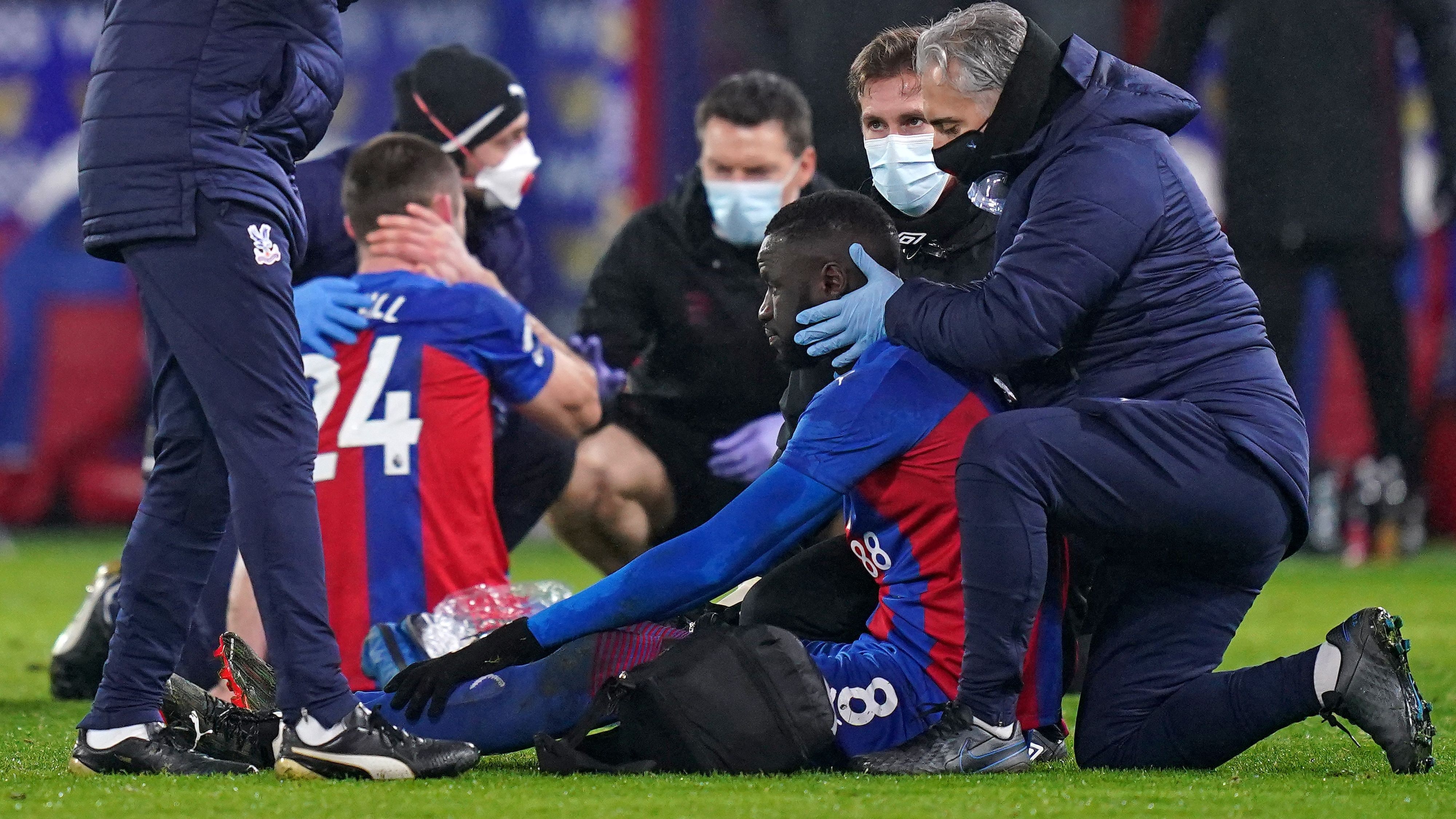

In a revelation that sends shivers down the spine, former Premier League powerhouse Cheikhou Kouyaté has lifted the lid on a staggering secret: he battled a serious heart condition throughout his entire illustrious career, a testament to unimaginable grit and a shocking indictment of the risks players sometimes take.
Key Points:
- Cheikhou Kouyaté officially retired at 36, confirming his exit from professional football.
- He played his entire career in top leagues with an undisclosed congenital heart condition.
- Kouyaté signed waivers at clubs like West Ham, Crystal Palace, and Nottingham Forest, taking personal responsibility for any on-pitch health incidents.
- The midfielder kept his condition secret from his family and national team doctors, fearing an early end to his career.
A Premier League Warrior's Unbelievable Confession
The football world is reeling from Cheikhou Kouyaté's candid interview with Senegalese channel Walf TV. The 36-year-old midfielder, renowned for his physical presence, didn't just announce his retirement; he revealed he had been living with a significant cardiac issue since birth. This wasn't a recent diagnosis; it was a lifelong battle hidden beneath the surface of his powerful performances.
Imagine the sheer mental and physical fortitude required to compete at the highest level of English football while carrying such a profound health secret. Kouyaté's admission reshapes our understanding of his remarkable career with West Ham, Crystal Palace, and Nottingham Forest.
Battling the Unseen: The Cardiac Ordeal
Kouyaté detailed the relentless monitoring he underwent in England. Despite rigorous bi-annual medical checks at all his clubs, where the condition was consistently flagged, he refused to let it derail his dream. He described the physical toll, particularly in challenging high-altitude or hot environments, where he experienced severe pain and debilitating cramps.
"If I play in the heat, it hurts terribly, during and after matches," Kouyaté explained. "It feels like a side stitch, for about five minutes, and then it goes away. When it happens, after the match, I get painful cramps. After 24 hours, it stops." This wasn't a minor discomfort; it was a profound physical struggle he endured repeatedly.
The Ultimate Sacrifice: Keeping Loved Ones in the Dark
Perhaps the most heartbreaking aspect of Kouyaté's revelation is the isolation he imposed upon himself. He never once confided in his family about his heart condition, nor did he inform the national team doctors. This extraordinary silence highlights the intense pressure and personal sacrifice many athletes make to prolong their careers.
"I never said anything. I didn’t want to be forced to stop early," he admitted. His decision speaks volumes about his dedication and fear of losing the sport he loved. The burden of this secret must have been immense, adding another layer of complexity to every match he played.
Club Protocols and Personal Responsibility: Signing the Waivers
Kouyaté's path through the Premier League was paved with personal risk. He openly admitted to signing insurance waivers at his clubs, effectively absolving them of responsibility should a tragic event occur on the pitch. This raises significant questions about player welfare and the extent to which individuals can override medical advice in pursuit of their passion.
"I signed the insurance papers stating that anything that might happen to me would be my responsibility," he revealed. While clubs maintain strict medical protocols, Kouyaté's case shows a player's determination can sometimes navigate, or even challenge, those safeguards.
Hanging Up the Boots: A New Chapter Begins for Kouyaté
The decision to retire came after a recent medical evaluation provided definitive advice. Anderlecht had approached him with an offer to play and begin coaching, but the subsequent check-up brought his playing days to an undeniable halt. "After the medical examination, the doctor asked me to stop playing football," Kouyaté confirmed.
While one chapter closes, another opens. Kouyaté is now expected to transition into coaching, potentially taking up Anderlecht's initial offer. His incredible journey, marked by both triumph and an unimaginable secret, will undoubtedly inspire future generations, albeit with a cautionary tale about the unseen battles athletes fight.