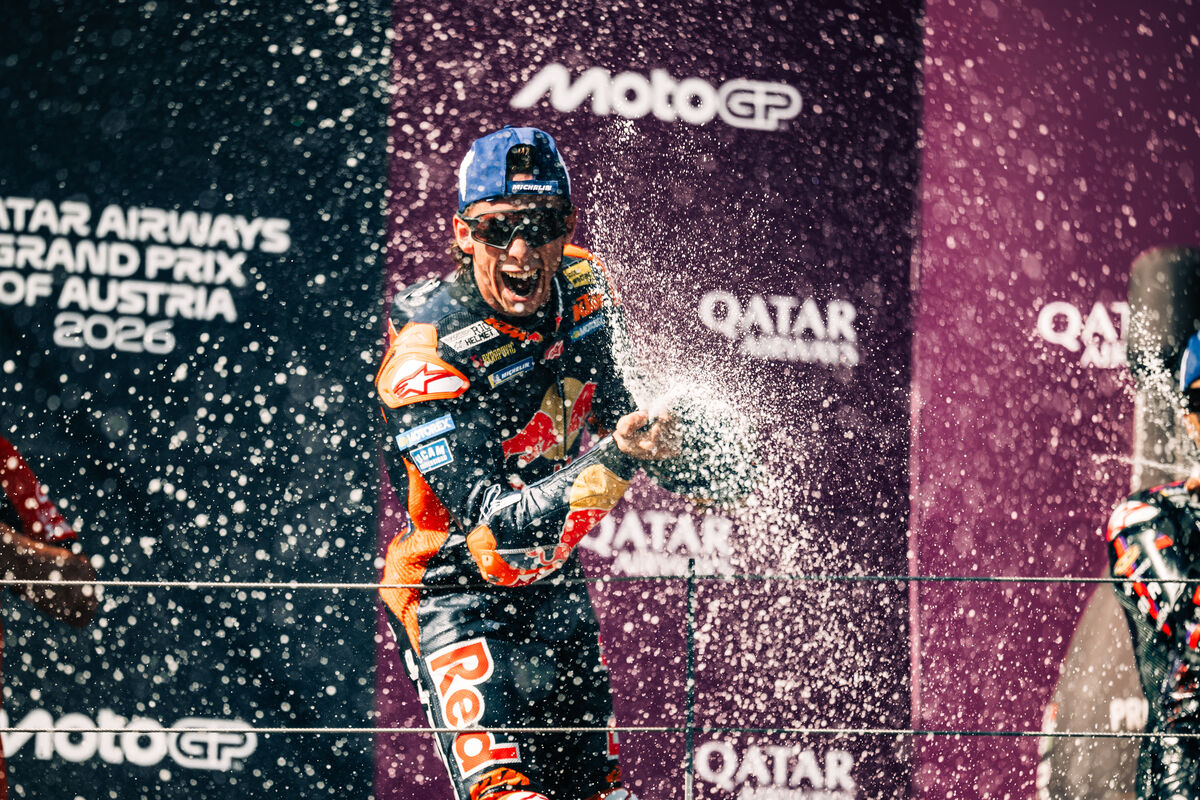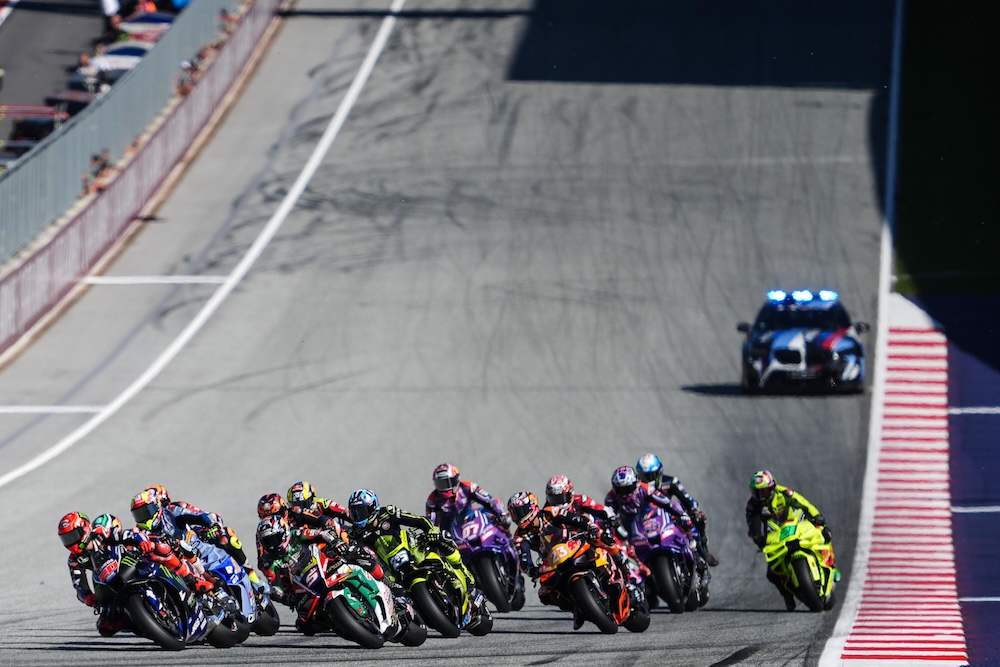
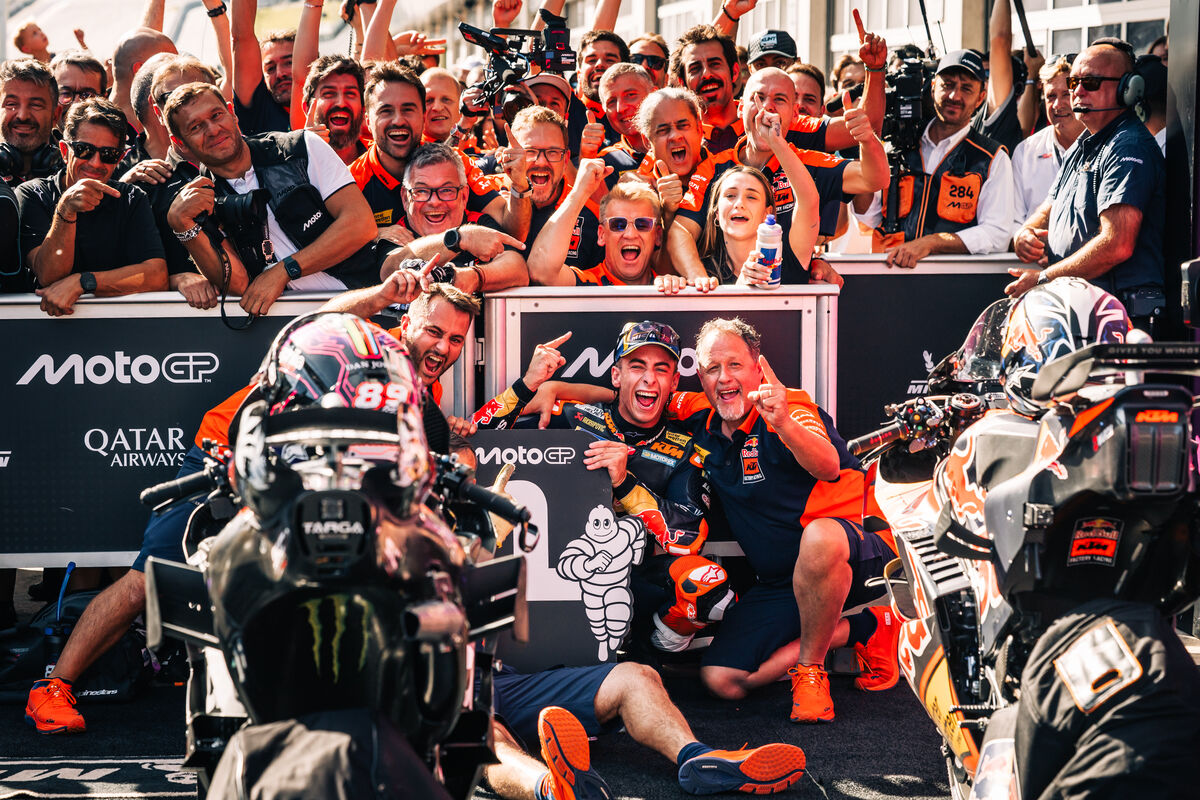

Pedro Acosta's maiden MotoGP victory at the Austrian Grand Prix delivered a moment of relief for KTM, ending a drought that stretched back to Miguel Oliveira's 2022 Thai Grand Prix win. However, as the celebrations settled, the result also served as a reminder of the mistakes the manufacturer must avoid if it hopes to build a more stable future.
KTM's triumph at the Red Bull Ring carried considerable emotional weight. As Acosta crossed the finish line, KTM CEO Gottfried Neumeister and motorsport director Pit Beirer embraced in the garage. The moment reflected the pressure that had built up around the manufacturer following a turbulent period both on and off the racetrack.
The victory came after a difficult stretch for KTM, which faced a serious financial crisis in late 2024. The company was placed under administration before being rescued by one of its existing shareholders. Its MotoGP project subsequently entered a period of uncertainty, with questions surrounding its long-term structure and technical direction.
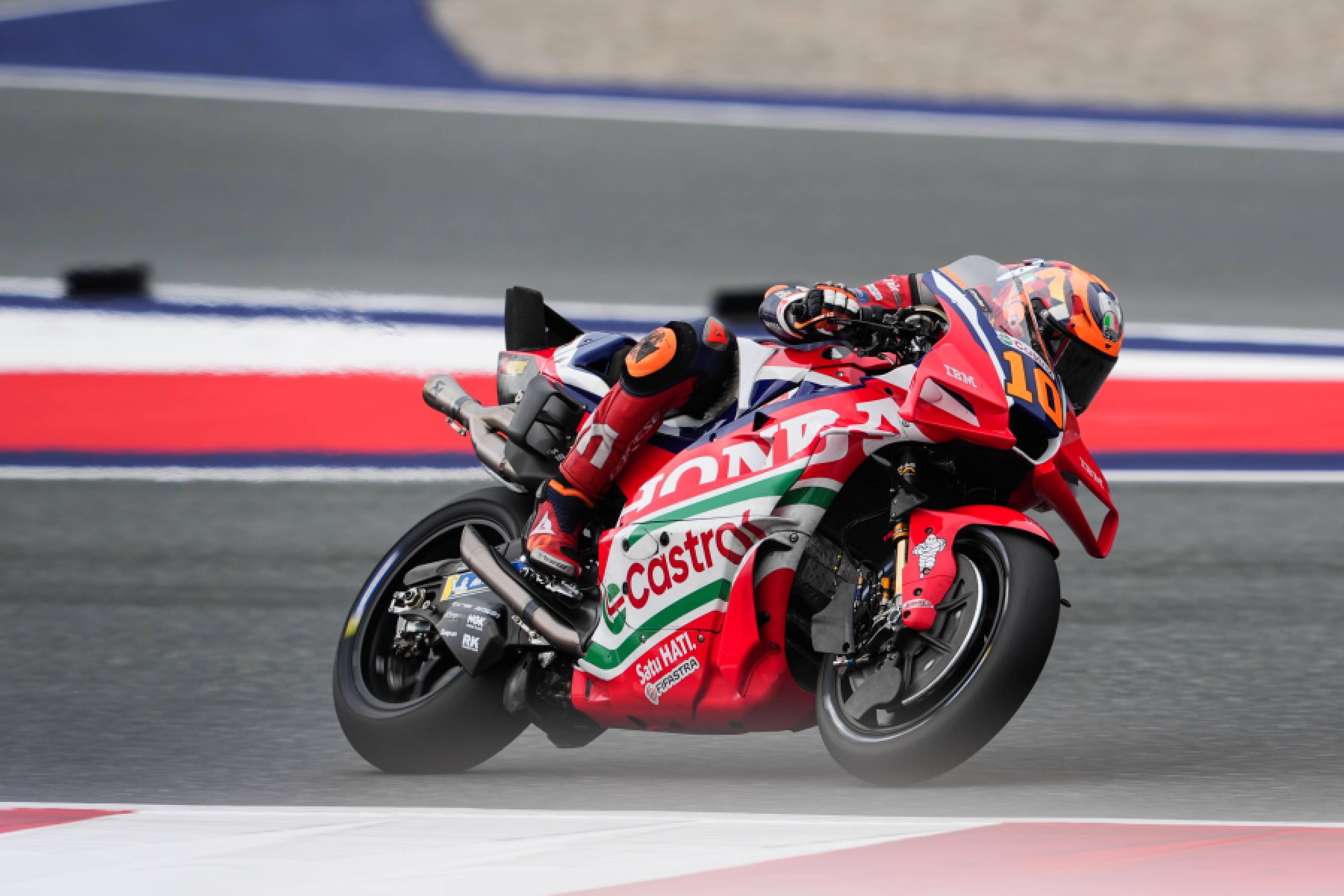
KTM's recent struggles have also raised questions about its approach to developing a competitive MotoGP machine. During the previous leadership era, the manufacturer maintained a firm commitment to its trellis frame philosophy, with former CEO Stefan Pierer defending the design as a key advantage.
However, engineers eventually moved away from that approach and adopted a carbon-fibre chassis in an effort to improve the RC16's competitiveness. The change illustrated the potential consequences of holding on to a technical philosophy for too long in a championship where manufacturers must continually adapt.

Source: Crash.net
The team also went through several management changes, including the departures of team manager Francesco Guidotti and engineer Fabiano Sterlacchini. Such changes contributed to a period of instability, while KTM's complicated rider contracts created further uncertainty within its racing operation.
Among the most significant consequences of that turbulent period has been the departure of Acosta himself. Despite developing into one of MotoGP's most promising riders with KTM, the Spaniard will join Ducati in 2027 as he pursues his ambition of fighting for the world championship.
Neumeister revealed that he had attempted to persuade Acosta to remain with KTM, but the rider had already set his sights on competing against Marc Marquez on the same machinery. With that decision made, KTM must now focus on rebuilding its competitive foundation while preparing for life without its current star.
Acosta's departure will be accompanied by changes to KTM's rider line-up, including the arrivals of Alex Marquez and Fabio Di Giannantonio. The manufacturer is also expected to reduce its support for Tech3 from 2027, with the satellite team moving towards greater independence under Guenther Steiner.
These changes leave KTM facing a crucial period of transition. While Acosta's victory demonstrates that the RC16 can still deliver a winning performance, one result does not erase the organisational and technical challenges that have affected the project.
The Austrian Grand Prix therefore represented both a celebration and a warning. KTM has shown that it can return to the top, but maintaining that progress will require consistent development, a clear direction and a willingness to learn from its previous mistakes.
For the manufacturer, the challenge now extends beyond celebrating its long-awaited victory. It must ensure that the lessons of its past continue to shape a more sustainable future in MotoGP.