


The 2026 F1 Championship is a battlefield of incredible talent, yet a strange humility grips the grid's top drivers. Despite thrilling back-to-back wins, Lando Norris of McLaren remains surprisingly skeptical about his car's championship potential. Is this strategic deflection or a harsh reality check?
Key Takeaways from the F1 Title Fight
- Lando Norris (McLaren) claims his MCL40 isn't consistently championship-ready, despite securing two recent Grand Prix victories and poles.
- Championship leader Kimi Antonelli (Mercedes) surprisingly suggests the Mercedes W17 might only be the third-best car on the grid.
- Car performance is highly circuit-dependent, with McLaren excelling in high-speed sections, Ferrari dominating slow corners, and Mercedes offering a more balanced package.
- Norris's distinctive driving style requires specific car characteristics, which the MCL40 does not consistently provide across all conditions and tyre compounds.
F1's Strategic Deflection or Genuine Concerns?
It's a perplexing narrative unfolding in the 2026 Formula 1 season. While the racing is intense, the drivers themselves are downplaying their own machinery. Championship leader Kimi Antonelli, driving for Mercedes, recently suggested his W17 might not even be the second-best car, let alone the dominant force it once was. This sentiment adds a fascinating layer to an already tight title fight.
Then there's Lando Norris. The McLaren ace has been on a phenomenal run, clinching two consecutive Grand Prix victories and two poles. Yet, despite closing the gap on Antonelli's 242 points from his current 159 points, Norris is adamant. He believes his MCL40 lacks the all-around capability to truly fight for the F1 title across the remaining rounds.
The McLaren MCL40: A Specialized Weapon
The heart of the debate lies in the highly specialized nature of the current F1 cars under the latest technical regulations. Each constructor seems to have engineered a machine with distinct strengths and weaknesses. The McLaren MCL40, for example, is an absolute rocket through fast corners – a characteristic Norris himself highlights.
However, this comes at a cost. The Ferrari SF-26 thrives when carrying speed into slower corners, while the Mercedes W17 appears to sit somewhere in the middle, offering a more balanced but perhaps less peaky performance. This means the competitive balance swings wildly depending on the circuit layout, making consistent dominance a Herculean task for any team.
Tyre Woes and Triumphs at Zandvoort
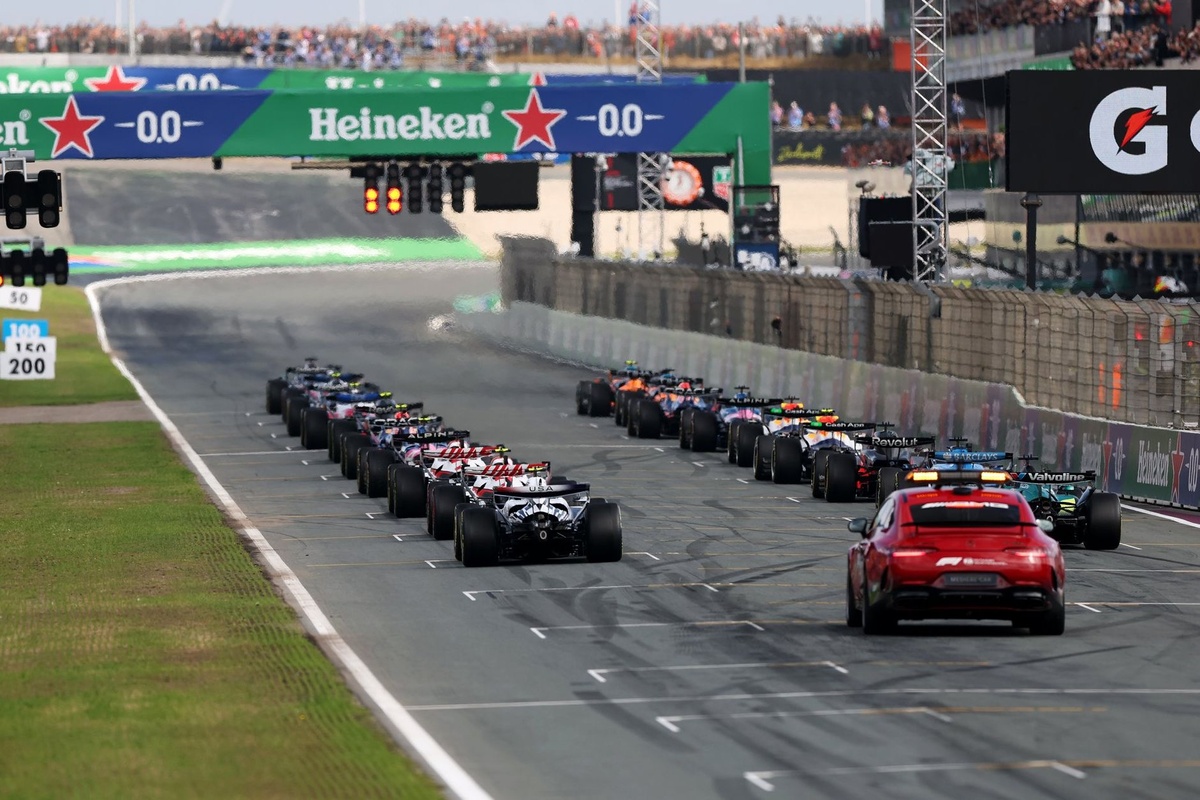
Norris's assessment isn't just theoretical; it was on full display at the Dutch Grand Prix. In Saturday's sprint race, on medium tyres, he battled significant rear degradation, allowing Ferrari's Charles Leclerc to overtake him late on. The main race, however, told a different story. After a challenging start on used softs, the switch to hard-compound tyres transformed his McLaren.
"When I get what I need from a car... I'm going to win a race," Norris declared after his Dutch Grand Prix victory. This stark contrast underscores how sensitive the MCL40 is to both track characteristics and tyre compounds, preventing it from being a universally potent threat.
The Driver's Edge: Norris's Unique Demands
Lando Norris isn't just any driver; his style bears a resemblance to that of Max Verstappen, favoring a nuanced blending of throttle and brake inputs. This approach requires an exceptional level of 'feel' from the car's front end, allowing him to precisely predict tyre grip and rotate the car for optimal cornering speed. The engineering challenge is immense: modern F1 cars prioritize consistent ride height for aerodynamics, which often dampens driver feedback.
McLaren has adapted to Norris's needs before, even redesigning front suspension geometry for him last season. When he gets that critical feedback and confidence in the car's rear rotation, his adaptability shines, especially in low-grip conditions. But without it, even a driver of his caliber struggles.
The Road Ahead for McLaren
Norris is pragmatic about the challenge. "It's clear where our weaknesses are," he admits. "Therefore, we need to attack those things. And until we do that, it's still going to be a very tough end of the season." For McLaren, the quest for F1 glory in 2026 isn't just about raw pace; it's about transforming a specialized weapon into a versatile, championship-winning machine that can deliver for its star driver on every track, in every condition.