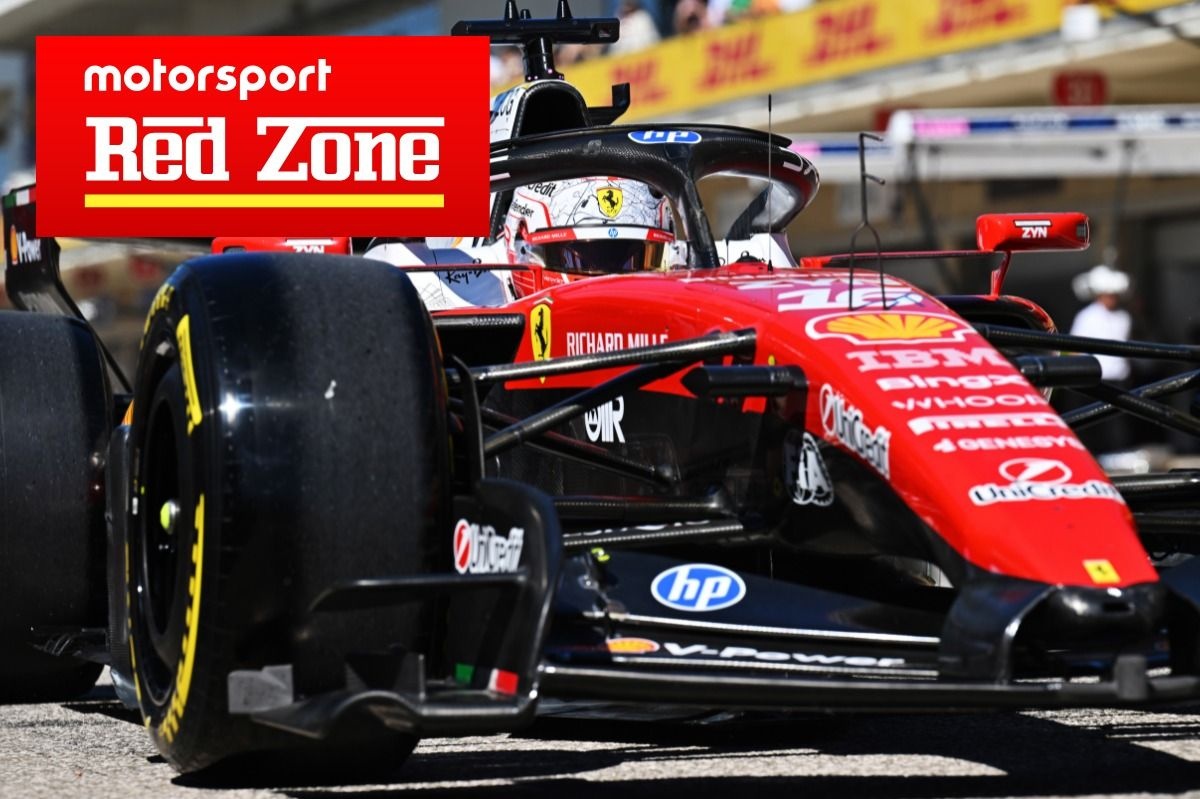
The roar of the crowd in Barcelona wasn't just for a Lewis Hamilton victory; it was a symphony of vindication for Ferrari Team Principal Fred Vasseur, whose unwavering faith in his legendary driver has finally paid off.
Key Takeaways from Hamilton's Breakthrough
- A Deep-Rooted Partnership: Hamilton's winning history with Vasseur's teams dates back over two decades to junior categories.
- Defying the Doubters: At 40, Hamilton faced scrutiny over his declining form, particularly during his final Mercedes years and initial Ferrari struggles.
- Vasseur's Bold Leadership: The Ferrari boss made the courageous choice to back Hamilton's significant demands for technical and structural changes within the Scuderia.
- The Barcelona Validation: Hamilton's commanding win confirmed that both the driver and Vasseur's vision were right, silencing critics.
A Bond Forged in Early Victories
For Lewis Hamilton, teaming up with Fred Vasseur at Ferrari was a reunion decades in the making. Their shared journey began over 20 years ago in Formula 3 Euro Series where a then 20-year-old Hamilton dominated for Vasseur's ASM team, securing an astounding 15 wins from 20 races. This success continued into GP2 with Vasseur's ART Grand Prix, another championship title, and ultimately paved the way for Hamilton's McLaren Formula 1 debut in 2007.
That foundational relationship endured, with Hamilton often expressing his admiration for Vasseur's leadership. "We always remained in touch," Hamilton recalled, "I thought that was going to be an amazing team manager at some stage and progress to F1... I think it really wouldn't have happened without him."
The Scuderia's Stuttering Start and Age Doubts
When Sir Lewis Hamilton arrived at Ferrari, he was no longer the young phenom. He was a seven-time world champion, turning 40, and coming off a couple of challenging seasons at Mercedes where George Russell often had the upper hand. Many observers, understandably, wondered if Hamilton was past his peak.
His first season with the Scuderia in 2025 did little to quell these concerns. Despite a sprint win in China, Hamilton struggled to consistently match Charles Leclerc's pace. Tensions were evident, leading to questions about his motivation and raw speed, drawing comparisons to other legends in their twilight years like Michael Schumacher's Mercedes comeback.
Hamilton's Relentless Drive for Change
Far from accepting a decline, Hamilton became a powerful advocate for change. He held meetings with Ferrari chairman John Elkann, CEO Benedetto Vigna, and Vasseur, submitting documents outlining necessary structural adjustments.
He pushed for technical revisions, discussing engine, front, and rear suspension with department heads. "Things that I want, issues that I have with this car," he articulated. These were significant demands, especially from a 40-year-old driver whose recent performance hadn't fully supported his legendary status.
The 'Italian Bono' Effect: Carlo Santi
One of the most visible changes came with the appointment of Carlo Santi as Hamilton's race engineer. While Vasseur humbly downplayed any single individual's role, the veteran engineer's presence alongside Hamilton on the Barcelona podium spoke volumes.
Santi's previous podium appearance was back in 2018 with Kimi Raikkonen's final Ferrari win. After a factory role, he returned trackside to assist Hamilton, quickly earning the moniker "Italian Bono." This partnership has clearly clicked, providing Hamilton with the synergy he sought.
Vasseur's Masterstroke: Trusting the Legend
Beyond personnel changes, Hamilton pushed for other shifts, including a switch from Brembo to Carbon Industrie braking systems – a significant move given Ferrari's long-standing relationships. These were just some of the "dozens of other, less visible things" Hamilton had "begged" Vasseur to implement.
For Vasseur, it was a precarious balancing act. He had to convince the team, a culture deeply rooted in tradition, to embrace the radical changes requested by a driver whose recent form was debatable. Yet, Vasseur stood firm, accommodating Hamilton's vision.
On Sunday in Barcelona, Hamilton openly thanked his team boss: "I wouldn't be in this team without Fred... he continued to believe, continued to be a good friend, continued to be a great team-mate and an ally and really supportive... he really listened at the end and I had to really ask, really ask for some of the changes. And he enabled them to happen, which I'm forever grateful for."
Vasseur, ever the humble leader, credited Hamilton's resilience: "I have zero merit on this... He was able to come back, to do a full reset and to continue to push, to continue to come to the factory on Tuesday morning. This commitment is a huge support."
The Ultimate Vindication
Bringing a seven-time world champion like Lewis Hamilton to Ferrari was, in many ways, an easy decision. The legacy, the star power, the sheer talent – it was undeniable. However, continuing to believe in that 40-year-old driver when his best seemed behind him, and then enabling him to reshape parts of a storied team, was anything but easy.
The Barcelona victory wasn't just a landmark moment for Lewis Hamilton; it was a profound vindication for Fred Vasseur's unwavering belief, astute management, and the courage to trust his gut. He truly slept best last night.