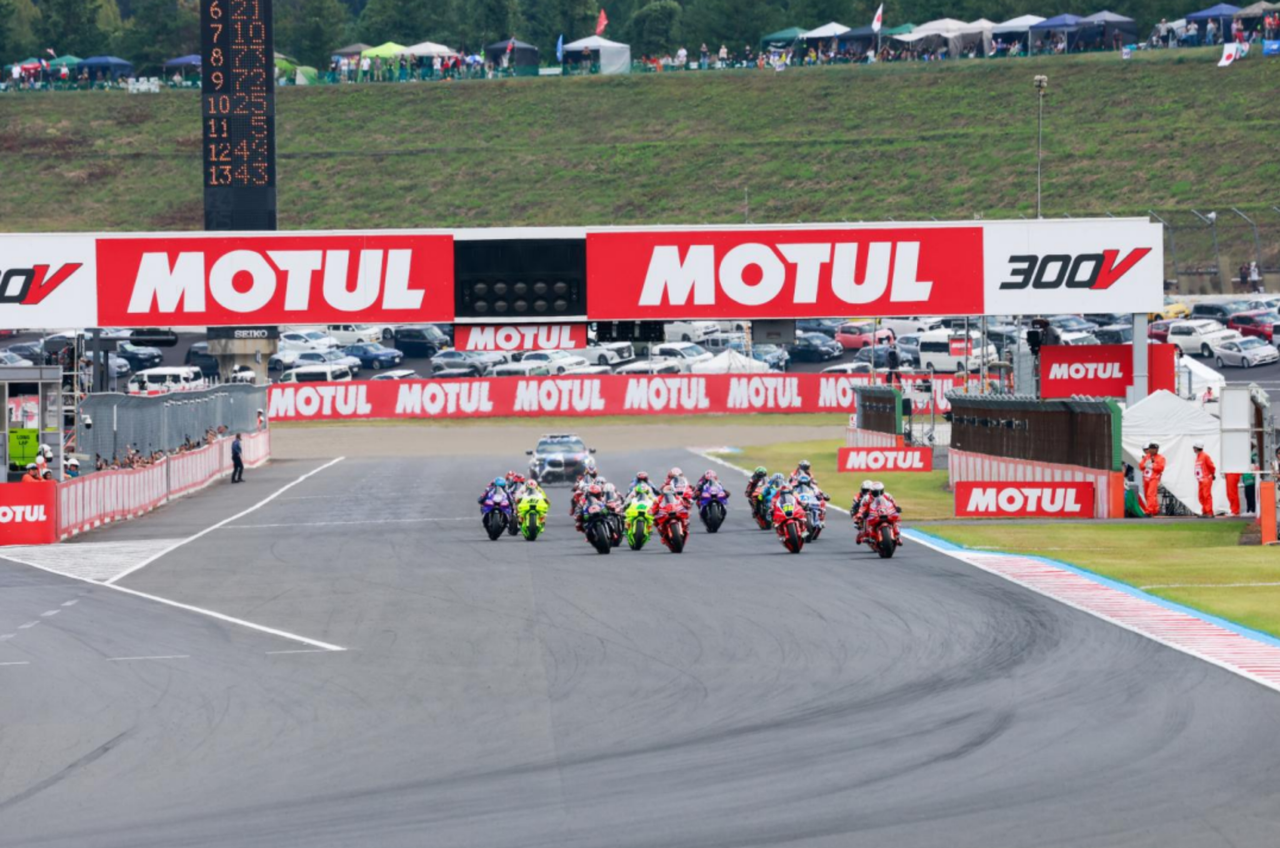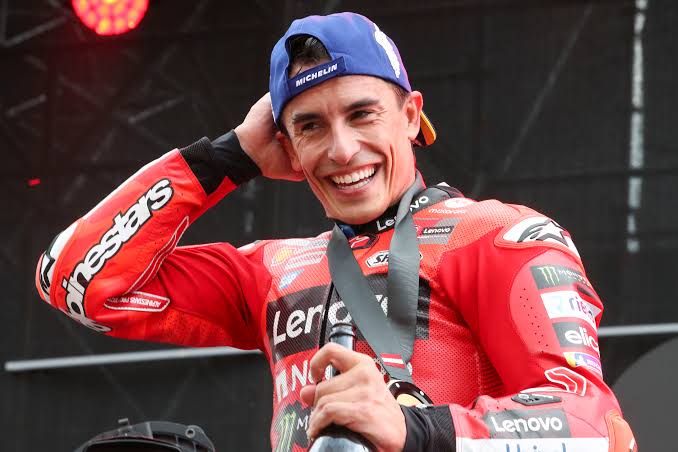
A year after sealing his seventh MotoGP premier-class world title at Motegi, Marc Márquez returns to Japan with a very different approach to racing.
The Ducati rider arrives at the circuit as a champion who has learned to manage his body and energy as carefully as he manages his bike. His latest transformation has been shaped by another difficult chapter in an injury-filled career, forcing him to rethink how much he asks of himself away from the track as well as on it.
Márquez's road back to the top has been anything but straightforward. A crash at Jerez in July 2020 triggered a long and complicated recovery, with six major operations following over the next several years. At one point, the Spaniard even considered whether continuing his career was worth the physical cost.
That made his 2025 title triumph at Motegi particularly significant. After years of setbacks, Márquez finally secured his seventh premier-class crown and celebrated with an emotional outburst of relief.
But the celebrations did not last long.
Márquez admitted shortly after winning the championship that he felt a sense of emptiness and had little desire to immediately return to the bike. Then came another setback at the Indonesian Grand Prix, where a crash involving Marco Bezzecchi resulted in another shoulder injury.
The latest injury forced Márquez into another recovery process and changed the way he approached the 2026 season.
His priorities have become clearer. Rather than pushing himself through every commitment, Márquez has become more willing to sacrifice activities that could interfere with his recovery.
Before the British Grand Prix, for example, he turned down a promotional appearance in London because he felt the extra time at home would be more valuable to his rehabilitation.
“Why didn't I go to London? Because I have to look after my recovery, and spending one more day at home can make a big difference,” Márquez explained.
The difficult weekend that followed appeared to justify his decision. Márquez finished seventh and admitted he had struggled to control his right arm.

Source: FMT
Yet his more measured approach soon paid off. He responded with consecutive double victories at Aragon and Misano, briefly moving back ahead of Jorge Martín in the championship standings.
His approach to the 2026 season has also been reflected in the way he manages his schedule between races. During the Asian leg of the championship, Márquez planned to remain in Indonesia with his partner after the Mandalika round rather than immediately travelling to Australia, giving himself additional time to recover and adjust to the demanding schedule.
His daily routine has become similarly focused on physical management. Márquez monitors his workload and recovery through exercises and biometric data, using the information to determine how much work his body can handle.
That information also influences how he approaches a race weekend.
“I go out on Friday and I already get an idea of how things are going to go,” Márquez said. “That allows me to regulate myself so I can optimize my energy and the level of risk I take every time I go out on track.”
The change is significant for a rider whose career has often been defined by pushing beyond the limit. Márquez still has the speed and ambition that made him a seven-time premier-class champion, but experience has taught him that managing his physical condition can be just as important as finding the last fraction of a second.
His new Ducati contract, which runs through the end of 2028, further underlines his importance to the factory. After initially joining Ducati's MotoGP operation in 2024 with the immediate goal of earning a place in the factory team, Márquez had established himself as a central figure by the following season.
Now, as he returns to the circuit where he secured his latest championship, Márquez is no longer simply chasing speed at any cost.
The #93 is racing with a different calculation. Every training session, travel day and lap is being managed with the bigger picture in mind, allowing him to preserve his body while continuing to compete at the highest level.
Motegi therefore represents more than a return to the scene of his 2025 title triumph. It is another test for a version of Márquez that has learned that longevity can be just as important as victory.