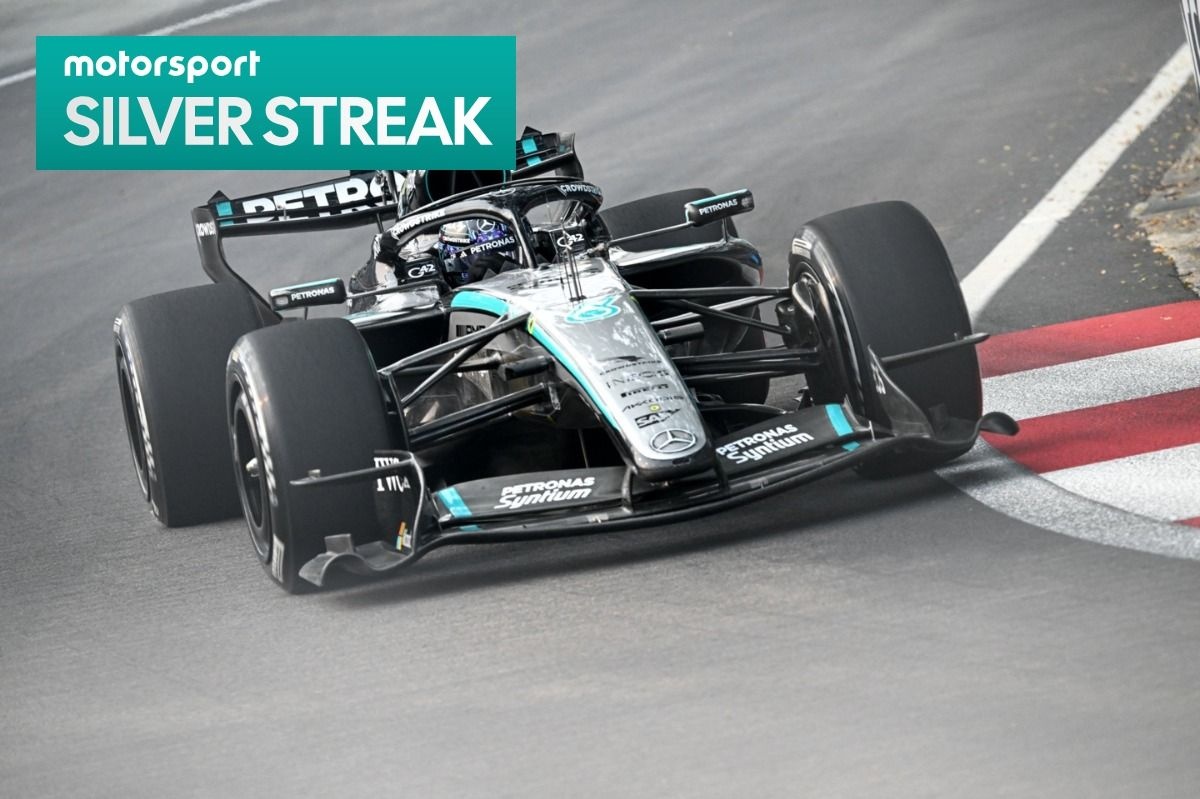
The podium at the Dutch Grand Prix tells only part of the story for Kimi Antonelli. While securing a crucial second place and extending his championship lead, the Mercedes youngster endured a difficult second half of the race, prompting the team to launch a "deep dive" into his car's mysterious balance issues.
Key Points:
- Kimi Antonelli finished P2 at the Dutch GP, extending his championship lead.
- He struggled with increasing oversteer and an unusual balance after changing tyres.
- Mercedes has launched a "deep dive" into the data to understand the unexplained car behavior.
- The team hopes to resolve the issue before Antonelli's home race in Italy, where he will also take an engine penalty.
A Strong Start Turns Into a Balance Struggle
Kimi Antonelli started the Dutch Grand Prix in impressive fashion. After qualifying third, the Mercedes driver got off the line ahead of teammate George Russell to move into second place by the end of the opening lap.
However, things became increasingly difficult as the race progressed. With each tyre change, Antonelli found more problems with the balance of his Mercedes W17, particularly with oversteer.
"It was really weird because I felt good with the medium. I felt decent on the first hard, but then on the second one it just felt really odd," Antonelli explained after finishing runner-up to Lando Norris.
The balance issue became particularly challenging in the second half, when Antonelli had to defend against the charging Ferrari pair of Lewis Hamilton and Charles Leclerc, while also closing in on Russell.
Mercedes Digs Into the Data
Mercedes has wasted no time investigating the issue ahead of the next race in Italy. Trackside Engineering Director Andrew Shovlin confirmed that the team is examining the data to understand why the car became increasingly difficult to drive.
"Each tyre had a bit more oversteer than the tyre before it and we're trying to understand why that was," Shovlin explained.
What makes the issue particularly puzzling is that Mercedes did not make changes to the car that would normally explain the shift in balance.
"Now, we didn't change the car, we didn't add any aero balance, which is the sort of thing that could have explained it," Shovlin added.
The team is therefore conducting a detailed analysis before the next round, especially as the competitive field continues to tighten. Mercedes is also still waiting for its major update, which Shovlin believes will help improve performance.
Russell's Help Secures P2
The unpredictable balance left Antonelli with "little confidence in the car" towards the end of the race. However, the Mercedes team managed to protect his second-place finish.
With Antonelli and George Russell running offset strategies, Russell allowed his younger teammate through, helping Antonelli secure P2 and extend his championship lead.
"George, you know, I have to thank him because he made my life a lot easier," Antonelli said.
The Italian also acknowledged that the strategy carried some risk, suggesting they could potentially have stayed out on the same set of tyres until the finish.
Despite those concerns, Antonelli viewed the result as a strong team effort and felt P2 was the maximum Mercedes could achieve, particularly given the pace of the McLarens in the second half of the race.
Home Race Brings Another Challenge
Now, Mercedes must get to the bottom of Antonelli's balance problems before the next round in Italy, his home race. The team will be hoping its investigation can identify the cause of the increasing oversteer and help the W17 deliver a more consistent performance.
However, Antonelli will face another challenge in Italy: Mercedes has confirmed that he will take an engine penalty as a result of reliability issues earlier in the season. With the championship battle tightening, resolving the W17's balance problems will be crucial as Antonelli heads into his home Grand Prix.