

The roar of MotoGP engines is about to get a little safer. Following a harrowing multi-rider pile-up at the Barcelona-Catalunya Circuit, the sport's governing bodies are implementing critical rule changes aimed at preventing first-corner chaos, starting with the upcoming German Grand Prix. This decisive action underscores a commitment to rider well-being, transforming how races begin.
- MotoGP will increase grid row separation by three metres from the German Grand Prix (Sachsenring).
- The use of ride-height devices at race starts will be banned from the British Grand Prix in mid-August.
- These changes are a direct response to the Barcelona crash, which injured Johann Zarco.
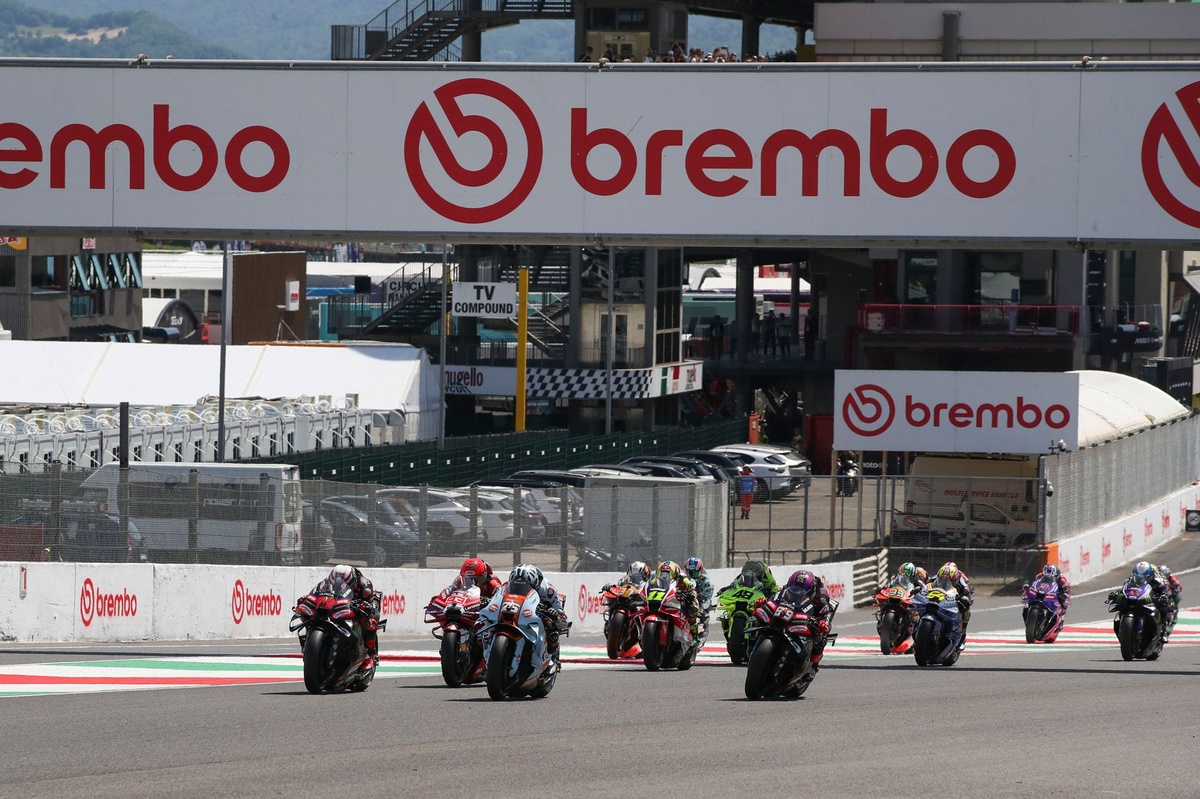
- The overarching goal is to reduce congestion and significantly improve safety into Turn 1.
A Wake-Up Call: Barcelona's Costly Crash
The catalyst for these urgent reforms was the terrifying incident at the Catalan Grand Prix. A brutal chain-reaction crash at Turn 1 saw multiple bikes tangled, with Johann Zarco suffering a severe knee injury after his leg became trapped in Francesco Bagnaia's Ducati. This wasn't just a race incident; it was a glaring spotlight on the inherent risks of tightly packed starts.
For weeks, MotoGP Sports Entertainment Group (MGPSEG) and the Motorcycle Sport Manufacturers Association (MSMA) have been in intense discussions. Their mission: to strategically reduce the high-speed compression into the first corner, a notorious hotspot for race-ending collisions.
Immediate Safety Overhaul: Grid Spacing Expands
The first major change kicks in immediately. Starting with the Sachsenring round on July 12th – the German Grand Prix – the distance between each row on the starting grid will be extended by an additional three metres. This seemingly small adjustment is monumental, giving riders more precious space and crucial separation off the line.
More room means less chance of accidental contact, less jostling for position, and a cleaner run into that critical first turn. It’s a proactive step designed to disperse the field more effectively from the moment the lights go out.
The Next Step: Ride-Height Devices Targeted
Looking ahead to the post-summer break, another significant regulation will take effect. From the British Grand Prix in mid-August, the use of ride-height devices at the start of races will be outlawed. These sophisticated systems, which lower the bike's rear for better acceleration, have inadvertently contributed to the rapid, compact surge into Turn 1.
While rear ride-height devices will still be permitted during the race itself, the ban specifically targeting race starts is a game-changer. MotoGP Sporting Director Carlos Ezpeleta confirmed these discussions, noting the urgency post-Barcelona. This restriction, initially planned for 2027, has been fast-tracked, highlighting the severity of the safety concerns.
Why the Ban Matters
The collective decision by teams ensures this critical safety measure applies universally across all circuits, not just historically risky ones like Silverstone or Phillip Island. By limiting the technological advantage at the launch, MotoGP aims to foster a more organic spread of the pack, mitigating the very circumstances that led to the Catalan GP drama.
This two-pronged approach – wider grids and restricted tech at starts – sends a clear message: rider safety is paramount, and MotoGP is ready to adapt its rules to protect its gladiators.