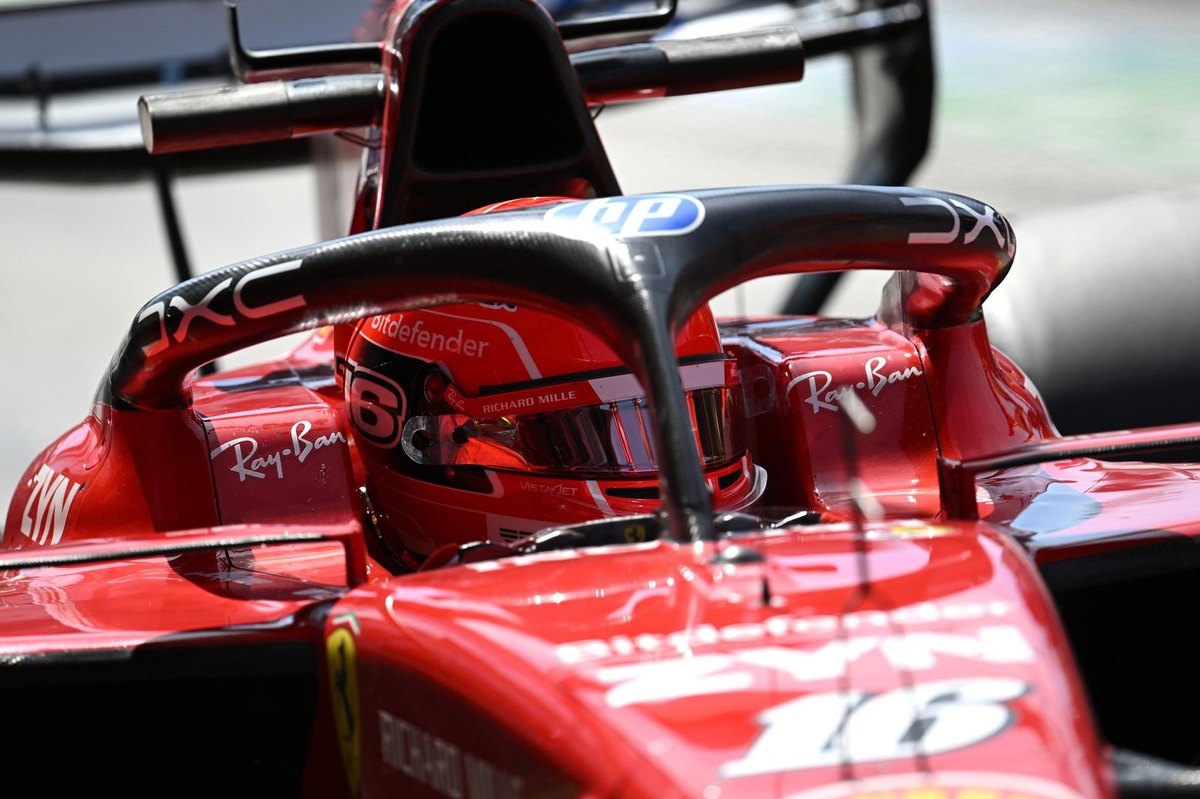
It's not every day an F1 driver achieves immortality, but McLaren sensation Oscar Piastri has done just that, having a 98-million-year-old wasp species named in his honor! This incredible tale spans millions of years and continents, uniting cutting-edge science with the thrill of top-tier motorsport.
Key Takeaways:
- McLaren driver Oscar Piastri is now the namesake for Gwesped piastrii, a Cretaceous Period fossil wasp.
- Oxford research fellow Corentin Jouault, a devoted F1 enthusiast, spearheaded the unique dedication.
- The 98-million-year-old specimen was discovered encased in Myanmar amber during a research trip to China.
- The specific spelling
piastriiadheres to stringent zoological nomenclature rules for male surnames ending in 'i'.
From Grand Prix Grid to Prehistoric Past: Piastri's Enduring Legacy
The story began as a light-hearted jest among F1-loving colleagues at Oxford. Corentin Jouault, a 27-year-old French research fellow, found himself immersed in spirited debates about the sport. A lifelong fan, Jouault openly admits his admiration for Oscar Piastri's exceptional driving and calm, professional demeanor. It was during these discussions that he jokingly declared he would name his next discovery after the rising McLaren star.
A Promise Entombed in Amber
Fast forward a few months, and the joke became a stunning reality. While on a research stay in China, examining one of the world's most impressive collections of fossil insects preserved in amber, Jouault and his colleague Prof. Di-Ying Huang stumbled upon something extraordinary. Trapped within a 98-million-year-old piece of Myanmar amber was an unusual wasp, clearly belonging to an entirely new lineage.
"From the beginning, we suspected that it represented something entirely new," Jouault explained. The team, including Prof. Celso O. Azevedo, embarked on a meticulous taxonomic study, carefully cutting and polishing the amber to reveal intricate anatomical details. This painstaking process confirmed their suspicions: they had discovered an extinct species from the age of dinosaurs.
It was at this pivotal moment that Jouault realized, "This is it. I've found my Piastri species." The timing felt particularly apt, coinciding with Oscar Piastri's remarkable rookie season, captivating fans worldwide.
Decoding the Gwesped piastrii Moniker
The scientific name Gwesped piastrii isn't just a simple tribute. Jouault diligently followed strict zoological nomenclature. He clarified that the double 'i' in piastrii is not a typo, but a requirement: when a species is named after a man whose surname already ends in 'i', an additional 'i' is appended. Scientifically, the new species is distinguished by its "higher number of flagellomeres and distinctive forewing venation" – details that would sound right at home in an FIA technical report.
More Than Just a Name: A Nod to McLaren's Heritage
The connection to Piastri and McLaren runs deeper than just the name. The very piece of amber housing the ancient insect boasted a beautiful orange hue, immediately reminding the researchers of McLaren's iconic papaya livery. This visual link also provided a subtle nod to Prof. Celso Azevedo's Brazilian heritage, honoring the deep historical ties between McLaren and Brazil, largely forged by the legendary Ayrton Senna.
The Buzz Heard 'Round the F1 World
The publication of the scientific paper in Palaeoworld ignited an unexpected sensation within the F1 community. Jouault, accustomed to the niche world of palaeontology, was genuinely astonished by the outpouring of attention. His phone was buzzing with notifications, likes, and messages as the news rapidly spread. Perhaps the most rewarding reaction was seeing the McLaren team, and Oscar Piastri himself, respond with a mix of bemusement and appreciation.
When asked about future dedications to other F1 legends, Jouault chuckled. While unlikely to be a frequent occurrence, he admitted that if he were ever to name another species after an F1 driver, he might be tempted to honor an earlier generation, perhaps a fellow Frenchman like the legendary Alain Prost, one of the sport's all-time greats.