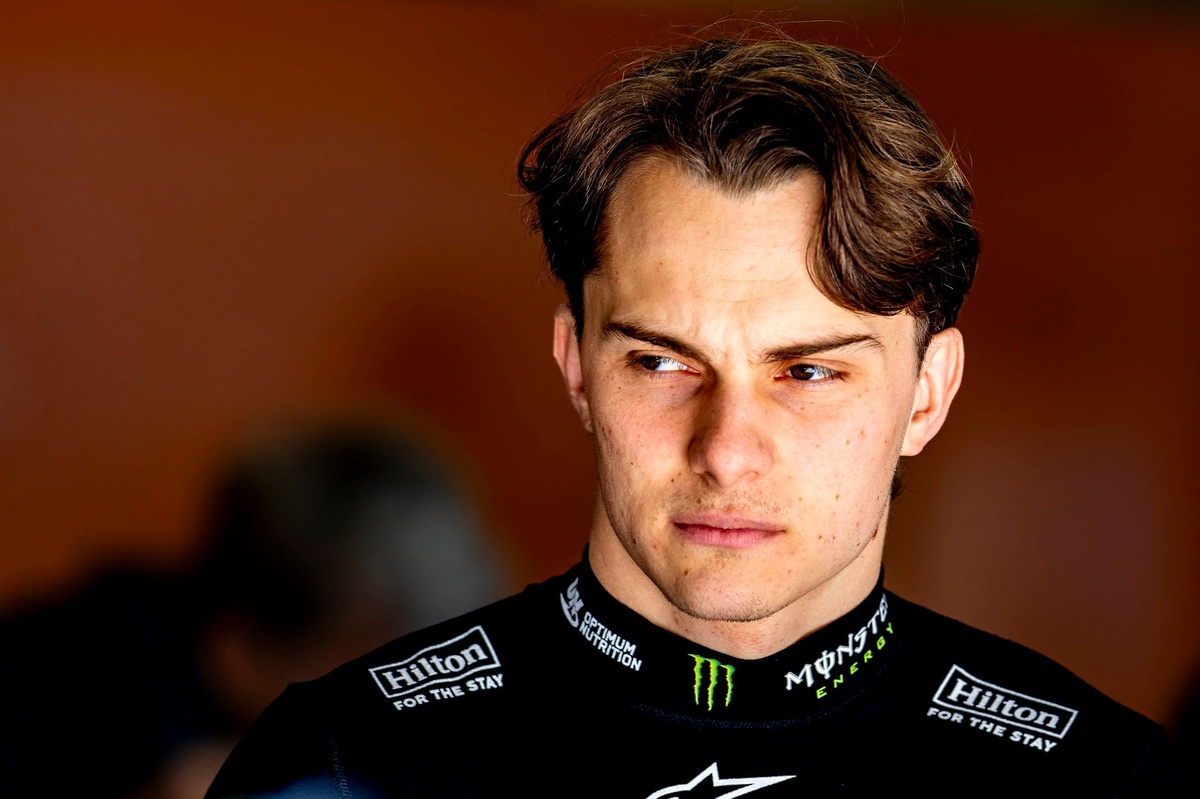

The 2024 F1 season has barely begun, yet Mercedes has already stamped its authority, leaving rivals like McLaren grappling with a stark reality check. With a perfect record in both Grand Prix and sprint races, the Silver Arrows are flying, forcing competitors to scrutinize every aspect of their dominant performance. Oscar Piastri offers a candid assessment of the challenge facing McLaren, dismissing whispers of "magic" and pointing to fundamental strengths.
Key Takeaways from the Grid
- Mercedes has achieved a flawless start to the 2024 F1 campaign, winning every race and sprint.
- Oscar Piastri attributes Mercedes' edge over McLaren to superior downforce and optimized power unit deployment, not a secret "trick."
- The FIA cleared Mercedes of any regulatory breach regarding their active front wing aerodynamics after an internal investigation.
- McLaren acknowledges the need for significant internal car development to close the performance gap to the front-runners.
The Silver Arrows' Unstoppable Start
The opening rounds of the 2024 F1 season have belonged to Mercedes. Despite the season being only three races deep – with the Japanese Grand Prix marking the third round – the team's drivers have secured victory in every single grand prix and sprint race. This commanding performance has already positioned George Russell as an early championship favourite, a clear signal of the team's potent package. Meanwhile, McLaren's season has been plagued by misfortune, with Oscar Piastri notably failing to start a Grand Prix this year due to technical issues.
Piastri's Candid Assessment: No Magic Formula
For McLaren, the challenge is immense. They find themselves trailing not only Mercedes but also Ferrari in the pecking order. Oscar Piastri, a strong title contender just last season, admits the gap is significant. When pressed on the root cause of Mercedes' speed, he was unequivocal: "There's nothing magical about it." Instead, Piastri highlighted core performance areas.
"I think they just have probably more downforce," Piastri explained. "I think they're using the power unit a bit better than us at the moment, and it's as simple as that, really. There's no magic." This frank admission underscores that Mercedes' advantage is built on fundamental engineering excellence rather than exploiting obscure loopholes.
The Data Doesn't Lie
Piastri elaborated on how quickly Kimi Antonelli's Mercedes pulled away during the Chinese Grand Prix sprint race restart. He emphasized that direct observation from the cockpit is less useful than deep data analysis. "The more helpful tool is definitely looking at the data, and we're losing a bit everywhere," he revealed. "There's not really one area where we're weak or one area that we're strong in. It's just a bit across the board, so I think just finding more downforce is our main opportunity."
He also pointed to Ferrari as another benchmark, noting their impressive cornering speed despite a potential trade-off on the straights. This holistic view suggests McLaren needs to draw inspiration from multiple sources to elevate their overall package.
Aerodynamic Intrigue and FIA Verdict
Whispers regarding Mercedes' active aerodynamics have circulated in the paddock. Footage from the Chinese Grand Prix appeared to show the Mercedes front wing adjusting in two distinct stages when transitioning from straight-line to cornering mode. This prompted at least one rival team to seek clarification from the FIA, a common tactic when suspicions of rule exploitation arise.
The regulations permit a 400-millisecond window for the wing's transition. While a staged closure could theoretically optimize car balance and tire load, the FIA investigated thoroughly. They ultimately confirmed that Mercedes complied with the timing rules, accepting the team's explanation that a hydraulic actuator issue, not a deliberate design feature, caused the apparent disparity.
Beyond the Wing: Power Unit Prowess
Despite the FIA's clearance, some paddock observers still believe Mercedes holds a potent "straight-line mode" advantage, allowing for aggressive energy harvesting without a significant speed penalty. Piastri, however, maintained a balanced perspective. "I don't know if it's [Mercedes’ advantage] anything to do with straight mode itself," he stated. "I think we kind of understand where we're losing a bit in terms of the power unit usage... there's just little bits everywhere."
He stressed the cumulative effect of seemingly minor differences, especially on the power unit side. Even within the same team or between laps, straight-line speeds can vary wildly due to intricate interplay of factors. This highlights the incredible complexity of F1 and the fine margins at play.
McLaren faces a monumental task to catch up. Yet, Piastri's insights underscore that genuine performance gains through relentless development, rather than chasing phantom "magic," will ultimately dictate their success. The battle for F1 supremacy is only just beginning!