
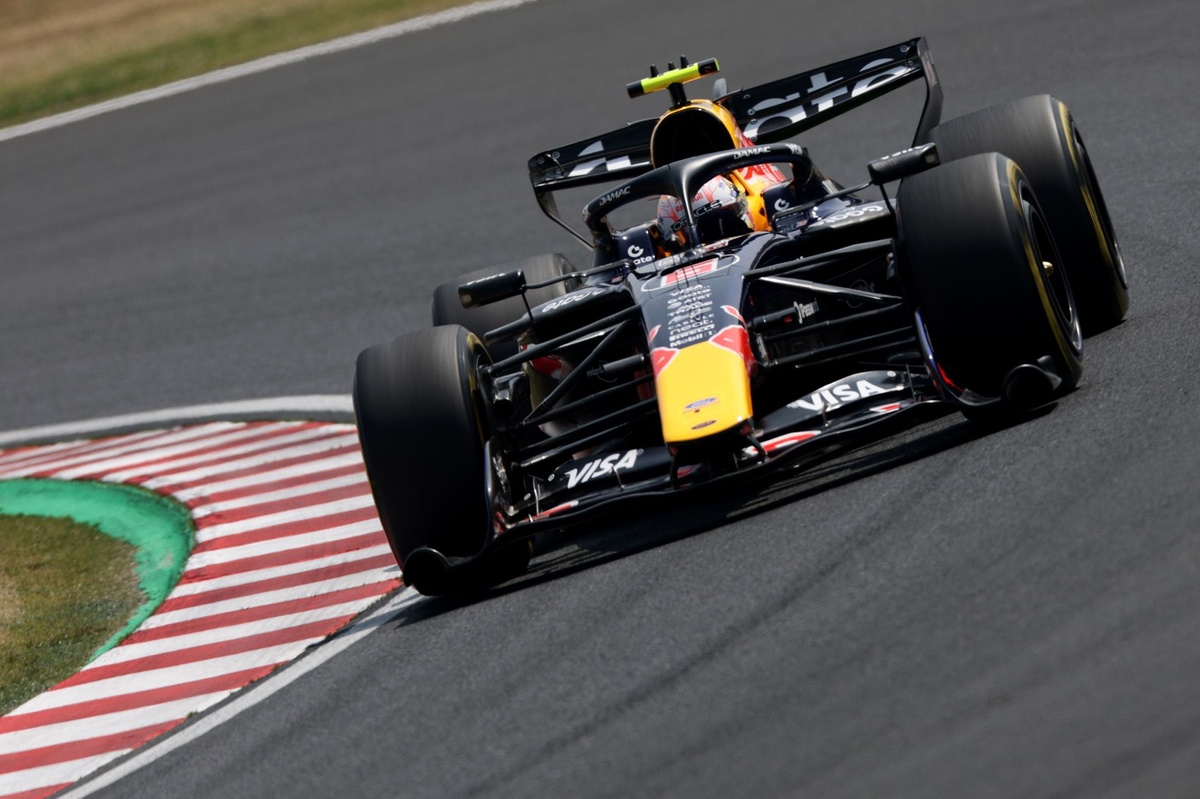

The once-invincible Red Bull Racing has hit a wall, and the F1 paddock is buzzing with an uncomfortable truth: their current performance under new regulations is a stark, unsettling reality check.
Key Points: Red Bull's Current F1 Struggles
- Red Bull currently sits a shocking sixth in the constructors’ championship with just 16 points from three race weekends.
- The RB22 is, on average, 0.97 seconds slower in qualifying and 1.26 seconds slower in races than Mercedes, making it the slowest Red Bull car in 11 years.
- Despite initial concerns, the Red Bull Powertrains engine isn't the primary culprit; a lack of downforce and a high low-drag setup seem to be the core issue.
- History suggests a long road to recovery, potentially mirroring the seven seasons it took to regain dominance after the 2014 hybrid era shift.
The Alarming Reality Check: Red Bull's Midfield Plunge
For a team accustomed to dominance since 2009, Red Bull’s start to the new Formula 1 regulatory era is nothing short of disastrous. While internal forecasts acknowledged a potential bumpy road – especially as they're now building their own Red Bull Powertrains engine – few could have predicted the extent of their struggles.
With a dismal 16 points after just three race weekends, Red Bull finds itself languishing in sixth place in the constructors’ championship. Outright performance metrics paint an even bleaker picture: the team is an average of 0.97 seconds off the pace in qualifying, and a staggering 1.26 seconds per lap behind Mercedes in race trim. This isn't just a blip; this is a full-blown crisis that sees them battling Alpine and Haas in the upper midfield, four tenths adrift of McLaren.
Echoes of the Past: A Troubling Return to 2015 Pace
This isn't the first time Red Bull has faced significant adversity, but it marks a historic low. The current RB22 is the slowest Red Bull car in 11 years, a fact that sends shivers down the spines of their loyal fanbase. The last major setback of this magnitude dates back to 2015, a season where Daniel Ricciardo and Daniil Kvyat battled in a car that trailed the leaders by an average of 1.18 seconds in qualifying, with Mercedes setting the benchmark then, just as they are now.
Intriguingly, Red Bull was actually more competitive in 2014, the very first hybrid season, with a 0.83 seconds deficit to Mercedes, still enough to secure a clear second-place finish in the championship. The historical parallel is chilling: it took Red Bull a painstaking seven seasons to re-emerge as a dominant force after the 2014 engine revolution, only reducing the qualifying gap to Mercedes to under half a second by 2019.
Beyond the Engine: Unpacking the Root Cause of the Struggle
While the monumental task of developing their own Red Bull Powertrains engine naturally draws scrutiny, evidence suggests the power unit isn't the primary issue. Across circuits like Australia, China, and Japan, Red Bull's top speed has remained competitive, often matching or even exceeding Ferrari's pace.
The real problem lies in the corners. Significant time loss has been observed in key technical sections, such as China's second sector and Japan's high-speed Esses. A revealing comparison with sister team Racing Bulls further isolates the problem: both teams use the same engine, yet Racing Bulls exhibits mid-field top speeds while Red Bull is among the leaders. This strongly indicates an overall lack of downforce on the RB22 and a car concept excessively skewed towards low drag – a philosophy Red Bull last employed with its underpowered Renault engines at the start of the hybrid era.
The Road Ahead: A Marathon, Not a Sprint
The path back to the front will undoubtedly be a long and arduous one for Red Bull. While the current situation isn't entirely analogous to the 2014 hybrid era – particularly with Red Bull now controlling its own engine development – fundamental issues with the car's aerodynamic philosophy must be resolved. Fans should brace themselves for a journey that will test their patience, as immediate wins seem a distant prospect.