The tennis world is reeling after Aryna Sabalenka, the dominant World No. 1, endured a heartbreaking and utterly baffling collapse at Roland Garros, once again proving that mental fortitude is as crucial as physical prowess on the clay courts of Paris. Her dreams of a third consecutive Grand Slam final evaporated in a blur of unforced errors and visible frustration.
Key Points from Sabalenka's Shock Exit:
- Aryna Sabalenka, leading by a set and two breaks, then serving for the match, lost 10 consecutive games to Diana Shnaider.
- The World No. 1 cited "overemotional" play and windy conditions as factors in her 3-6, 7-5, 6-0 defeat.
- This marks her second straight dramatic Roland Garros collapse, reminiscent of her 2025 final loss.
- The exit leaves the women's draw wide open, as Iga Swiatek, Coco Gauff, and Elena Rybakina were already out.
Sabalenka's Stunning Meltdown on Court Philippe-Chatrier
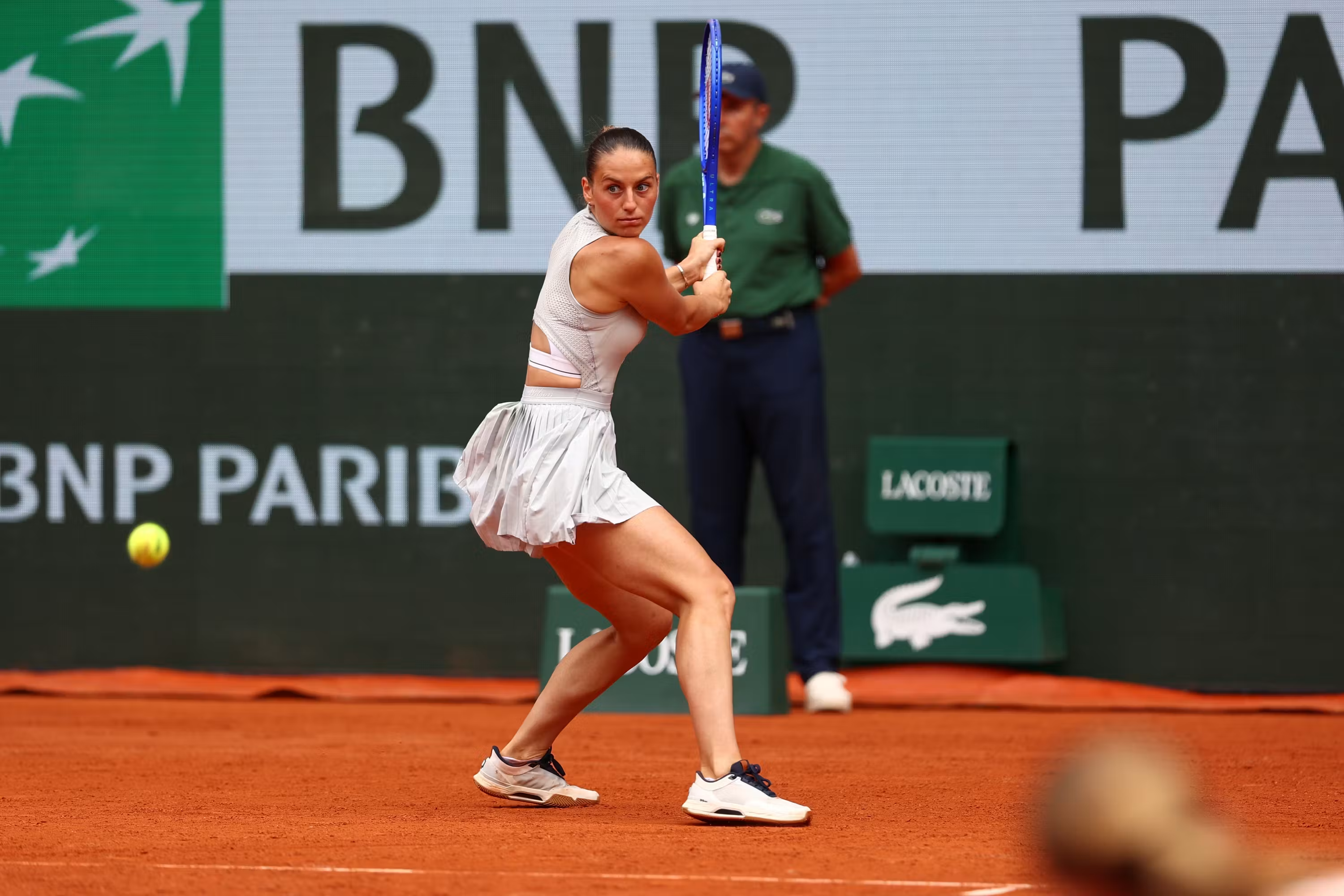
What started as a confident march into the quarterfinals turned into a nightmare for Aryna Sabalenka. Leading Diana Shnaider, the No. 25 seed, by a set and a significant lead in the second, the path to victory seemed clear. However, a combination of escalating winds, Shnaider's relentless fight, and Sabalenka's own inner turmoil completely derailed her campaign.
The Belarusian superstar, who had seemed untouchable for much of the season, found herself serving for the match at 5-4 in the second set. From that pivotal moment, the match became a blur of uncharacteristic mistakes. She dropped 10 straight games, ultimately succumbing to a devastating 3-6, 7-5, 6-0 defeat. It was a brutal end for a player who had her sights set on another major title.
The Mental Maze: "Overemotional" Play Undermines Sabalenka
In a candid post-match press conference, a dazed Sabalenka didn't mince words about the root of her struggles. "I just am so tired of me losing some matches not in the best way just because I was overemotional," she confessed, highlighting a pattern that has plagued her at critical moments. The persistent 30 mph wind gusts on Court Philippe-Chatrier undoubtedly played a role, but her own admission points to deeper mental battles.
While she questioned the decision to keep the roof open amidst the challenging conditions, Sabalenka ultimately took responsibility. "How can I complain if almost for the whole match everything was working okay for me, but then it just slipped away? I feel like it was getting crazy maybe just because mentally I wasn't really okay." This self-awareness, though painful, is a crucial step for the World No. 1.
A Troubling Pattern of Grand Slam Heartbreak
This Roland Garros implosion wasn't an isolated incident. It echoed her dramatic 2025 finals defeat to Coco Gauff on the same clay. Even earlier this year, at the Australian Open final, she led Elena Rybakina 3-0 in the final set before losing six of the last seven games. While her overall record as World No. 1 since late 2024 has been dominant, her 4-4 record in major finals suggests a recurring mental hurdle when the stakes are highest.
For fans, it's a perplexing scenario. Sabalenka possesses all the physical tools, power, and aggression to sweep Grand Slam titles. Yet, these emotional roadblocks emerge at the most inopportune times, preventing her from converting dominant positions into definitive victories.
Missed Opportunity and the Open Draw
The sting of this loss is intensified by the state of the women's draw. With rivals like Iga Swiatek, Coco Gauff, and Elena Rybakina all making early exits, the path for Sabalenka to reach her third straight Grand Slam final looked wide open. A Polish qualifier, Maja Chwalinska, awaited the winner in the semifinals. This was a golden chance, tragically squandered.
This tournament was her opportunity to solidify her reign at the top and silence doubters regarding her big-match temperament. Instead, the focus will now shift to her ability to rebound and address these internal challenges before the next major.
What's Next? Smashing Stereotypes and Rackets
Despite the immediate devastation, Sabalenka remains determined. "I'm quite experienced player," she affirmed. "I have been through so many things, and I overcome so many things. I just have to figure that little thing that is not working for me sometimes, and hopefully I can overcome it." Her resilience is not in doubt.
Looking ahead to Wimbledon, her plans are uncertain, but her press conference ended on a humorous, yet telling, note. Invoking the adage, "What doesn’t kill you makes you stronger," she added with a wry smile: "You know those rooms where you just go in and you smash everything? Probably I will spend a whole day tomorrow over there destroying stuff. Maybe it will help; maybe not." It's a testament to her personality – a blend of raw emotion and fighting spirit, ready to smash her way through her demons, literally or figuratively.