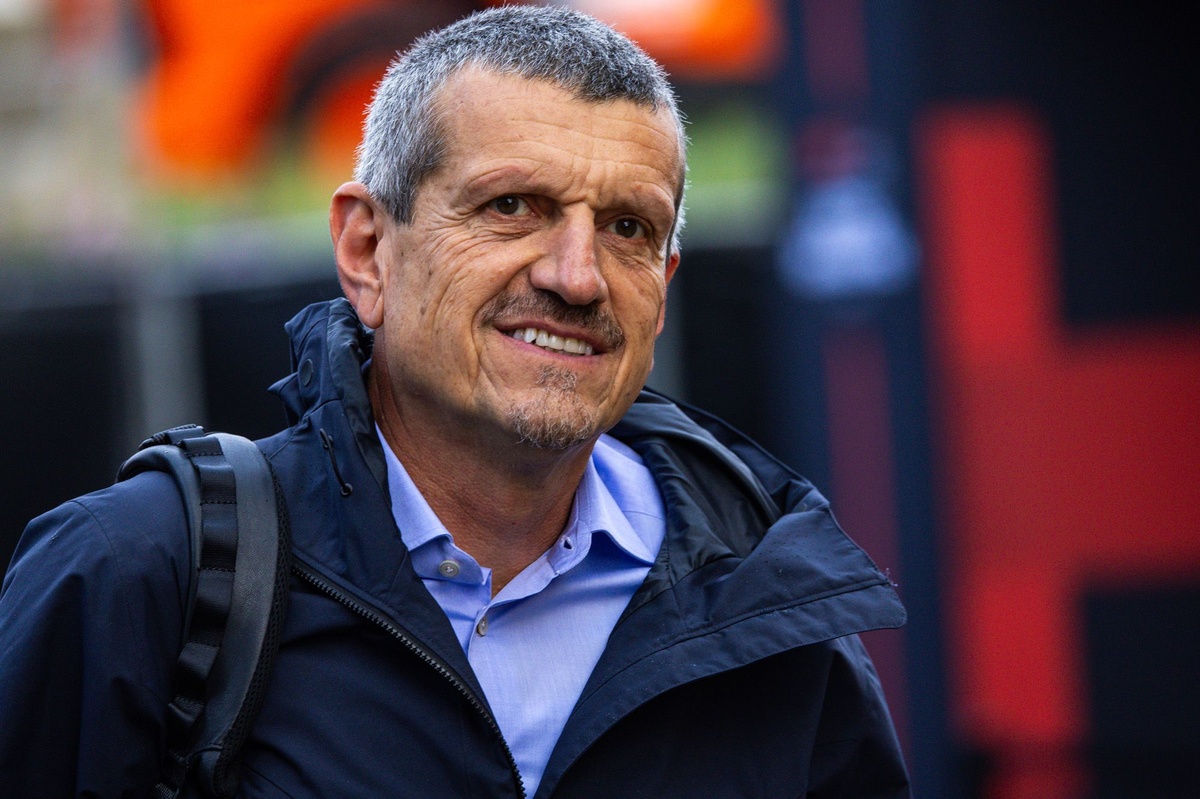

The British Grand Prix closing under a safety car was an absolute damp squib, and former Haas team principal Guenther Steiner isn't mincing words about the FIA's need for radical change. This isn't just about one race; it's about the very integrity of Formula 1 finishes. Steiner is demanding a systemic overhaul, pushing for permanent officials and cutting-edge AI to ensure fans get the thrilling conclusions they deserve.
Here are the key takeaways from Guenther Steiner's powerful critique:
- Guenther Steiner calls for a fundamental shift in FIA race management after the British GP.
- He advocates for full-time stewards to provide consistent, expert support to the race director.
- Steiner insists AI is crucial to pre-plan and resolve complex race scenarios, particularly concerning safety car procedures.
- The goal is to eliminate anticlimactic finishes and uphold the spectacle of Formula 1 racing.
The Silverstone Sting: Another Finish Under Safety Car
The 2024 British Grand Prix at Silverstone saw Charles Leclerc claim a hard-fought victory, but the celebrations were muted by a frustrating safety car finish. On lap 48 of 52, a spin by Red Bull's Max Verstappen stranded him in the gravel at Stowe corner, triggering the safety car. What followed was a confusing period: a broadcast message initially signaled a restart, only for the FIA to later confirm it was an error, stating insufficient laps remained for the standard unlapping procedure. The race ended behind the safety car, leaving many fans and pundits, including Steiner, deeply unsatisfied.
Steiner's Prescription: Elevating Race Management with Permanent Professionals
Guenther Steiner's criticism isn't aimed at individual race directors or stewards; it's a structural challenge to the FIA. He argues passionately for the introduction of permanent, full-time stewards. These dedicated professionals, working consistently, could proactively assist the race director in navigating intricate situations, anticipating potential issues, and ensuring smoother, fairer resolutions. The current rotating system, according to Steiner, simply isn't robust enough for the demands of modern Formula 1.
"If the race director had permanent stewards, the permanent stewards would help him to find ways around not to look like we did again at Silverstone," Steiner emphasized. He clarifies that while the race director followed the rulebook, the rulebook itself led to an unsatisfying outcome, highlighting the need for rules that prioritize sporting spectacle without compromising safety.
AI: The Future of Flawless Finishes?
Perhaps the most forward-thinking aspect of Steiner's proposal is the integration of advanced artificial intelligence. He believes AI could be a game-changer for handling the myriad of scenarios that can unfold during a race, especially concerning safety car deployments and restarts. A human being, he contends, simply cannot process "a million scenarios" in real-time to craft the optimal solution.
By leveraging AI, the FIA could pre-program and test countless permutations of race finishes, including complex unlapping procedures. This would allow for clear, pre-defined protocols that can be executed swiftly and consistently, removing ambiguity and the potential for human error. Steiner points to past controversies, hinting at the infamous 2021 Abu Dhabi Grand Prix, as stark reminders of what happens when race management falters at critical moments. The technology exists; it's time for F1 to embrace it.
Driving Towards a More Predictable and Thrilling F1
Guenther Steiner's insights underscore a vital truth: Formula 1 is not just a sport; it's a global spectacle. Every decision, especially in the closing laps, impacts the fan experience. By investing in permanent, expert personnel and embracing sophisticated AI solutions, the FIA can minimize controversies, ensure sporting fairness, and guarantee that the dramatic conclusions fans crave are delivered consistently, rather than ending in confusion or anticlimax. It's time for F1's governance to catch up with its incredible on-track action.