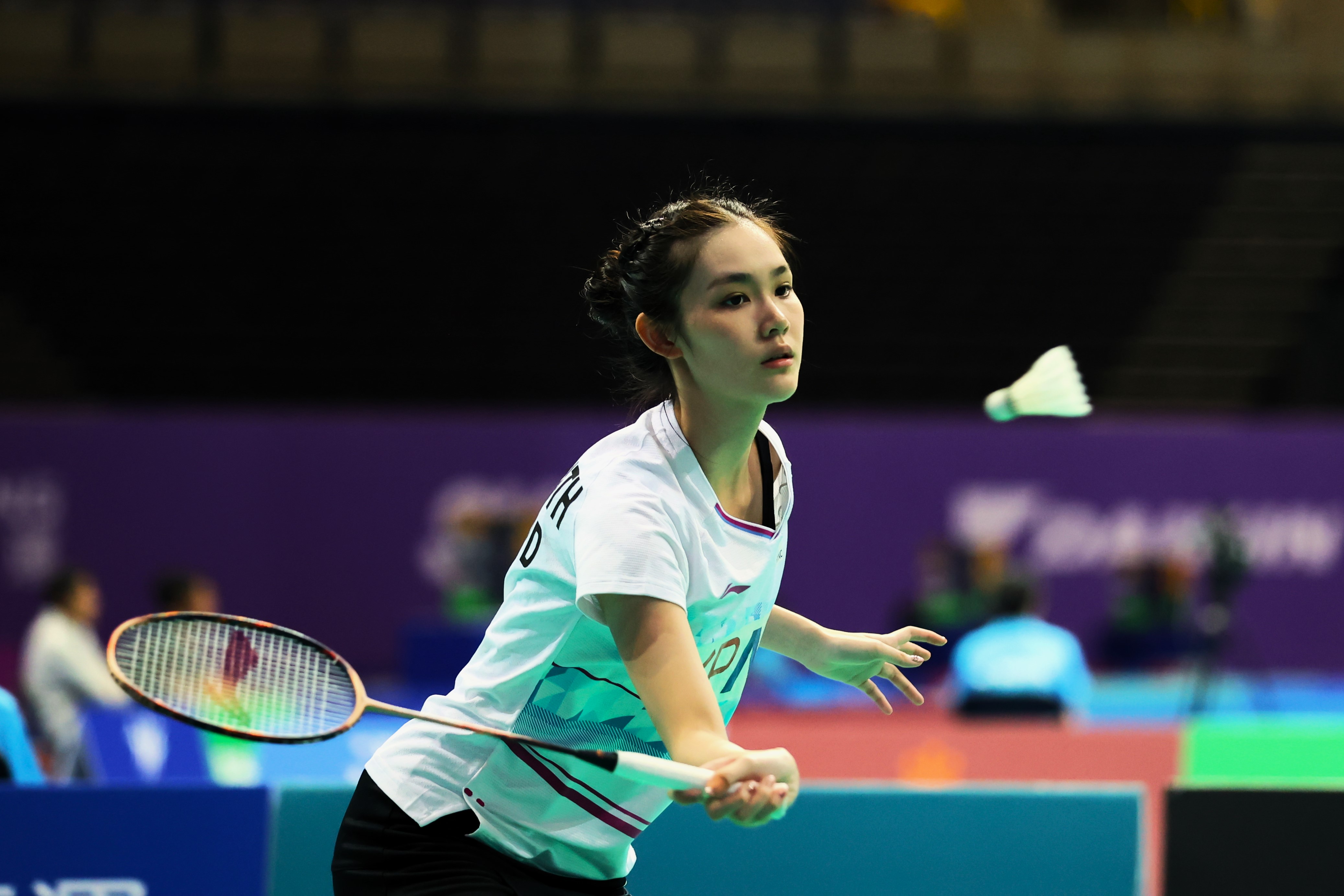

Thailand’s rising badminton star Pitchamon Opatniputh has been provisionally suspended from the 2026 Asian Games after returning an adverse analytical finding for the banned substance furosemide.
The 19-year-old, ranked No. 18 in the world, was due to represent Thailand in the women’s team quarter-final against China on Tuesday. However, the International Testing Agency (ITA), which is overseeing anti-doping procedures on behalf of the Olympic Council of Asia, announced on September 21 that Opatniputh had been provisionally suspended with immediate effect.
The sample was collected during an out-of-competition anti-doping test in Nagoya on September 17. Laboratory analysis returned an adverse analytical finding for furosemide, which is listed by the World Anti-Doping Agency (WADA) under S5, Diuretics and Masking Agents. The substance is prohibited at all times, both in and out of competition.

Source: Okezone Sports
According to the ITA, furosemide can be used to help athletes remove water from the body for rapid weight loss. However, the current case does not establish why the substance was present in Opatniputh’s sample, and the proceedings have not yet been concluded.
The provisional suspension means Opatniputh is unable to compete, train, coach or take part in activities during the Asian Games while the measure remains in effect. She has also been removed from Thailand’s planned team encounter with China.
The suspension comes as a major setback for Opatniputh, who has emerged as one of Thailand’s promising young players. She entered the Asian Games ranked 18th in the world and was due to make her appearance in the team event before the anti-doping case emerged.
However, the case is still subject to the relevant procedures. Opatniputh has the right to challenge the provisional suspension before the Court of Arbitration for Sport Anti-Doping Division and can request an analysis of her B-sample.
The ITA said it would not make further comments while the proceedings are ongoing.
For now, Opatniputh’s provisional suspension marks the first known doping case of the Aichi-Nagoya Asian Games, but the final outcome of her case has yet to be determined.