


Beyond the Trophy: A Nation's Heart on Court
Every championship celebration brings joy, but Marta Kostyuk and Elina Svitolina infused their recent triumphs with an extra layer of profound emotion. These wins are more than just points and rankings; they are symbols of strength for Ukraine.
Key Takeaways:
- Marta Kostyuk clinched her first WTA 1000 title in Madrid, marking the occasion with an unforgettable backflip.
- Elina Svitolina secured her third Italian Open title in Rome, delivering an emotional tribute to her country.
- Both stars consistently use their platforms to highlight the ongoing conflict in Ukraine.
- Their recent successes are fueled by significant personal and game-play evolutions, demonstrating incredible resilience.
Kostyuk's Acrobatic Triumph & Unwavering Stance
The Madrid Breakthrough and a Silent Protest
Marta Kostyuk, fresh off her first career WTA 1000 title in Madrid, astonished fans in the Caja Magica with a celebratory backflip. It was a moment of pure, unadulterated joy that captured the essence of her breakthrough victory.
However, Kostyuk's commitment to her country runs deeper than celebratory acrobatics. After her win, she bypassed the traditional handshake with her Russian opponent, Mirra Andreeva. This consistent stance, shared by other Ukrainian players for nearly four years, underscores their protest against the invasion.
Only Daria Kasatkina receives a handshake from Kostyuk, acknowledged for her public denouncement of the war. For Marta, her principles remain unwavering, a powerful message delivered on the global stage.
Svitolina's Roman Resurrection: A Battle-Hardened Champion
Conquering Clay and Inspiring a Nation
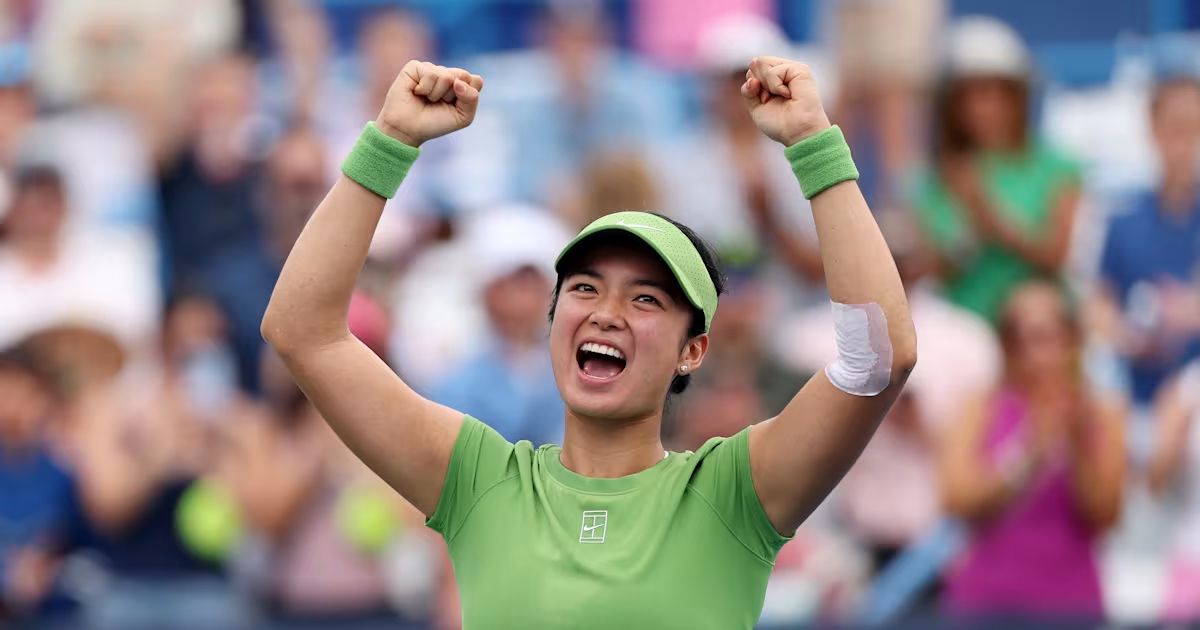
Two weeks later, the seasoned Elina Svitolina claimed her third Italian Open title in Rome. While she didn't attempt a backflip, her emotional reaction after defeating Coco Gauff was equally poignant: a flying racquet, raised arms, and a spontaneous, disbelieving grin. Eight years after her last Roman crown, this victory felt profoundly significant.
I want to thank all the people back in Ukraine that have been supporting me, watching at night, being in the bomb shelters. It's been really heavy for the past couple of weeks for Ukraine, and I want to thank you for all the support, and I feel all the love.
Svitolina's powerful words, delivered just minutes after her triumph, brought a stark reminder of the reality faced by her compatriots, many watching from bomb shelters amidst new rounds of missile strikes.
The Ukrainian Wave: A United Front on Tour
For over four years, Svitolina, Kostyuk, and their fellow Ukrainians have navigated life on tour alongside the harsh realities of war. This ongoing struggle has seemingly forged an even stronger Ukrainian contingent in tennis.
Currently, seven Ukrainian women are ranked in the WTA Top 100: Svitolina (No. 7), Kostyuk (15), Dayana Yastremska (45), Yulia Starodubtseva (54), Oleksandra Oliynykova (66), Anhelina Kalinina (89), and Daria Snigur (95).
Oleksandra Oliynykova notably made headlines earlier this year, accusing some of her tour-mates, including Aryna Sabalenka, of "participating in Russian propaganda" and advocating for their ban. Despite the controversy, her game has flourished, boosting her to a career-high ranking.
Securing sponsorships and sustained success in tennis from Ukraine has always been challenging, but the added chaos of war makes it seem almost insurmountable. Yet, for players like Svitolina and Kostyuk, this adversity has ignited a new perspective and an unyielding determination, leading to noticeable improvements in their game.
From Mental Blocks to Grand Slam Threats: Kostyuk's Evolution
For Marta Kostyuk, the primary hurdle was mental. Once a prodigy joining the tour at just 14, she grappled with the pressure of high expectations. Mistakes often led to anger, trapping her in a counterproductive cycle. Through dedicated therapy, she has finally broken free this season.
Her improved mindset is evident in her results and her visibly calmer demeanor on court.
I was living for many years in that state of everyone expecting big results from me. Having such good results being so young was almost like a curse. I've tried to change that narrative in my head. And that worked, because, you just, you're more consistent, you just go out there, you do your job, you don't have like emotional attachment to it. Whether you win or lose, you just keep working and keep becoming a better person and a player, and that's it.
This newfound mental fortitude has transformed her into a consistent threat, particularly on clay.
Svitolina's Power Surge: Reimagining Her Game
Elina Svitolina's challenge was more physical. Previously, she sometimes struggled against the overwhelming pace and spin of top-ranked players like Iga Swiatek, Elena Rybakina, and Aryna Sabalenka.
After a mental break in 2025, Svitolina returned with a renewed purpose, committed to an attacking style. She now dictates play with aggressive court positioning and increased shot pace. A focused training week post-Madrid saw her elevate her game even further.
In Rome, she showcased this new ferocity, defeating Swiatek, Rybakina, and Gauff consecutively. Her relentless mental approach and powerful shot-making marked a significant evolution in her game at 31.
This one is I think one of the toughest draws that I had in a tournament. I'm very proud of the way that I've been handling myself and handling the nerves and being consistent.
More Than Matches: A Profound Purpose
With these pivotal victories, Kostyuk and Svitolina have firmly placed themselves in the conversation for Roland Garros and upcoming Grand Slams. After four years of relentless struggle at home, they've not only found a new perspective and success on the court but also a profound joy that resonates far beyond the sport itself.