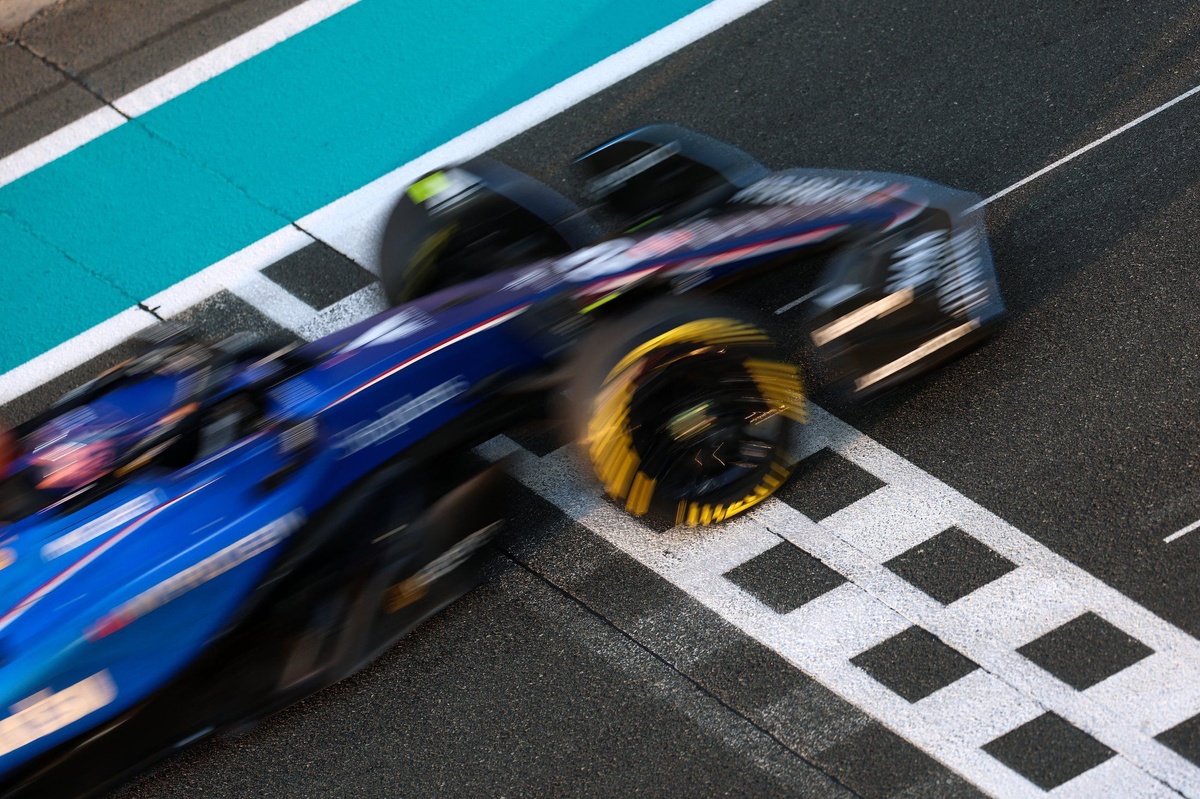

The 2026 Formula 1 season is still a distant roar, yet the recent Barcelona shakedown has already sparked intense debate. In a surprising move, Williams F1 opted out of the initial five-day test, raising immediate concerns reminiscent of their 2024 struggles. However, Team Principal James Vowles has emphatically countered the whispers, insisting this isn't a setback but a shrewd strategic play to optimize their future on the grid.
Key Points:
- Williams strategically bypassed the 2026 Barcelona shakedown, prioritizing long-term development and resource protection.
- James Vowles refutes comparisons to past production woes, emphasizing a calculated decision to safeguard spare parts and future updates for the FW48.
- The team leverages invaluable insights from power unit supplier Mercedes, whose strong performance in Barcelona provides a critical data advantage.
- Williams is employing a sophisticated "Virtual Test Track" (VTT) to rigorously develop and optimize crucial car systems in a controlled environment.
Williams Skips Barcelona: Panic or Ploy?
The absence of the Williams FW48 from the clandestine Barcelona testing sessions sent a ripple of anxiety through the Formula 1 paddock. For many, it triggered flashbacks to the problematic 2024 season, where production delays and an overweight car plagued the team. But James Vowles, ever the pragmatist, has been quick to clarify. He confirms Williams could have participated, but at a significant cost to their vital spare parts inventory and crucial in-season development trajectory. This isn't a production disaster; it's a strategic retreat to win the bigger war.
The Vowles Vision: Beyond Early Laps
Vowles' philosophy for 2026 is clear: success hinges not on an explosive start, but on relentless development throughout the campaign. With sweeping new regulations set to redefine F1, the ability to rapidly adapt and evolve will be paramount. By preserving resources now, Williams aims to arrive in Bahrain for the official pre-season test with a robust, reliable package ready to hit the ground running, rather than limping through initial shakedown laps. With a strong talent like Alex Albon on their roster, a reliable platform is key.
Mercedes' Data Dividend for Williams
Perhaps the most underrated aspect of Williams' strategy is their robust partnership with Mercedes. The Silver Arrows, known for their dominance during the last major engine regulation change in 2014, showed impressive form in Barcelona. Their drivers, including George Russell and Andrea Kimi Antonelli, collectively racked up 183 laps, with Antonelli even completing a full race simulation. This is a goldmine of data for Williams.
Power Unit Prowess: A Glimpse into 2026
Mercedes' apparent early success with the 2026 power unit is a massive advantage for Williams. As Vowles explained, Mercedes supplies not just the engine but also the gearbox. This means the critical learning and optimization happening within the Mercedes camp directly translates to Williams, giving them a head start without even turning a wheel. The expectation is that the official Bahrain test will be the true crucible, where these early learnings will become evident on track.
The Virtual Edge: How VTT Aids Development
While others were on track, Williams was not idle. They are aggressively utilizing a "Virtual Test Track" (VTT). This isn't just a simulator; it involves much of the physical car, mounted on a rig, replicating real-world track conditions and loads without dynamic cornering. It's a highly controlled environment for intensive system characterization.
From Sim to Success: Calibrating Key Systems
The VTT allows Williams to fine-tune critical components like the cooling system, engine, and gearbox under various simulated conditions. They can mimic different circuits, weather, and even race scenarios, such as running behind other cars. This controlled environment provides invaluable data, especially for their new cooling system design. It's about ensuring reliability from day one in Bahrain and gathering crucial insights for future development, negating some of the disadvantages of skipping the Barcelona shakedown. Vowles is confident this proactive approach means Williams won't be "behind" when the real action begins.
![Business as usual for world champs Tang Jie-Ee Wei against compatriots [WATCH]](https://assets.nst.com.my/images/socialmedia/5C60252CDA6CC7B9CF8D322B14E56EC9_data_1_1.jpg)