

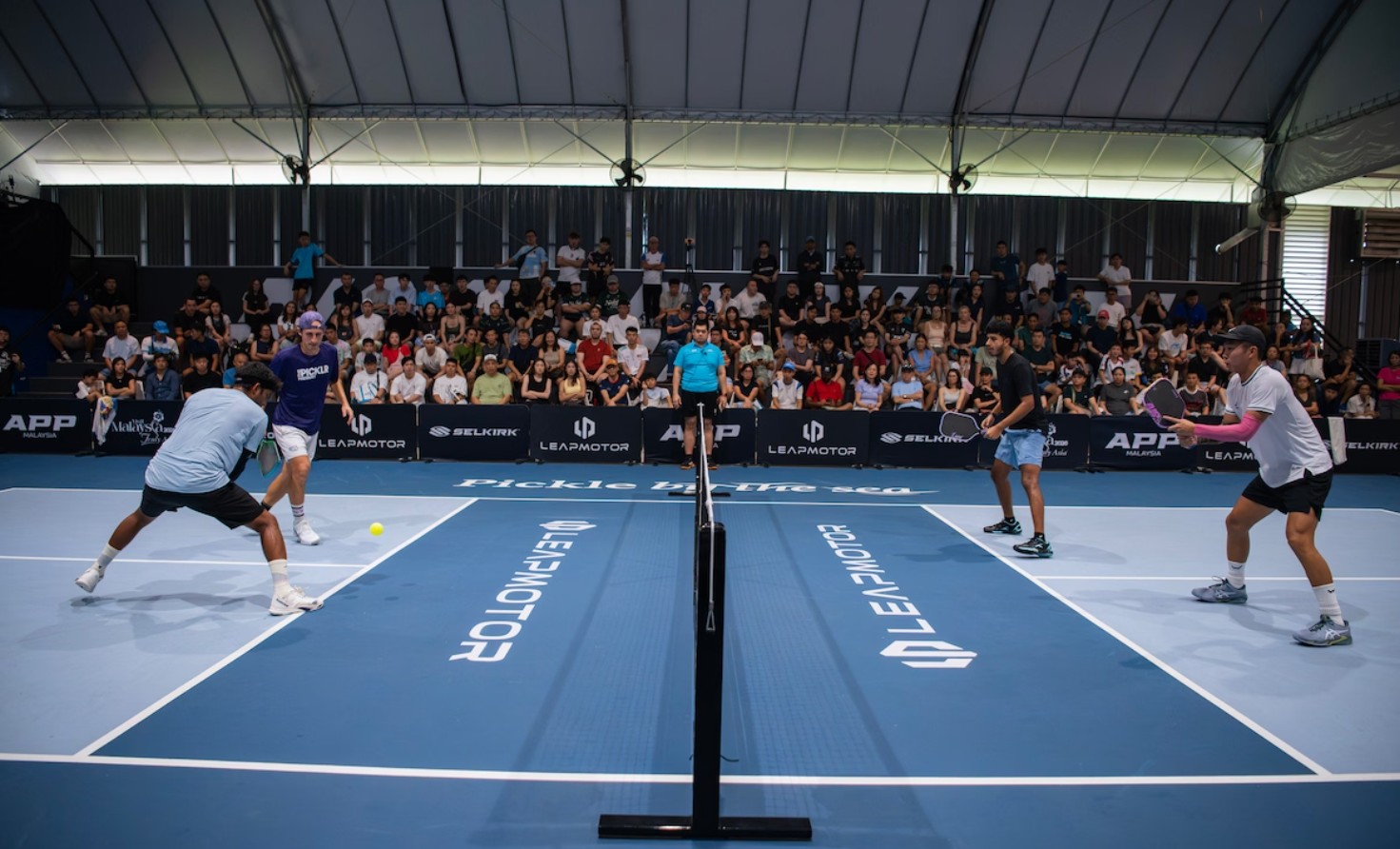

The APP Asia Tour didn't just meet expectations in its inaugural year; it detonated them, laying indisputable groundwork for pickleball's global revolution. What began as an ambitious regional circuit in 2023 quickly transformed into a compelling proof of concept, demonstrating the sport's massive, untapped potential across the continent.
Key Takeaways from APP Asia's Inaugural Year
- APP Asia saw unprecedented player turnout in Malaysia, exceeding 3,000 total participations across two major events.
- Leadership, including Marc Chua and Yuki Chen, is focused on building a sustainable, region-wide operating system, not just one-off tournaments.
- The tour successfully integrated international competitive standards with unique local cultural elements, resisting a "transplant" approach.
- Asia's rich racket-sport heritage provides a natural, fertile ground for pickleball's explosive growth and promises a new wave of global talent.
The Asian Pickleball Revolution Takes Flight
The numbers speak for themselves. The February Kuala Lumpur Open captivated 1,760 player participations from a staggering 28 countries, with 711 international entries. Just months later, the July Penang Open echoed this success, drawing 1,386 participations from 22 nations and over 100 professionals across its divisions.
For a tour launched with the bold ambition of becoming a genuine regional circuit, rather than a collection of isolated events, this is an undeniable, powerhouse start.
More Than Just Games: Crafting a Sustainable Ecosystem
For the visionaries behind APP Asia – Marc Chua, Yui See Lau, Caryn Yap, and Yuki Chen – success isn't a cue to relax. Their candid assessment is a unified call to action: "We are not catching our breath; we are building the platform," asserts Chen. Chua admits, "There has not been much time to stop, but it has been rewarding to look back and see how much we have managed to build in a relatively short period."
Bridging Global Standards with Local Flair
The focus now shifts from running successful tournaments to establishing a consistent, region-wide operating system. This includes standardized rules, robust officiating, clear rankings, reliable data, dedicated player services, and strong local partnerships that can seamlessly transcend national borders.
A key differentiator has been the deliberate refusal to simply transplant an American model wholesale. Marc Chua highlights Kuala Lumpur as the actual Asian entry point, connecting online fans with live, local action. Suddenly, a sport many only watched virtually was happening right on their doorstep.
Yui See Lau observes the profound shift when virtual fandom meets reality: "There is a huge difference between following professional pickleball on Instagram or YouTube and suddenly having those players standing on the court next to you." This creates an undeniable emotional connection that screens simply can't replicate.
Caryn Yap emphasizes the importance of off-court activations. Her team designs engaging experiences between matches, even pioneering social tournament formats that bend traditional rules, fostering community and engagement beyond pure competition.
The Diverse Tapestry of Asian Pickleball
The APP Asia team understands that "Asian pickleball" isn't a monolith. Malaysia boasts enormous participation and infrastructure. Vietnam is a hotbed for competitive talent, while China offers immense long-term scale due to its size and existing racket sports culture. India contributes extraordinary youth numbers.
Nations like Thailand, Taiwan, the Philippines, and Indonesia are each forging unique paths, showcasing the region's incredible diversity. This very diversity is viewed as a strength, not a hurdle. Different backgrounds—from badminton to table tennis—bring unique instincts and skills to the court, enriching the competitive landscape.
Why Asia's Racket Sports Culture is Pickleball's Secret Weapon
The unanimous consensus on pickleball's rapid adoption across Asia points to one crucial factor: a deeply ingrained racket-sport culture. Decades of strong participation in badminton, table tennis, and tennis mean the sport's basic mechanics feel instantly familiar to newcomers.
From Casual Fun to Competitive Fire
What truly sets pickleball apart, according to Yui See Lau, is how quickly newcomers find enjoyment. "You can give someone a paddle and have that person playing and having fun almost immediately," she explains, highlighting the low barrier to entry.
Yet, this accessibility doesn't compromise competitive depth. Players rapidly discover a strikingly high ceiling for strategy, positioning, and shot selection. Caryn Yap adds a personal touch, citing families spanning three generations—from ten-year-olds to grandparents in their seventies—sharing courts, a testament to its universal appeal. "How can any other sport beat that?" she asks.
The Next Wave: Stars, Infrastructure, and Global Ambition
Spotlighting Asia's Elite Talent
When asked about breakout stars, Vietnam frequently leads the conversation. Caryn Yap singles out Phuc Huynh for his "agility and accuracy in ball placement" as among the most impressive she's ever witnessed. Marc Chua expands this list to include fellow Vietnamese players Ly Hoang Nam, Trinh Linh Giang, and Quang Duong.
Other notable talents include Taiwan's Kao Pei Chuan, Hong Kong's Kara Lin-Wheatley, and Vivian Glozman, who brings Taiwanese roots to her game. This burgeoning talent pool suggests Asia is poised to deliver a new generation of global pickleball stars.
Building a Global Pillar, Not a Satellite
Underlying APP Asia's mission is an ambition far grander than running successful tournaments. Marc Chua argues pickleball cannot claim true global status while its competitive infrastructure remains concentrated in North America.
The goal is to bring international-standard events, meaningful rankings, substantial prize money, and broadcast exposure directly to Asian players. This ensures they don't have to cross oceans just to access top-tier competition.
Yui See Lau envisions a truly global sport where athletes can build careers regionally, fans celebrate local heroes, and sponsors find opportunities beyond traditional markets. As Yuki Chen succinctly puts it, APP Asia is intended to be a a "second pillar entirely," not merely a satellite of the North American tour.
"I want a young player in Asia to be able to look at pickleball and say, 'I can become a professional without having to move to the United States,'" Lau concludes. This bold vision suggests that in a decade, "Asian pickleball" won't be a niche; it will simply be "pickleball," with Asia sitting at its vibrant, competitive core.