
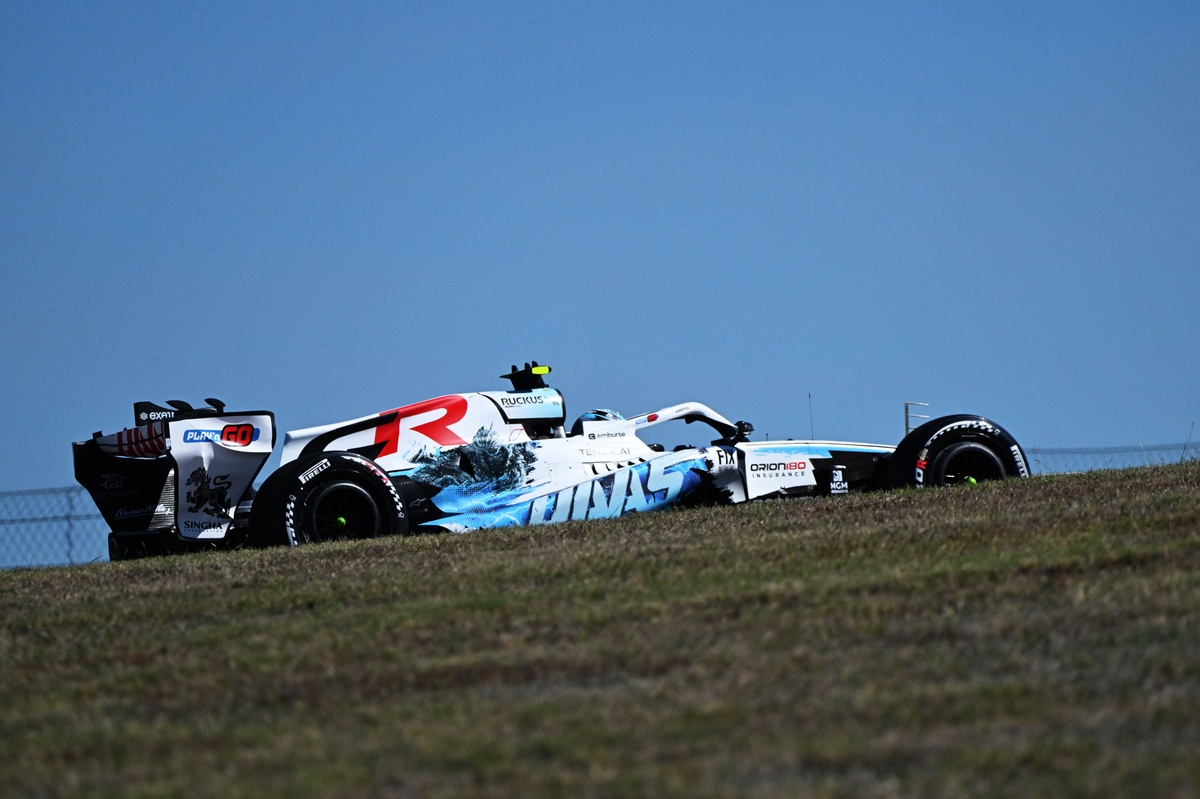

The truth stings, especially in Formula 1, and Oliver Bearman just delivered a knockout blow to Haas F1 Team's current performance outlook. Following the United States Grand Prix, Bearman delivered a stark assessment, stating the VF-26 has officially hit its performance ceiling.
Here's what you need to know about Haas F1 car performance:
- Oliver Bearman declares the Haas VF-26 has reached its absolute performance limit.
- Despite stable handling characteristics, the car fundamentally lacks downforce.
- Haas is falling behind rivals due to a significant lack of upgrades.
- Teammate Esteban Ocon also highlights separate, persistent braking inconsistency issues.
Haas Hits a Performance Wall: Bearman's Blunt Assessment of the VF-26
Haas F1 Team's season has been a rollercoaster of fleeting promise and harsh reality, and young sensation Oliver Bearman isn't sugarcoating the situation. Following the United States Grand Prix, Bearman delivered a stark assessment, stating the VF-26 has officially hit its performance ceiling. This isn't just a tough break; it's a critical revelation about the team's capacity to compete at the sharp end of the grid.
Early Promise, Late Fade: The Downforce Dilemma
At the Circuit of The Americas, Bearman initially dazzled, clocking impressive 11th and 10th-place finishes in FP1 and FP2. Yet, qualifying saw a frustrating slide down to 16th. The explanation is as simple as it is brutal: the Haas team found an almost perfect setup right out of the gate in FP1.
"We're getting the most out of our car from FP1, basically," Bearman explained. He highlighted minimal setup changes throughout the weekend, confirming the car's inherent balance. The core issue, he revealed, is a fundamental absence of downforce. "It feels good, but we're just not quite as quick as others."
The Upgrade Gap: Why Rivals Pull Ahead
The reality for Haas is that their last significant upgrade package dates back to the Italian Grand Prix – nearly two months ago. This stagnation is proving costly. As other teams bring a relentless stream of new components, Haas is left to watch their relative pace erode.
Bearman minced no words, stating, "Our competitors brought upgrades again this weekend. I mean, they brought like three or four times more upgrades than we have." This continuous development disparity means that while the VF-26 might be a "predictable, benign car" with good characteristics, it simply cannot keep pace. The lack of downforce quickly "kills the tyres," further compounding their race-day struggles.
Ocon's Braking Woes: A Different VF-26 Challenge
While Bearman focused on the car's overall aerodynamic ceiling, teammate Esteban Ocon shed light on another persistent challenge: braking inconsistency. Ocon described the problem as particularly acute under maximum attack during qualifying, where the car's unpredictability makes pushing to the limit a harrowing experience.
"When the tyre takes off, I need to anticipate braking 10-15 metres and I still do pick up a lot of locking and a lot of understeer," Ocon detailed. Despite efforts to minimize the issue, the underlying problem remains. Ocon's struggles were evident in the US GP, where he finished 14th, well outside the points.
Looking Ahead: What's Next for Haas?
With Bearman declaring the VF-26 has "hit the ceiling," the immediate future for Haas F1 Team looks challenging. While driver feedback suggests improved car characteristics compared to earlier in the season, the crucial element of downforce is still missing. The team faces a monumental task to bridge the development gap and compete consistently for points. Without significant shifts, Haas might be resigned to a season of maximizing an already maxed-out machine.