
MotoGP's governing bodies have approved several important regulation changes that will affect both the current season and the championship's long-term future.
The most immediate change is the ban on front holeshot devices, which will come into force from this weekend's Dutch Grand Prix. The technology, designed to lower the front of the motorcycle during race starts to improve acceleration and traction, has been the subject of growing debate within the paddock.
Officials cited safety concerns as a key reason for the decision. Riders were required to disengage the system by braking heavily into the opening corners, creating additional risks during one of the busiest phases of a race. The device had also become a costly area of technical development with limited impact on racing itself.
Rear holeshot devices will remain legal until the broader ban on such systems takes effect under the 2027 technical regulations.
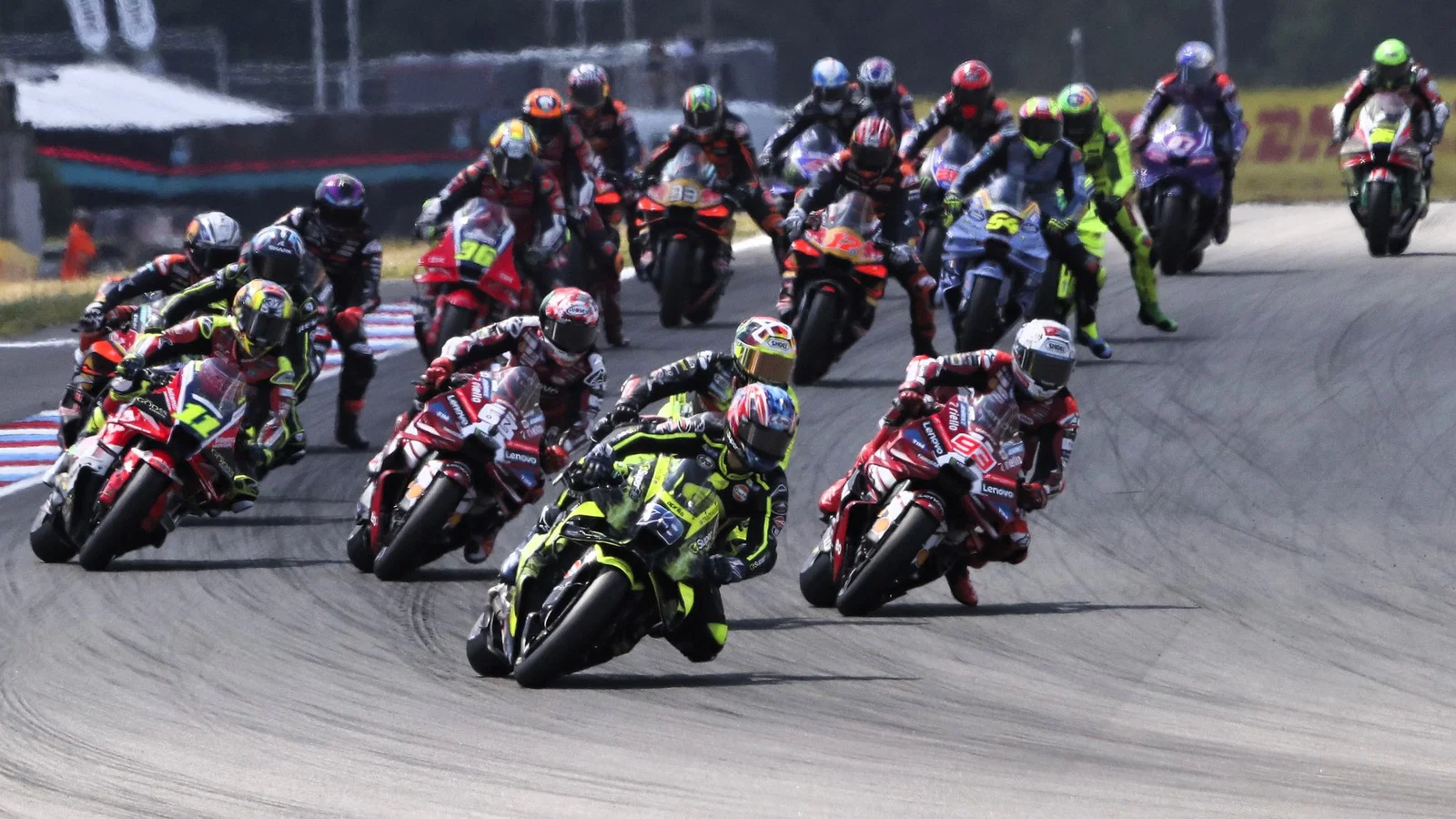
MotoGP has also confirmed changes to starting grid layouts beginning with the German Grand Prix at Sachsenring. The spacing between riders will increase from three metres to four metres, expanding the width of each row from nine metres to 12 metres while maintaining the existing three-rider-per-row formation.
The adjustment is intended to improve safety during race starts by providing riders with more room and better visibility as they approach the first corner.
Looking further ahead, a new manufacturer rider limit will be introduced from the 2028 season. Under the regulation, each manufacturer will be allowed a maximum of six riders on the grid, equivalent to one factory team and two satellite teams.
The measure is designed to preserve competitive balance and prevent any single manufacturer from gaining an excessive presence within the championship. The move also aligns with MotoGP's future structure, particularly following the expected redistribution of satellite teams among manufacturers.
The new rule is supported by MotoGP's latest Concorde Agreement, which secures the participation of Ducati, Aprilia, KTM, Honda and Yamaha through at least the 2031 season.
Together, the changes represent a significant step in MotoGP's ongoing efforts to improve safety, control costs and maintain a competitive championship as the sport prepares for a new era of technical regulations.